
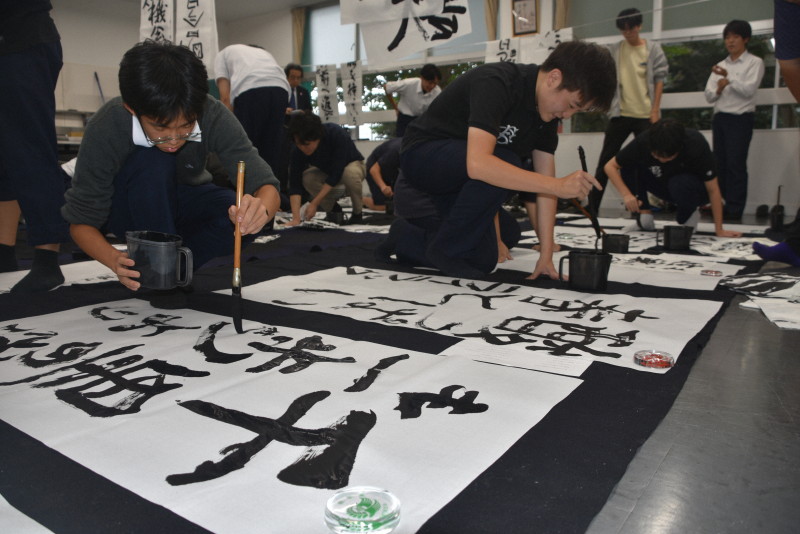
Japan’s 書道 (shodō), or calligraphy, is now likely to be added to UNESCO’s 無形文化遺産 (mukei bunkai isan), intangible cultural heritage list. Japan’s Agency for Cultural Affairs announced on November 5 that a UNESCO evaluation body has recommended registration. The formal decision is scheduled for November 30 to December 5 at an intergovernmental committee meeting in Xiamen, Fujian Province, in southern China.
If approved there, 書道 (shodō) will become Japan’s 24th UNESCO intangible cultural heritage entry, following 伝統的酒造り in 2024. According to Yahoo Japan, the Japanese government had applied for registration on the grounds that calligraphy has become a social custom in Japan.
What UNESCO is evaluating
In this application, 書道 (shodō) means the expressive act of writing kanji and kana with brushes, ink, and an inkstone, using traditional 筆遣い (fudezukai), or brushwork, and techniques. It also includes seal carving, where characters are engraved to make stamps.
The government said calligraphy appears in everyday settings as well as formal ones: in letters, New Year’s 書き初め (kakizome), and guest-signing at 冠婚葬祭 (kankonsōsai), ceremonial occasions such as weddings and funerals. That broad use helped support the case that it is part of ordinary Japanese social practice.
How calligraphy took shape in Japan
The history of Japanese calligraphy goes back many centuries. As Chinese characters spread to Japan, 写経 (shakyō), or sutra copying, became active around the 6th century along with the spread of Buddhism.
By the middle of the Heian period, a distinct Japanese style of writing had emerged. The source explains that changes including the end of missions to Tang China contributed to that shift, and as waka poetry flourished, kana calligraphy developed as well. Fine calligraphy came to be admired as an art, while learning to write by copying strong models also spread as a form of 教養 (kyōyō), cultivation and education.
A tradition many learn, but few continue
Many people in Japan experience calligraphy through school classes. Even so, a 2020 Agency for Cultural Affairs survey found that about 90 percent stop practicing after milestones such as graduation. The spread of computers and smartphones has also weakened handwriting culture.
Amid those concerns, calligraphers launched a push in 2015 for UNESCO recognition by creating the Japan Calligraphy UNESCO Registration Promotion Council. In 2021, after a legal revision created Japan’s registered intangible cultural properties system, 書道 (shodō) and traditional sake brewing became the first two entries. That same year, the Japan Calligraphy Culture Association was established as a preservation body working on protection and 継承 (keishō), passing the tradition to future generations.
Japan applied for UNESCO registration in 2024 and then reapplied in 2025. UNESCO reviews nominations once a year, but because Japan already has many registered items, the source says its cases are effectively reviewed once every two years.
How UNESCO’s intangible heritage system works
UNESCO’s intangible cultural heritage system is an international framework for protecting oral traditions, performing arts, festivals, and other living practices. Registrations are based on the Convention for the Safeguarding of the Intangible Cultural Heritage, which was adopted by UNESCO’s General Conference and came into force in 2006.
As of the end of September 2026, 185 countries are party to the convention. A 24-country intergovernmental committee reviews up to around 60 items each year, making decisions based on recommendations from an evaluation body that can advise registration, referral for more information, or non-registration.
Learn Japanese from This Article
Vocabulary
| Japanese | Romaji | Meaning |
|---|---|---|
| 無形文化遺産 | mukei bunkai isan | intangible cultural heritage |
| 書道 | shodō | Japanese calligraphy |
| 筆遣い | fudezukai | brush handling; brushwork |
| 書き初め | kakizome | first calligraphy of the New Year |
| 冠婚葬祭 | kankonsōsai | ceremonial occasions such as weddings and funerals |
| 写経 | shakyō | sutra copying |
| 教養 | kyōyō | cultivation; education; refinement |
| 継承 | keishō | inheritance; passing down to the next generation |
Grammar Spotlight
〜により — due to; because of; by means of
Pattern: Noun + により
From the article: 平安時代中期には遣唐使の廃止などにより日本独自の書風が生まれ、和歌の文化が栄える中で「かな」の書が発展。 Heian jidai chūki ni wa kentōshi no haishi nado ni yori Nihon dokujI no shofū ga umare, waka no bunka ga sakaeru naka de “kana” no sho ga hatten. By the middle of the Heian period, factors such as the end of missions to Tang China led to the birth of a uniquely Japanese style of calligraphy, and kana writing developed as waka culture flourished.
Example: スマートフォンの普及により、手で文字を書く機会が減りました。 Sumatofon no fukyū ni yori, te de moji o kaku kikai ga herimashita. Due to the spread of smartphones, chances to write characters by hand have decreased.
Example: 伝統は人から人へ教えることにより受け継がれます。 Dentō wa hito kara hito e oshieru koto ni yori uketsugaremasu. Traditions are passed down by teaching them from person to person.
Use 〜により in formal writing and news language when explaining a cause, reason, or means.
〜を通じて — through; by means of; via
Pattern: Noun + を通じて
From the article: 学校の授業を通じて書道を経験する人は多いものの、20年の文化庁の調査によると卒業などによって約9割が書道から離れてしまう。 Gakkō no jugyō o tsūjite shodō o keiken suru hito wa ōi mono no, 20-nen no Bunkachō no chōsa ni yoru to sotsugyō nado ni yotte yaku kyūwari ga shodō kara hanarete shimau. Many people experience calligraphy through school classes, but according to a 2020 Agency for Cultural Affairs survey, about 90 percent drift away from it after graduation and similar milestones.
Example: 私は学校の活動を通じて、書道に興味を持ちました。 Watashi wa gakkō no katsudō o tsūjite, shodō ni kyōmi o mochimashita. I became interested in calligraphy through school activities.
Example: 手紙を通じて気持ちを伝える文化は今も残っています。 Tegami o tsūjite kimochi o tsutaeru bunka wa ima mo nokotte imasu. The culture of expressing feelings through letters still remains today.
Use 〜を通じて when something happens via a method, medium, experience, or institution.
Useful Expressions
登録される見通しとなった tōroku sareru mitōshi to natta It is expected to be registered.
正式決定する seishiki kettei suru To make a formal decision.
日本独自の書風 Nihon dokuji no shofū A uniquely Japanese style of calligraphy.
保護と継承に取り組む hogo to keishō ni torikumu To work on protection and passing down a tradition.
Continue Learning
- Advanced Particles: Kara, Made, Yori Depth: Want to use 〜より from this article yourself? Our Advanced Particles: Kara, Made, Yori Depth lesson covers it.
- Introduction to Kanji: Pictorial Foundations of Japanese Script: Working on your reading skills? Our Introduction to Kanji: Pictorial Foundations of Japanese Script lesson is a great next step.
これからもよろしくお願いします。 Kore kara mo yoroshiku onegaishimasu.