
If you've ever looked at Japanese writing and felt daunted by those complex characters, know that you're in good company. So many Western learners tackle kanji through endless flashcards or apps that reduce them to rote memorization, missing the rich stories and logic woven into their forms. But imagine discovering kanji as the Japanese do—as evolved pictures from ancient life, not cryptic symbols crammed into English-style drills.
Picture learning Japanese on its own terms: by tracing kanji back to their visual roots, without forcing them through translations or mnemonics that obscure their true nature. In this lesson, we'll explore the pictorial origins of kanji, uncover their history, and see how they harmonize with kana to create authentic Japanese text. You'll start seeing kanji as an inviting path to fluency, not an obstacle.
The Origins of Kanji: From Pictures to Script
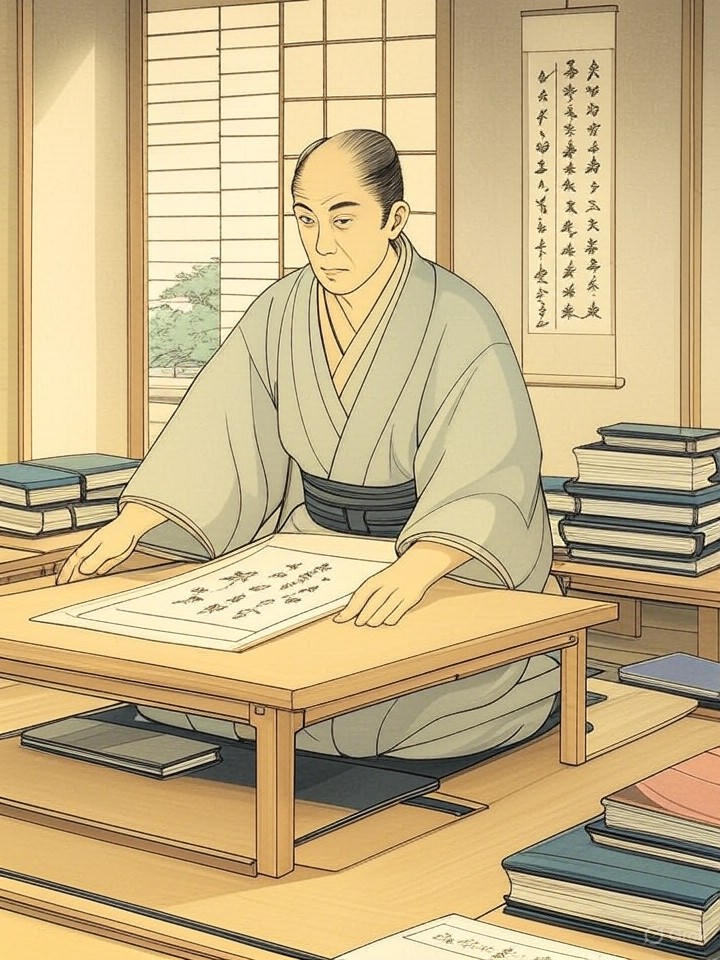
Kanji came to Japan from China around the 5th century AD, introduced by Korean envoys and Chinese scholars. Back then, Japan lacked its own writing system, so these characters bridged that gap, enabling the expression of Japanese ideas and words. Crucially, kanji began as pictographs—straightforward drawings of objects, actions, or concepts drawn from the world around ancient scribes.
These weren't arbitrary inventions; they mirrored what people saw in nature and daily life. Over time, the drawings stylized into today's characters, but their pictorial essence lingers if you know where to look. This makes kanji logographic, where each one conveys a core meaning or idea, unlike the sound-based letters of English or even Japanese kana.
Western approaches often overlook this visual logic, pushing memorization that feels disconnected. In contrast, Japanese children learn kanji by linking shapes to images and tales, a method we'll draw from here to build your intuition.

Basic Kanji and Their Pictorial Meanings
Let's jump into some essential kanji, highlighting their ancient pictorial forms. We'll introduce them with romaji initially, but focus on connecting directly to the characters themselves. The aim is to visualize the picture within each one, just as native learners do.
Take 山 (yama) — mountain. Its early form showed three peaks, like a quick sketch of a rugged range. Now stylized, those upward lines still hint at towering heights, and it appears in terms like 富士山 (Mount Fuji).
Next, 木 (ki) — tree. It started as a pictograph of a trunk with branches and roots, symbolizing upward growth. This kanji builds compounds; two make 林 (hayashi) — grove, and three form 森 (mori) — forest.
Then 日 (hi) — sun or day. From a circle with a dot representing the sun, it evolved into a square, but the radiance endures. See it in 今日 (kyō) — today, meaning "this day."
And 川 (kawa) — river. Ancient versions featured flowing lines like streaming water. Those three parallel strokes still suggest currents cutting through earth.
Here's a table to capture these with their evolutions:
| Kanji | Ancient Pictorial Form Description | Modern Meaning | Example Word |
|---|---|---|---|
| 山 | Three vertical peaks | Mountain | 山道 — mountain path |
| 木 | Trunk with branches and roots | Tree | 木曜日 — Thursday (tree day) |
| 日 | Circle with central dot | Sun/Day | 日本 — Japan (sun origin) |
| 川 | Three flowing lines | River | 川辺 — riverside |
These show kanji's non-arbitrary nature, born from drawings. In Japanese schools, kids grasp them through visuals and stories, fostering natural recall over drills.
How Kanji Integrates with Kana
Kanji thrive alongside hiragana and katakana, the phonetic kana scripts. Kanji carry core meanings in nouns, verb stems, and adjectives, while kana handle grammar like particles and endings. Together, they form an efficient, expressive system.
Consider 私は山に登る。 (Watashi wa yama ni noboru.) — I climb the mountain. 山 anchors the noun, with kana like は (topic), に (to), and る (verb ending) providing structure. All in kana, it'd be わたしはやまにのぼる, but that dims the clarity and density kanji bring.
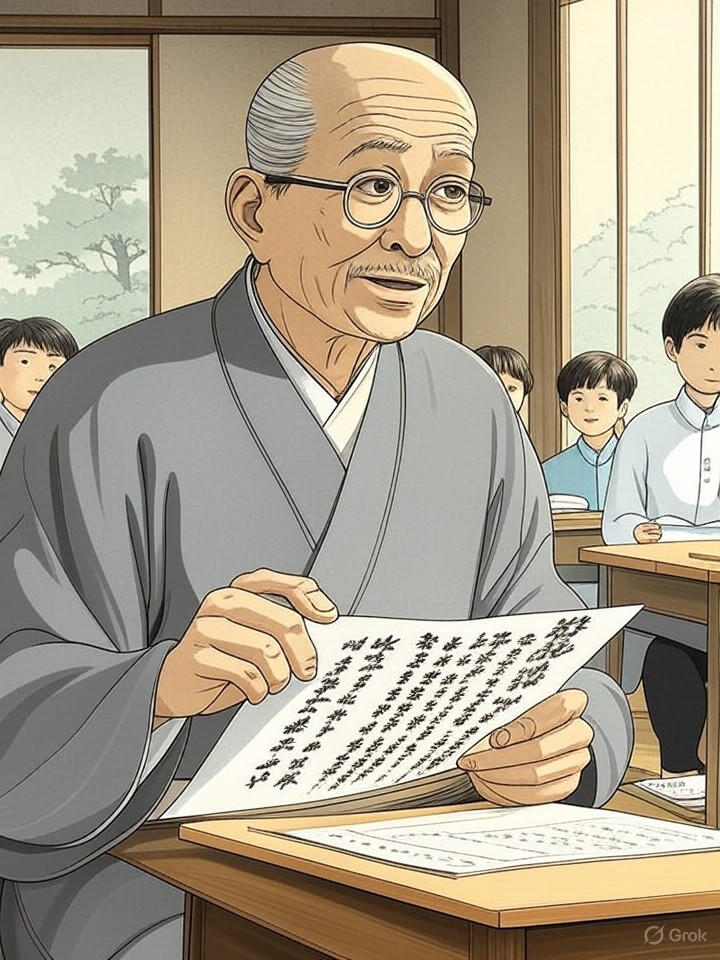
This synergy emerged as early Japanese adapted Chinese characters to their grammar in the 8th-9th centuries, creating kana from simplified kanji. It's a brilliant evolution, blending logographic depth with phonetic flexibility. Western teaching often isolates kanji, breeding confusion, but Japanese kids encounter them woven into sentences from day one.
Building Your Kanji Foundation
Build your skills by envisioning these origins—sketch 山 as a peak or 川 as a stream. Steer clear of apps that skip context; opt for native kids' books illustrating these roots.
Countless Japanese speakers mastered kanji by tying them to images and real use, without foreign tricks. You can follow suit. Begin here, and watch compounds emerge, like 山川 for "mountains and rivers," evoking nature's majesty.
Conclusion
We've traced kanji's pictorial core from 5th-century Chinese imports to their place in today's script. You've encountered basics like 山, 木, 日, and 川, and how they fuse with kana for full expression. This shifts kanji from daunting to delightful.
Keep prioritizing these visual foundations over translation crutches. Future lessons will delve into more kanji and their readings.
Until next time,
これからもよろしくお願いします。
Kore kara mo yoroshiku onegaishimasu