
If you've ever tuned into a Japanese conversation and felt like it flowed like a gentle melody, simple yet captivating, you're picking up on something special. Many English speakers jump into Japanese thinking pronunciation will be easy—fewer sounds than English, right? But then the struggles hit: your "ra ri ru re ro" comes out wrong, or the rhythm feels off, rushed in spots where it should linger.
The issue often stems from Western resources that squeeze Japanese sounds into English boxes, ignoring how the language evolved on its own path. Today, we'll retrain your ears by approaching Japanese pronunciation as it truly is, drawing from native teaching methods and its ancient roots, so you can sound natural from the start.
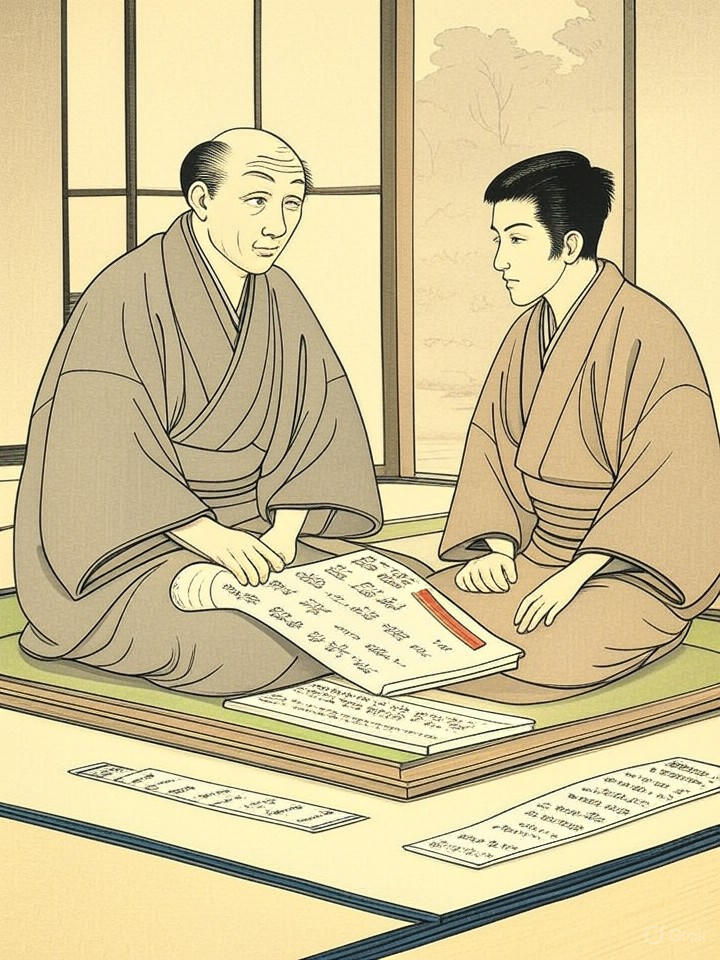
The Building Blocks: Japanese Vowels
Let's dive into the foundation: vowels. Japanese relies on just five pure vowel sounds—あ (a), い (i), う (u), え (e), and お (o). Say them cleanly: a like the "ah" in "father" but brief, i as in "machine," u like "book" without much lip rounding, e as in "bed," and o like "or" but sharp and short.
This purity comes from Japanese's history, tracing back to Proto-Japonic around 2,000 years ago, with a similar vowel set that stayed consistent unlike English's shifting ones. Western guides might compare them loosely to English, but that misses how Japanese vowels remain steady, no blending into diphthongs—each stands alone.
To get the feel, practice them aloud:
| Japanese | Romaji | English Approximation |
|---|---|---|
| あ | a | ah (as in "spa") |
| い | i | ee (as in "see") |
| う | u | oo (as in "book," but softer) |
| え | e | eh (as in "bet") |
| お | o | oh (as in "go," but shorter) |
Repeat the sequence, keeping each vowel short and isolated. You'll notice they don't slide like English vowels; that's the Japanese way, and embracing it directly beats forcing English parallels.

Consonants That Trip You Up
Now, consonants—Japanese has ones you'll recognize like k, s, t, n, h, m, y, r, w, but skips th, v, f except in borrowed words, and merges l and r into one tapped sound. That famous Japanese r is a quick tongue tap, like the "dd" in "ladder," heard in ら (ra), り (ri), and so on—not rolled like Spanish or curled like American English. English speakers often overdo it because we're wired for separate l and r, but Japanese keeps it simple and light.
This tapped r evolved distinctly in Proto-Japonic, without the complex clusters English loves, like in "strength." Old Japanese records show open syllables dominating, pairing consonants neatly with vowels, a trait that makes the language rhythmic and clear.
Watch for common slips, like rounding lips too much on u or softening tsu into "tsoo" instead of a crisp "ts" as in "cats." Try these examples:
| Japanese Word | Romaji | Meaning | English Pitfall |
|---|---|---|---|
| りんご | ringo | apple | Sounds like "lingo" |
| はし | hashi | bridge/chopsticks | Don't say "hash"; keep a pure |
| つ | tsu | (as in tsunami) | Not "too"; sharp ts |
Run through らりるれろ (ra ri ru re ro) ten times, tapping lightly. Feel how it differs from English "row" or "low"? Native kids pick this up through play and songs, without English comparisons— you can do the same.

The Rhythm of Japanese: Mora Timing
Japanese rhythm sets it apart—it's mora-timed, where each unit (a vowel or consonant-vowel pair) gets equal time, unlike English's uneven stress patterns. Think of it as a steady beat: とうきょう (Tōkyō) breaks into to-u-kyo-u, four even morae, with long vowels counting double. This system hails from Proto-Japonic's vowel lengths that could alter meanings, like おばさん (obasan) for "aunt" versus おばあさん (obāsan) for "grandmother."
Western methods might ignore this, leading you to stress words like English, but Japanese flows evenly, no rushing weak syllables. Native learning emphasizes this through poetry, helping speakers internalize the beat naturally.
Build your sense with these:
| Word | Mora Breakdown | Practice Tip |
|---|---|---|
| さくら | sa-ku-ra | Three even beats; no emphasis |
| にほん | ni-ho-n | Three morae; n stands alone |
| きょうと | kyo-u-to | Four equal parts; stretch evenly |
Clap per mora as you say them. This counters the English rush, and with practice, you'll match the natural cadence Japanese children learn effortlessly.
Why It All Sounds So Different: A Historical Peek
Japanese sounds feel unique because the language evolved in isolation on the archipelago, descending from Proto-Japonic without Indo-European ties that shaped English. Reconstructions reveal seven original vowels that streamlined to five, and shifts like Old Japanese p to modern h, as in はな (hana) "flower" from earlier pana. No shared roots mean no l/r divide or heavy clusters—just clear, rhythmic phonetics.
This independent path means you're engaging a system honed over centuries, not "weird" quirks. Native resources focus on repetition in context, like phonetic games for kids, skipping unhelpful Western analogies to let you absorb the sounds purely.
Putting It Into Practice
Time to apply this: listen to basic Japanese audio, like children's songs or simple talks, and shadow them—repeat right after, mimicking the purity and rhythm. Record your あいうえお (a i u e o) and compare to natives; adjust for that tapped r and even morae. Tackle pairs like ろく (roku) "six" versus an English-style "lock" to hone contrasts.
Japanese learners worldwide master English's tricks through immersion; you'll do the same for Japanese by ditching crutches and practicing directly. Millions speak it natively without English filters—immerse, and it'll click for you too.
Conclusion
You've now grasped the core differences: steady vowels, light consonants, and mora rhythm, all from Japanese's standalone evolution. Keep practicing as natives do, and your pronunciation will shine authentically, free from English distortions. Embrace the language on its terms, and watch your skills soar.
Until next time,
これからもよろしくお願いします。
Kore kara mo yoroshiku onegaishimasu