
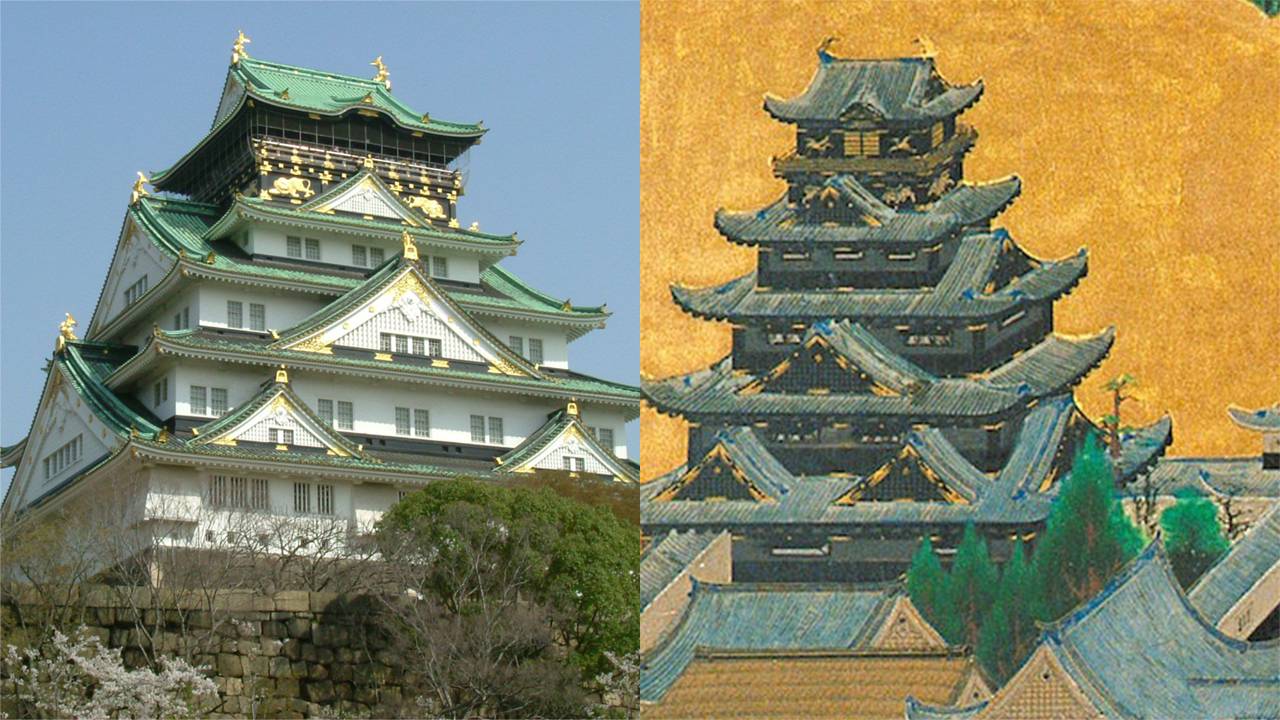
NHK’s taiga drama 『豊臣兄弟!』 is entering its 大詰め (oozume), its final stage, and Japaaan used that moment to look at a striking historical fact: Toyotomi Hideyoshi’s Osaka Castle is still there, buried about seven meters underground beneath the present castle. The piece focuses on the Toyotomi-era keep, the 天守 (tenshu), which was originally a black-lacquered tower rather than the white exterior visitors see today.
As the drama follows Hidenaga ruling from Koriyama Castle in Yamato after the Kishu campaign, and Hideyoshi advancing toward national power with Osaka Castle as his 拠点 (kyoten), or base, the historical Osaka Castle becomes the real subject. According to Japaaan, the castle built under the Tokugawa shogunate after 1615 sits on top of the earlier Toyotomi stronghold.
The castle people see today is not Hideyoshi’s Osaka Castle
Hideyoshi began building a new castle in 1583, the year after defeating Akechi Mitsuhide in the Battle of Yamazaki, on the site of Ishiyama Honganji in Osaka. That castle became a symbol ともいうべき of Hideyoshi as ruler of the realm.
Today’s Osaka Castle is designated a Special Historic Site of Japan, with a towering keep, deep 堀 (hori), or moats, and high stone walls. But the source explains that the current castle layout belongs to the Edo period, after the Toyotomi clan was destroyed in the 1615 Summer Siege of Osaka.
Tokugawa Hidetada, the second shogun, ordered western feudal lords to build a new Osaka Castle. Large amounts of earth were piled over the Toyotomi castle, and new stone walls were built above it. The older castle’s 痕跡 (konseki), or traces, were effectively sealed underground as part of a new political order that replaced Toyotomi rule.
The lost keep was black, lavish, and built to impress
The keep standing now is a 復興 (fukkou), a reconstructed building completed in 1931. It stands on the Tokugawa-era base and is said to have been designed with the Toyotomi keep in mind, but its appearance differs greatly from Hideyoshi’s original tower.
The source points to a scene in episode 41, “Ieyasu’s Ambition,” where Hideyoshi and Hidenaga speak from the top floor of the keep beneath the sky. That scene shows the keep in black, matching historical painted sources such as folding-screen depictions of the Winter and Summer Sieges of Osaka. Those images show the original keep with black lacquered siding.
By contrast, the reconstructed keep seen today is white. The source explains that this was done to match the white-plastered appearance of towers and gates from the Tokugawa period. The Toyotomi keep had stood east of the current one, with five visible exterior levels and decorative roof tiles using gold ふんだんに (fundan ni), lavishly and in great quantity.
Learn Japanese from This Article
Vocabulary
| Japanese | Romaji | Meaning |
|---|---|---|
| 大詰め | oozume | final stage; climax |
| 拠点 | kyoten | base; hub |
| 考察 | kousatsu | consideration; analysis |
| 天守 | tenshu | castle keep |
| 堀 | hori | moat |
| 痕跡 | konseki | trace; remains |
| 復興 | fukkou | reconstruction; restoration |
| ふんだんに | fundan ni | abundantly; lavishly |
Grammar Spotlight
〜ともいうべき
Meaning: should be called; worthy of being called; can be described as
From the article: 今回は、秀吉の天下統一のシンボルともいうべき、豊臣時代の大坂城について考察していきます。 Konkai wa, Hideyoshi no tenka touitsu no shinboru to mo iu beki, Toyotomi jidai no Oosaka-jou ni tsuite kousatsu shite ikimasu. “This time, we will consider Toyotomi-era Osaka Castle, which should be called a symbol of Hideyoshi’s unification of the realm.”
Example: この天守は、豊臣政権の象徴ともいうべき建物でした。 Kono tenshu wa, Toyotomi seiken no shouchou to mo iu beki tatemono deshita. “This keep was a building worthy of being called a symbol of the Toyotomi government.”
Example: 大坂城は、秀吉の権力の中心ともいうべき場所でした。 Oosaka-jou wa, Hideyoshi no kenryoku no chuushin to mo iu beki basho deshita. “Osaka Castle was a place that should be called the center of Hideyoshi’s power.”
〜のちに
Meaning: after; following
From the article: しかしいまの大坂城は、1615年(慶長20年)の大坂夏の陣で豊臣氏が滅亡したのちに、江戸幕府が西国の諸大名に命じて新たにつくった城なのです。 Shikashi ima no Oosaka-jou wa, 1615-nen (Keichou 20-nen) no Oosaka Natsu no Jin de Toyotomi-shi ga metsubou shita nochi ni, Edo bakufu ga saigoku no sho daimyou ni meijite arata ni tsukutta shiro na no desu. “However, the Osaka Castle of today is a castle newly built by order of the Edo shogunate to the western lords after the Toyotomi clan was destroyed in the 1615 Summer Siege of Osaka.”
Example: 戦いののちに、新しい城が築かれました。 Tatakai no nochi ni, atarashii shiro ga kizukaremashita. “After the battle, a new castle was built.”
Example: 豊臣氏が滅亡したのちに、城の姿は大きく変わりました。 Toyotomi-shi ga metsubou shita nochi ni, shiro no sugata wa ookiku kawarimashita. “After the Toyotomi clan fell, the castle’s appearance changed greatly.”
Useful Expressions
地下に眠っている (chika ni nemutte iru) — “lies buried underground” Example: 豊臣時代の大坂城は地下に眠っています。 Toyotomi jidai no Oosaka-jou wa chika ni nemutte imasu. “Toyotomi-era Osaka Castle lies buried underground.”
黒漆塗り (kuro-urushi nuri) — “black lacquered” Example: 本来の天守は黒漆塗りでした。 Honrai no tenshu wa kuro-urushi nuri deshita. “The original keep was black lacquered.”
贅の限りを尽くす (zei no kagiri o tsukusu) — “to spare no expense; to be extremely luxurious” Example: その天守は贅の限りを尽くした建物でした。 Sono tenshu wa zei no kagiri o tsukushita tatemono deshita. “That keep was an extremely luxurious building.”
これからもよろしくお願いします。 Kore kara mo yoroshiku onegaishimasu.