
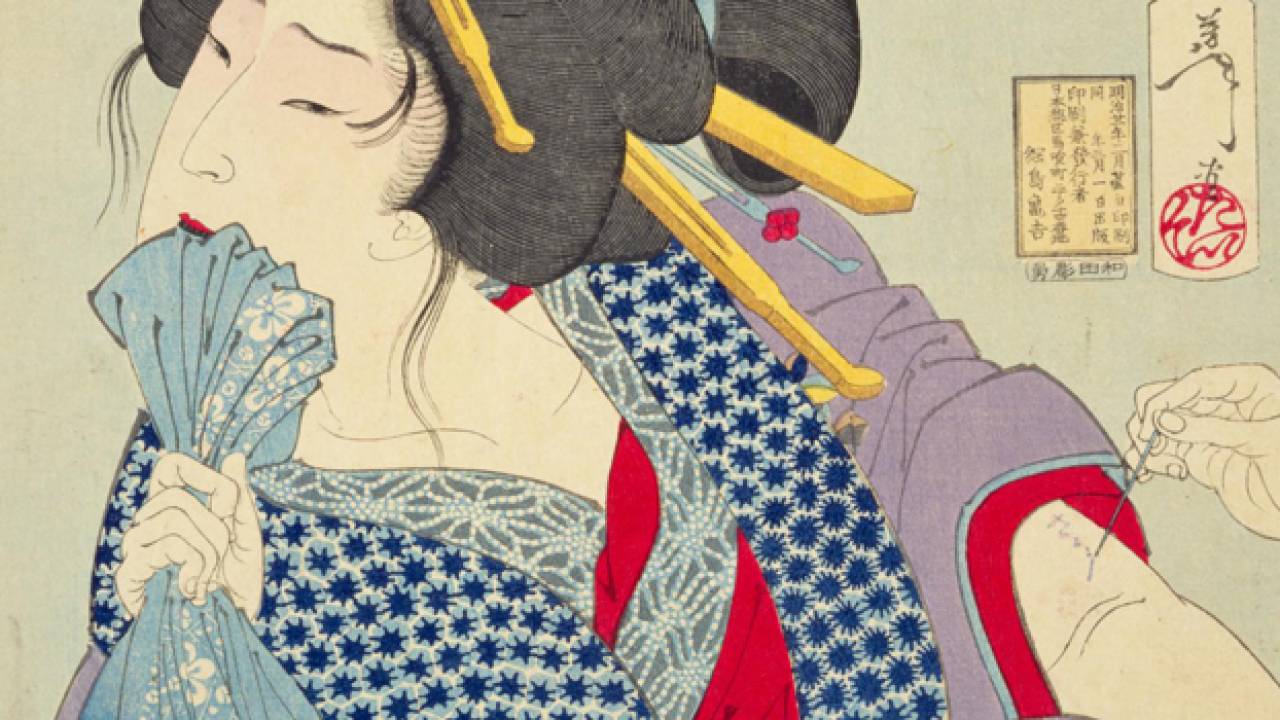
In Edo-period Japan, having more children could push a family toward ruin. A culture piece published by Japaaan explains that behind the era’s often-highlighted sexual openness was a harsh reality: for samurai, farmers, and sex workers alike, pregnancy could threaten daily survival, work, and inheritance.
The piece focuses on 避妊 (hinin), or contraception, as a practical issue rather than a romantic or moral one. While Edo sexuality is often associated with pleasure quarters and ukiyo-e, ordinary life was shaped by 家計 (kakei), labor, and family obligations.
Why many people tried to avoid pregnancy
For lower-ranking samurai, more children meant greater pressure on the household budget. Their 俸禄 (hōroku), a feudal stipend, was granted to the household rather than to an individual, so a growing family did not mean higher pay.
Even daimyō had reasons to limit births. If children from a 妾 (mekake), a concubine, increased, dividing property and handling 相続 (sōzoku), inheritance or succession, became more complicated.
Farmers faced similar problems. Children could become laborers later, but farmland was limited, and 年貢 (nengu), the annual tax placed on agricultural households, remained a burden. Raising a child until they were old enough to work cost time and resources, so more children did not automatically mean more profit.
Among 庶民 (shomin), ordinary people, these were already serious concerns. For courtesans, the issue was even more direct: pregnancy could immediately affect their ability to work, so contraception and abortion became urgent matters.
What contraception looked like in the Edo period
According to Japaaan, people in the Edo period used お灸 (okyū), medicines, and devices in attempts to prevent pregnancy. The source notes clearly that, unlike modern methods, these did not come with reliable proof of effectiveness or safety.
Methods of abortion were also passed down. One reported method was to boil and drink the root of the ground cherry plant, ホオズキ (hōzuki). If that did not work, dried ground-cherry root was supposedly powdered, placed on a bird feather, and applied to the cervical opening.
Devices were used as well. These reportedly included items made from konnyaku and others inserted into the vagina in a way compared to a pessary.
The source also notes that some devices aimed at both contraception and pleasure, including 張形 (harigata), shaped objects used for sexual stimulation without intercourse. Some were carefully designed with attention to form and beauty, showing that sexuality and aesthetics were closely connected.
Learn Japanese from This Article
Vocabulary
| Japanese | Romaji | Meaning |
|---|---|---|
| 庶民 | shomin | common people, ordinary people |
| 家計 | kakei | household finances, family budget |
| 俸禄 | hōroku | stipend, feudal salary |
| 妾 | mekake | concubine, mistress |
| 相続 | sōzoku | inheritance, succession |
| 年貢 | nengu | annual tax, especially agricultural tax in premodern Japan |
| 避妊 | hinin | contraception |
| お灸 | okyū | moxibustion |
Grammar Spotlight
〜がちです — tend to; are apt to
Pattern: Verb stem + がちです
Example: 江戸時代の性文化というと、遊郭や浮世絵など華やかな面が注目されがちです。 Edo jidai no seibunka to iu to, yūkaku ya ukiyo-e nado hanayaka na men ga chūmoku saregachi desu. When people talk about Edo-period sexual culture, the glamorous side, such as pleasure quarters and ukiyo-e, tends to get the attention.
Example: 難しい漢字は読み方を忘れがちです。 Muzukashii kanji wa yomikata o wasuregachi desu. People tend to forget how to read difficult kanji.
〜わけではない — it does not mean that...; it is not necessarily the case that...
Pattern: Plain form + わけではない
Example: 子どもの増加がそのまま農家の利益になるとは限らないでしょう。 Kodomo no zōka ga sono mama nōka no rieki ni naru to wa kagiranai deshō. An increase in children would not necessarily become profit for a farm household.
Related expression with the same idea: 高いものが必ずしも良いわけではないです。 Takai mono ga kanarazushimo ii wake de wa nai desu. Expensive things are not necessarily better.
Useful Expressions
家計を圧迫する Kakei o appaku suru To strain the household budget
仕事に直接影響する Shigoto ni chokusetsu eikyō suru To directly affect one’s work
事情が同じ Jijō ga onaji To be in a similar situation
これからもよろしくお願いします。 Kore kara mo yoroshiku onegaishimasu.