
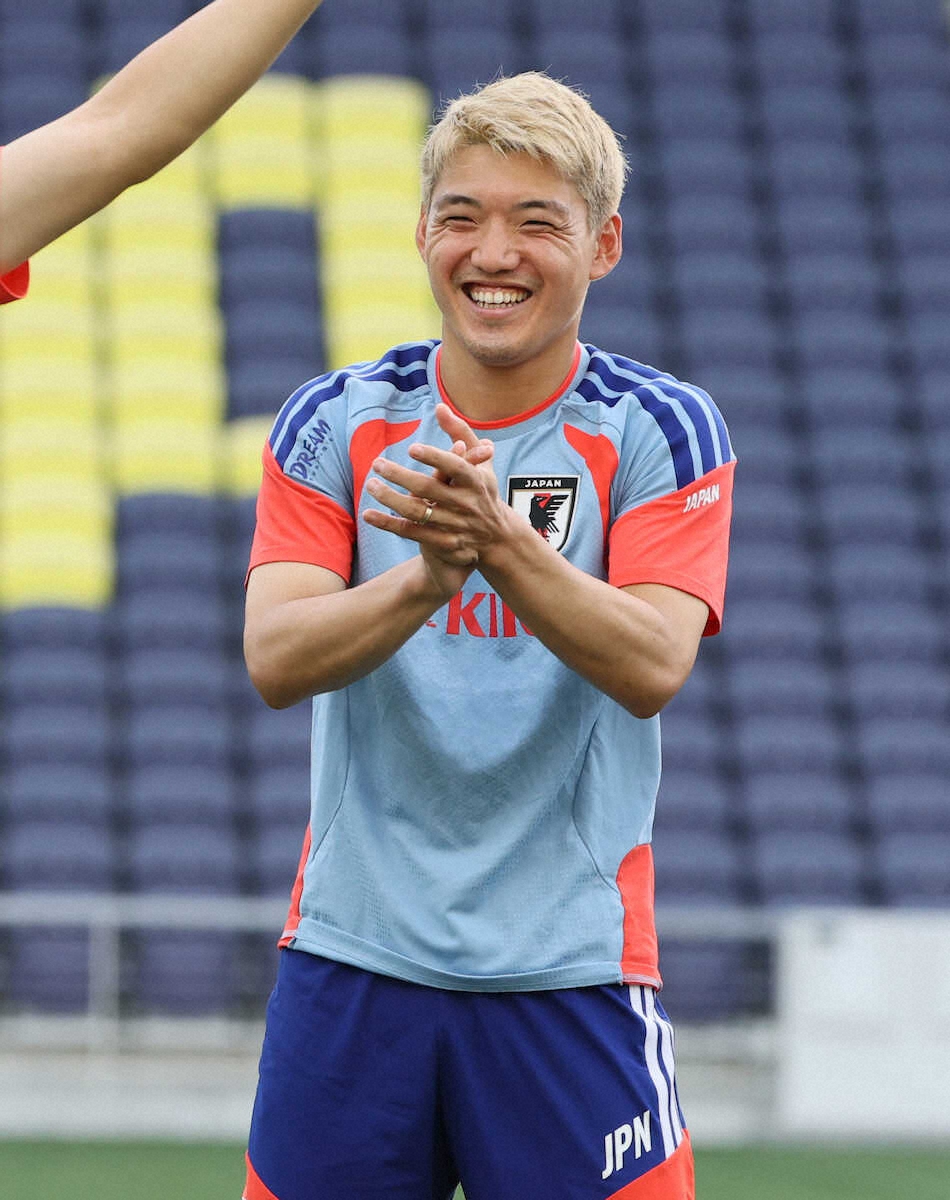
On July 19, Japan national soccer team midfielder Doan Ritsu updated his Instagram and revealed a special dinner photo with two of Japan’s biggest stars.
A Post After the World Cup
The 28-year-old midfielder, who plays for Eintracht Frankfurt, recently returned to Japan after the FIFA World Cup North and Central America tournament. Japan was eliminated in the first round of the knockout stage — 敗退する (haitai suru), meaning “to be defeated” or “to be eliminated.”
After the tournament, Doan 帰国する (kikoku suru), “returned to Japan,” on the 2nd.
On the 19th, he 更新する (kōshin suru), “updated,” his Instagram and 披露する (hirō suru), “publicly shared,” a photo from a dinner gathering. In the picture, Doan is holding a cake at a restaurant, standing alongside two hugely famous figures: comedian Akashiya Sanma and actor Kimura Takuya.
In his caption, Doan wrote:
「こんなにも偉大な方々に応援していただきながらワールドカップを戦えたことを、改めて光栄に思えた時間でした」 Konna ni mo idaina katagata ni ōen shite itadakinagara wārudokappu o tatakaeta koto o, aratamete kōei ni omoeta jikan deshita. “It was a time when I was able to once again feel honored to have fought in the World Cup while receiving support from such great people.”
Let’s break that down in a way that helps you grow your Japanese naturally.
Who Are These “Great People”?
The phrase 偉大な方々 (idaina katagata) means “great people” in a very respectful way.
- 偉大な (idaina) = great, eminent
- 方々 (katagata) = people (honorific plural of 方 kata)
Akashiya Sanma is one of Japan’s most famous comedians and TV personalities, while Kimura Takuya is an extremely popular actor and former member of the idol group SMAP. Referring to them as 偉大な方々 shows deep respect — something you’ll see often in Japanese, especially when speaking about senior or highly accomplished figures.
Cultural Context: Respect and Gratitude
In Japan, expressing humility and gratitude is more than politeness — it’s part of social harmony.
Doan didn’t simply say, “They supported me.” Instead, he used a humble structure:
応援していただく (ōen shite itadaku)
This literally means “to receive the favor of someone supporting (me).” It highlights appreciation and lowers the speaker’s position. Athletes in Japan frequently use this kind of expression when talking about fans, coaches, or supporters.
Notice also the phrase:
こんなにも (konna ni mo) — “so much” or “to such an extent”
It emphasizes how deeply he feels the honor.
Rather than focusing on disappointment after being eliminated, Doan chose to reflect on gratitude. That tone is very characteristic of public statements in Japan.
Learn Japanese from This Article
Let’s turn this news into practical Japanese you can use.
Key Vocabulary
| Japanese | Romaji | Meaning |
|---|---|---|
| 更新する | kōshin suru | to update |
| 披露する | hirō suru | to unveil; to show publicly |
| 敗退する | haitai suru | to be eliminated; to be defeated |
| 帰国する | kikoku suru | to return to one's country |
| 偉大な | idaina | great; eminent |
| 光栄 | kōei | honor; privilege |
| 方々 | katagata | people (honorific plural) |
Try making your own sentence:
日本に帰国しました。 Nihon ni kikoku shimashita. “I returned to Japan.”
写真をインスタグラムで披露しました。 Shashin o insutaguramu de hirō shimashita. “I shared a photo on Instagram.”
Grammar Spotlight
1. 〜ていただく (Humble: “to receive the favor of…”)
Structure: Verb (て-form) + いただく
Used when you receive an action from someone, showing humility and gratitude.
Example from the article:
- 応援していただく ōen shite itadaku “to receive someone’s support”
More examples:
先生に教えていただきました。 Sensei ni oshiete itadakimashita. “I received instruction from my teacher.”
先輩に助けていただきました。 Senpai ni tasukete itadakimashita. “I received help from my senior.”
This structure is extremely common in formal speech and public comments.
2. こんなにも〜 (So much; to such an extent)
Structure: こんなにも + adjective/verb
- こんなにも偉大な方々 Konna ni mo idaina katagata “such great people”
Another example:
- こんなにも多くの人が来ました。 Konna ni mo ōku no hito ga kimashita. “So many people came.”
It adds emotional emphasis — very useful in speeches and heartfelt messages.
Useful Expression
- 光栄に思います。 Kōei ni omoimasu. “I feel honored.”
This is a phrase you’ll hear in interviews, award speeches, and formal settings. It’s polite, humble, and very Japanese in tone.
Continue Learning
Ready to dive deeper? Our lesson on Time and Dates: Tense-Free Expressions will help you master these concepts.
Expressions about returning, updating, and reflecting often rely on understanding how Japanese handles time — and it works differently from English.
Moments like this show how language carries culture. Even in a simple Instagram post, you can see humility, respect, and gratitude woven into every sentence. When you learn Japanese this way — through real voices and real events — you begin to think the way Japanese speakers do.
これからもよろしくお願いします。 Kore kara mo yoroshiku onegaishimasu.