
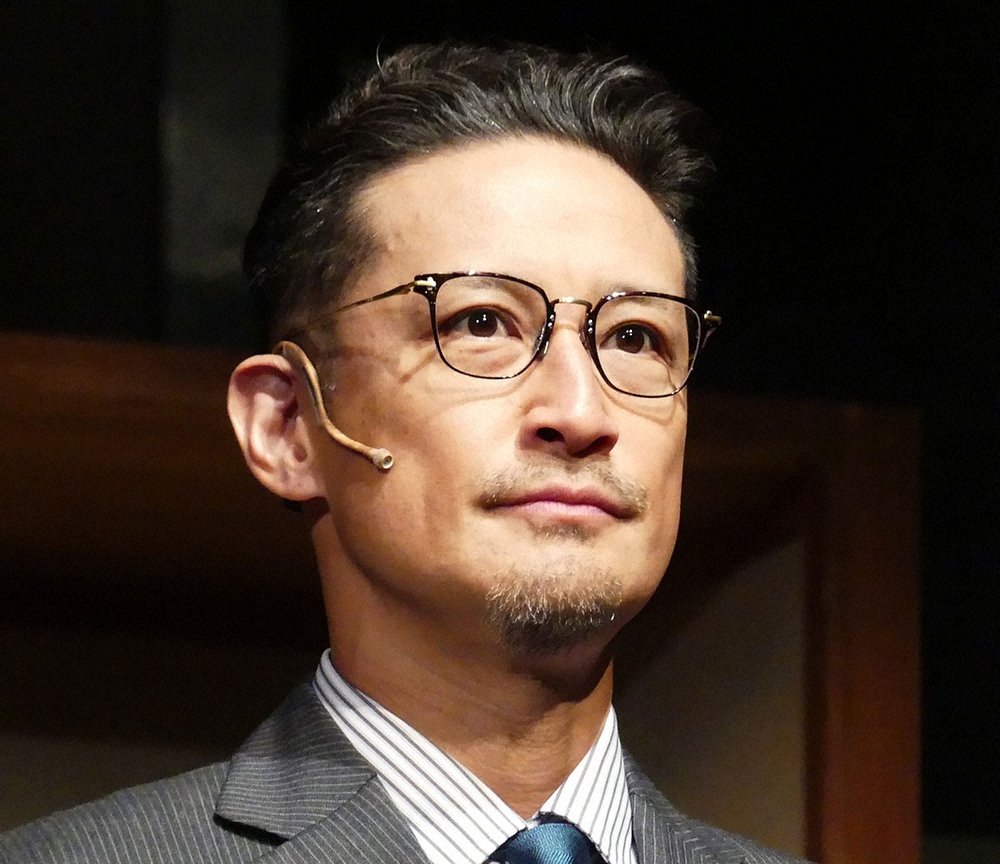
On June 21, former TOKIO member Matsuoka Masahiro (49) revealed on the radio that he unexpectedly ran into a popular actress—right in the middle of Ginza—while she was intensely power-walking.
A Surprise Encounter in Ginza
Matsuoka appeared (出演 shutsuen) on the June 21 broadcast of NACK5’s radio program 「松岡昌宏の彩り埼先端」 (Sunday 7:00 a.m.). During the show, he shared a recent private story.
He explained that he had enjoyed a trip packed with destinations—Nagoya, Kyoto, Shimonoseki, and Fukuoka—traveling by 新幹線 (shinkansen), Japan’s famous bullet train. It was a 盛りだくさん (moridakusan) journey, meaning it was full and eventful.
According to Matsuoka, he returned to Haneda Airport by plane. On the very day he got back, he already had dinner plans—a 約束 (yakusoku), or appointment—with a friend.
Before meeting up, he decided to walk around Ginza.
“She Was Walking Quite Flashily…”
While strolling through the upscale district, Matsuoka noticed someone walking in a striking way.
He said there was “probably a woman” doing something like intense walking exercise. He described the sound and rhythm as “スカスカスカスカッ,” mimicking fast, sharp steps. He remembered thinking:
「随分派手に歩いてんな」 Zuibun hade ni aruiten na. “She’s walking quite flashily.”
The word 随分 (zuibun) means “quite” or “very,” often with a nuance of surprise at the degree of something.
Then, he said, the person suddenly turned around and walked briskly back toward him—“スタスタスタスタッ,” another sound-symbolic expression capturing quick footsteps.
That’s when she called out:
「松岡くん」 Matsuoka-kun. “Matsuoka-kun.”
In other words, the person he had been watching so curiously turned out to be a popular actress who recognized him and 声をかけた (koe o kaketa)—called out to him.
Matsuoka 遭遇した (sōgū shita)—he encountered her by chance in the middle of Ginza.
Cultural Context: Ginza and Chance Encounters
Ginza is one of Tokyo’s most famous districts, known for luxury brands, department stores, and stylish cafés. It’s a place where celebrities might blend in more easily than you’d expect—especially in a city as large as Tokyo.
In Japanese entertainment news, it’s common for celebrities to casually mention personal stories during radio or TV appearances. These glimpses into everyday life make public figures feel more relatable. Running into someone by coincidence—遭遇する (sōgū suru)—often becomes a light, humorous anecdote, just like in this story.
You may also notice how vivid Matsuoka’s storytelling is. Japanese often uses sound-symbolic words (オノマトペ, onomatope) like “スカスカ” and “スタスタ” to bring scenes to life. These expressions are extremely common in everyday speech in Japan.
Learn Japanese from This Article
Let’s break down key words and grammar that appear in this story.
Vocabulary
| Japanese | Romaji | Meaning |
|---|---|---|
| 出演 | shutsuen | appearance (on TV, radio, stage) |
| 遭遇する | sōgū suru | to encounter; to run into (by chance) |
| 新幹線 | shinkansen | bullet train |
| 盛りだくさん | moridakusan | full of; packed with |
| 約束 | yakusoku | promise; appointment |
| 声をかける | koe o kakeru | to call out to; to speak to someone |
| 随分 | zuibun | quite; very; considerably |
Try making your own sentence:
- 昨日、駅で友だちに遭遇した。 Kinō, eki de tomodachi ni sōgū shita. “Yesterday, I ran into a friend at the station.”
Grammar Spotlight ①: 〜たことを明かした
Pattern: Plain past verb + ことを明かした
Meaning: “revealed that…” / “disclosed that…”
This is very common in news reporting.
Example from the article (structure-wise):
- 旅を楽しんだことを明かした。 Tabi o tanoshinda koto o akashita. “He revealed that he enjoyed the trip.”
More examples:
- 結婚したことを明かした。 Kekkon shita koto o akashita. “(He/She) revealed that (they) got married.”
- 病気だったことを明かした。 Byōki datta koto o akashita. “(He/She) disclosed that (they) had been ill.”
You’ll see this structure constantly in entertainment and celebrity news.
Grammar Spotlight ②: 〜ていたといい
Pattern: Verb (て-form + いた) + といい
Meaning: “It is said that…” / “According to (him/her), … was doing…”
This softens the statement and shows reported speech.
Example from this story:
- ウオーキング的なことをしていたといい… Uōkingu-teki na koto o shite ita to ii… “He said that (she) was doing something like walking exercise…”
This structure is very typical in written news summaries.
Useful Expression: 随分〜
随分 + adjective/verb
Adds emphasis, often with mild surprise.
- 随分寒いね。 Zuibun samui ne. “It’s quite cold, isn’t it?”
- 随分歩いたね。 Zuibun aruita ne. “We walked quite a lot.”
It feels more conversational than simply saying とても (totemo, “very”).
Continue Learning
📚 Working on your reading skills? Our Introduction to Kanji: Pictorial Foundations of Japanese Script lesson is a great next step.
Introduction to Kanji: Pictorial Foundations of Japanese Script
📚 Ready to dive deeper? Our lesson on Honorifics: Keigo for Respectful Dialogue will help you master these concepts.
📚 Want to learn more about culture? Check out our lesson on Basic Vocabulary Building: Embracing Words Without Latin Ties.
Basic Vocabulary Building: Embracing Words Without Latin Ties
これからもよろしくお願いします。 Kore kara mo yoroshiku onegaishimasu.