
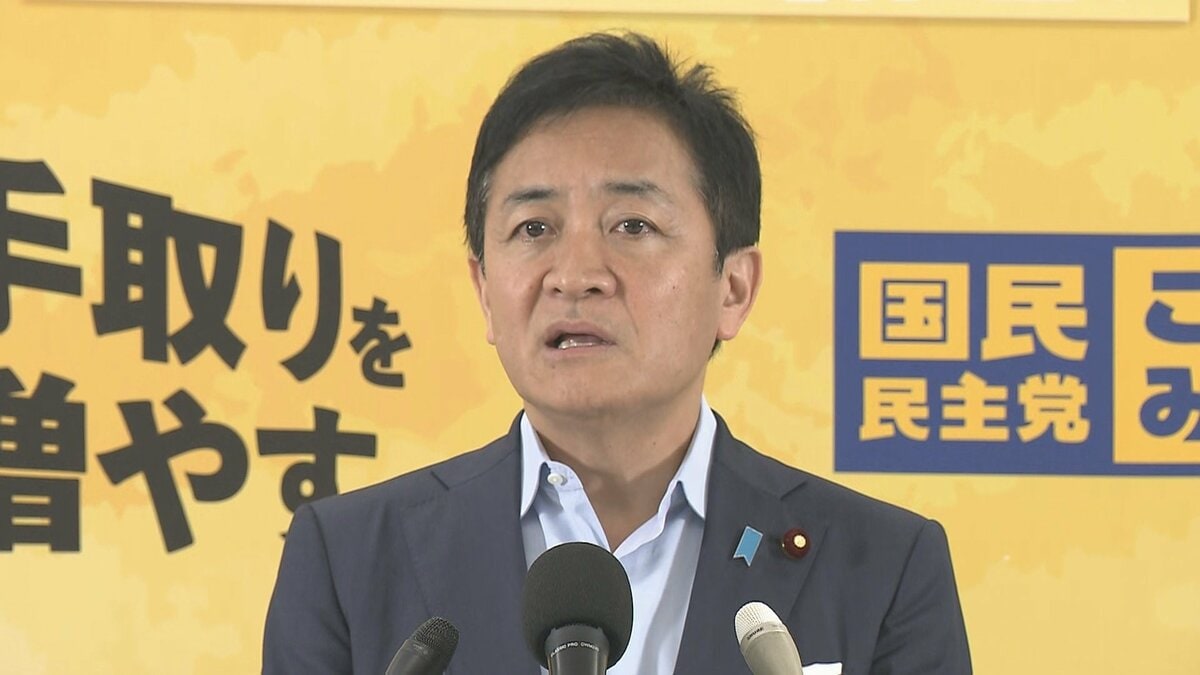
「自民党内で修正機能が働かないことが今回明らかになったわけですよね。」 “It has become clear this time that the corrective function within the Liberal Democratic Party isn’t working, hasn’t it?”
With those words, 国民民主党の玉木雄一郎代表 (daihyō, representative/leader) sharply 批判しました (hihan shimashita, criticized) the ruling Liberal Democratic Party (LDP).
The criticism came after it was reported that within the LDP, a proposal to lower the 消費税 (shōhizei, consumption tax) on food items to 1% for two years starting next April had received 大筋で了承 (ōsuji de ryōshō, approval in principle).
What Happened?
According to the report, members within the LDP broadly agreed in principle to 引き下げる (hikisageru, lower) the consumption tax on food products to 1% for a two-year period beginning in April next year.
In response, Tamaki said:
「自民党内で修正機能が働かないことが今回明らかになったわけですよね。」 “It has become clear that a corrective function within the LDP is not operating.”
The phrase 明らかになる (akiraka ni naru) means “to become clear” or “to be revealed.” Here, Tamaki argues that the situation has revealed a deeper issue within the ruling party.
He continued with a striking metaphor:
「こんなに問題があるって言っているのに、そのままそれでいってしまうということは、ブレーキもアクセルもハンドルも何も付いてないわけじゃないですか」 “Even though people are saying there are so many problems, to just go ahead as it is — isn’t that like having no brakes, no accelerator, no steering wheel — nothing at all?”
Through this imagery, he suggested that the party is moving forward without proper internal checks or control mechanisms.
Understanding the Political Context
In Japanese politics, parties often debate policy proposals internally before making official decisions. The term 修正機能 (shūsei kinō, corrective function) refers to the ability of a group to adjust, revise, or fix a policy when problems are pointed out.
Tamaki’s criticism implies that such internal debate or correction is not functioning effectively within the LDP regarding the proposed tax cut.
The issue itself centers on the 消費税 (shōhizei), Japan’s consumption tax, which applies broadly to goods and services. Food taxation is often a sensitive topic because it directly affects everyday living costs.
Learn Japanese from This Article
Let’s break down the key vocabulary and grammar so you can use them yourself.
Key Vocabulary
| Japanese | Romaji | Meaning |
|---|---|---|
| 消費税 | shōhizei | consumption tax |
| 引き下げる | hikisageru | to lower; to reduce |
| 大筋で了承 | ōsuji de ryōshō | approval in principle |
| 修正機能 | shūsei kinō | corrective function |
| 明らかになる | akiraka ni naru | to become clear |
| 批判する | hihan suru | to criticize |
| 代表 | daihyō | representative; leader |
Notice how many of these words are written in kanji that combine meaning-rich characters. For example:
- 消 (extinguish, spend) + 費 (expense) + 税 (tax) → 消費税 (shōhizei) Understanding kanji building blocks makes political and economic news much easier to read.
Grammar Spotlight 1: 〜ことについて
Structure: Verb (dictionary form) + ことについて
Meaning: “about…” or “regarding…”
From the article: 食料品の消費税を来年4月から2年間、1%に引き下げることについて “Regarding lowering the consumption tax on food to 1% for two years starting next April…”
More examples:
日本の政治について勉強しています。 Nihon no seiji ni tsuite benkyō shite imasu. I’m studying about Japanese politics.
この問題について話しましょう。 Kono mondai ni tsuite hanashimashō. Let’s talk about this issue.
This pattern is essential when discussing news, opinions, or academic topics.
Grammar Spotlight 2: 〜わけじゃないですか
Structure: Plain form + わけじゃないですか
Meaning: “Isn’t it the case that…?” Often used to emphasize a point or seek agreement.
From the quote:
何も付いてないわけじゃないですか “Isn’t it like having nothing attached?”
This expression adds rhetorical force. The speaker isn’t really asking a question — they’re emphasizing their view and inviting the listener to agree.
More examples:
それは難しいわけじゃないですか。 Sore wa muzukashii wake ja nai desu ka. It’s difficult, isn’t it?
時間がないわけじゃないですか。 Jikan ga nai wake ja nai desu ka. We don’t have time, do we?
You’ll hear this often in political speeches and interviews.
Useful Expression
そのままそれでいってしまう Sono mama sore de itte shimau “To just go ahead as it is (without change)”
The addition of 〜てしまう often implies something happening completely, sometimes with regret or criticism.
Continue Learning
Working on your reading skills? Our Introduction to Kanji: Pictorial Foundations of Japanese Script lesson is a great next step.
Curious about the Japanese used here? Our Honorifics: Keigo for Respectful Dialogue lesson covers this in depth.
Want to learn more about culture? Check out our lesson on Basic Vocabulary Building: Embracing Words Without Latin Ties.
Political news can feel dense, but once you start recognizing patterns like 〜ことについて and powerful rhetorical phrases like 〜わけじゃないですか, you’ll find that Japanese debates become much more accessible.
Keep reading, keep noticing patterns, and your understanding will steadily grow.
これからもよろしくお願いします。 Kore kara mo yoroshiku onegaishimasu.