
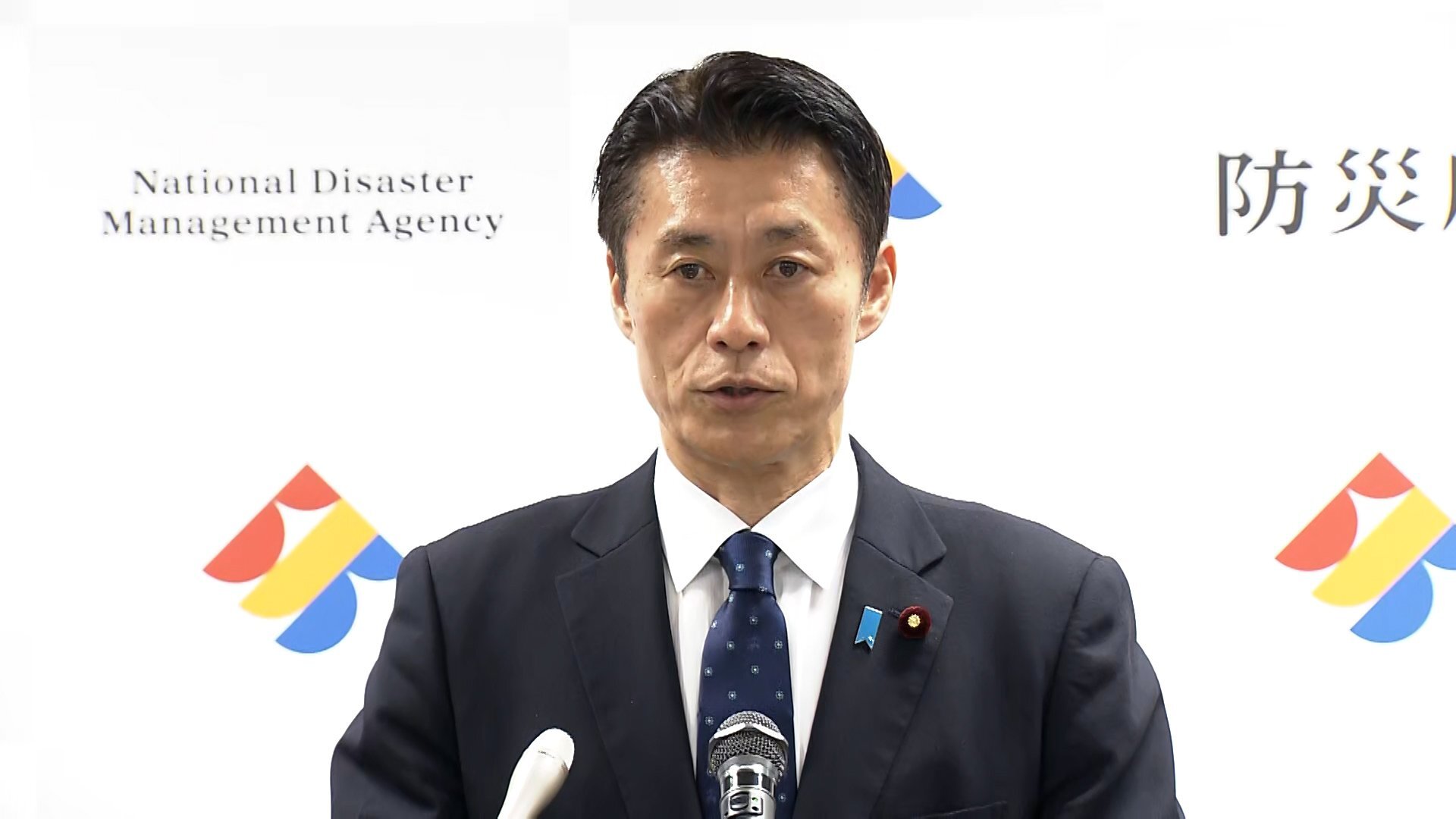
Japan launched the new Disaster Prevention Agency on November 2, and its first minister, 細野豪志 (Hosono Gōshi), immediately issued an emergency request to the entire public. He asked people to thoroughly prepare for disasters in advance, including keeping at least three days of water, food, and portable toilets at home, and preferably enough for one week.
According to Yahoo Japan, the new agency will serve as the national command center for disaster response, handling the full chain from advance preparation to recovery and reconstruction. The cabinet also formally approved Hosono as the first disaster prevention minister on the same day.
What the emergency request asked people to do
Hosono said the agency’s top priority is preparing for what he called “national-crisis-level disasters.” In that message, he urged the public to fully carry out 事前防災 (jizen bōsai), or advance disaster preparedness, based on the idea that “your own life should be protected by yourself.”
The emergency request listed five actions. First, people should get a 耐震診断 (taishin shindan), or seismic inspection, for homes built before 1981, strengthen them if needed, and secure furniture. The statement warns that in a major earthquake, unsecured furniture should be assumed to fall.
Second, people should prepare 備蓄 (bichiku), or emergency stockpiles, of water, food, portable toilets, tissues, and toilet paper. The request says households should keep at least three days’ worth, and ideally one week’s worth, with drinking water calculated at three liters per person per day, including water used for meals.
Third, people should check hazard maps, including earthquake shaking maps and tsunami hazard maps, to understand the risks around their home and workplace. They should also confirm their 避難場所 (hinan basho), evacuation site, and 避難経路 (hinan keiro), evacuation route.
Fourth, they should prepare an emergency grab bag and keep it in an easy-to-carry place such as near the entrance. Fifth, they should join local disaster drills, practice evacuation, safety checks, meal distribution, and the use of simple toilets, and build cooperative relationships with ご近所 (gokinjo), nearby neighbors.
What the government will check next
Hosono also issued urgent requests to central government ministries and prefectures. For ministries, those requests include checking and revising BCPs and promoting disaster-prevention measures. For prefectures, they include improving evacuation living conditions through stockpiling and related steps, making disaster agreements, ensuring those agreements actually work, and supporting municipalities.
The government plans to have both central ministries and prefectures report their progress by the end of the year. After that review, it may issue further requests, and if needed, the Disaster Prevention Agency plans to use its power to make formal recommendations to central ministries.
Learn Japanese from This Article
Vocabulary
| Japanese | Romaji | Meaning |
|---|---|---|
| 発足 | hossoku | launch, establishment, inauguration |
| 備蓄 | bichiku | stockpile, emergency storage |
| 避難場所 | hinan basho | evacuation site, shelter location |
| 避難経路 | hinan keiro | evacuation route |
| 耐震診断 | taishin shindan | seismic inspection, earthquake-resistance assessment |
| 徹底 | tettei | thoroughness, complete enforcement |
| ご近所 | gokinjo | neighbors, neighborhood |
Grammar Spotlight
〜とは限らない: not necessarily; cannot say that ~ always happens
Pattern: 普通形 + とは限らない
From the article: 大災害では、すぐに助けが来るとは限りません。 Daisaigai de wa, sugu ni tasuke ga kuru to wa kagirimasen. In a major disaster, help will not necessarily come right away.
Example: 日本では、地震のあとに電気がすぐ戻るとは限りません。 Nihon de wa, jishin no ato ni denki ga sugu modoru to wa kagirimasen. In Japan, electricity does not necessarily come back immediately after an earthquake.
Example: 避難場所が近くても、そこまで安全に行けるとは限りません。 Hinan basho ga chikakute mo, soko made anzen ni ikeru to wa kagirimasen. Even if an evacuation site is nearby, you cannot assume you can get there safely.
〜よう要請する: to request that someone do ~
Pattern: 動詞辞書形 / ない形 + よう要請する
From the article: このため、国民のみなさまに対し、次のことをあらためて徹底するよう要請します。 Kono tame, kokumin no minasama ni taishi, tsugi no koto o aratamete tettei suru yō yōsei shimasu. For this reason, we request that all citizens once again thoroughly carry out the following items.
Example: 政府は各家庭に水と食料を備蓄するよう要請しました。 Seifu wa kakukatei ni mizu to shokuryō o bichiku suru yō yōsei shimashita. The government requested that each household stockpile water and food.
Example: 学校は生徒に避難経路を確認するよう要請しました。 Gakkō wa seito ni hinan keiro o kakunin suru yō yōsei shimashita. The school requested that students check their evacuation routes.
Useful Expressions
自らの命は自らが守る Mizukara no inochi wa mizukara ga mamoru. Protect your own life by yourself.
非常持ち出し品 hijō mochidashihin emergency grab-bag items
家具の固定 kagu no kotei securing furniture
Continue Learning
- Conditional Forms: Tara, Ba, To Hypotheticals: Want to use 〜らない from this article yourself? Our Conditional Forms: Tara, Ba, To Hypotheticals lesson covers it.
これからもよろしくお願いします。 Kore kara mo yoroshiku onegaishimasu.