
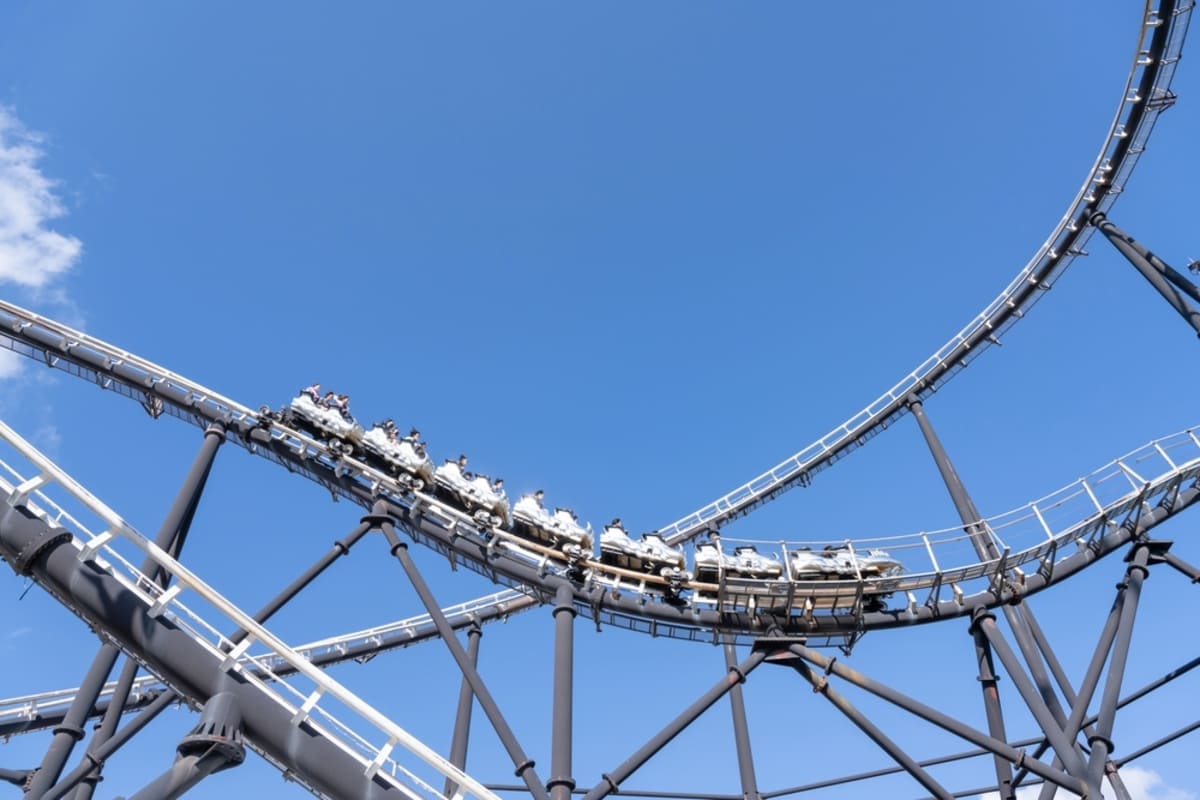
約19億9030万円。 That’s the estimated total financial damage if the famous roller coaster murder from Detective Conan happened at a real Japanese theme park.
On June 30, 2026, Japanese media outlet Livedoor reported a fascinating calculation: what would the “Jet Coaster Murder Case” from 『名探偵コナン FILE.1 平成のホームズ』 (Meitantei Konan: Heisei no Hōmuzu) actually cost in the real world?
Let’s break down the numbers—through business, law, and of course, Japanese language.
The Direct Business Losses
The fictional crime takes place at Tropical Land. For a real-world comparison, the article uses data from パルケエスパーニャ(志摩スペイン村) (Parque España, Shima Spain Village), which inspired a later Conan movie setting.
1. Lost Revenue Due to Business Suspension
One key term here is 営業停止 (eigyou teishi) — “business suspension.”
According to 2024 data, Parque España had 1.42 million annual visitors. That works out to about 3,890 guests per day. Ticket revenue alone would average about 22.95 million yen per day.
If a murder occurred and the park closed for three days due to refunds and investigation:
- 22.95 million yen × 3 days = 約6885万円 in lost 売上 (uriage, sales revenue)
Notice how Japanese often expresses cause using:
- 事件による営業停止 jiken ni yoru eigyou teishi “business suspension due to the incident”
The grammar 〜による/〜によって means “due to” or “caused by.”
2. Inspection and Operating Costs
Even during closure, costs continue.
Based on financial reports from Kintetsu Group Holdings (which operates tourism facilities), about 2.6 billion yen is spent annually on operating expenses such as:
- Labor
- Depreciation
- Outsourced management
If the park closed for three days, wasted operating expenses plus special cleaning and part replacements would total:
- 約2145万円
This includes extraordinary inspection costs that would arise in the case that a murder occurred:
- 事件が起きた場合 jiken ga okita baai “in the case that an incident occurred”
The grammar 〜た場合 means “if” or “in the event that.”
3. Reputational Damage
Now we get to a uniquely Japanese concept: 風評被害 (fuuhyou higai).
This means “damage caused by rumors or negative publicity.” It’s frequently used in news about food safety, disasters, or scandals.
A roller coaster labeled as:
- 「人が殺されたコースター」 hito ga korosareta kōsutā “the coaster where someone was killed”
…would likely scare away visitors for months.
The article estimates that if annual attendance dropped by 20%, revenue could fall by:
- 約18億円
However, proving 因果関係 (inga kankei, causal relationship) between the crime and reduced revenue would be legally difficult. Media coverage, public psychology, and PR efforts all influence outcomes.
How Much Would the Criminal Pay?
In reality, a perpetrator cannot automatically be forced to pay every business loss. But in a civil lawsuit, certain payments are possible.
Compensation to the Victim’s Family
The legal term for compensation is:
- 賠償金 (baishoukin)
This includes:
- 逸失利益 (isshitsu rieki) — lost future earnings
- 慰謝料 (isharyou) — emotional damages
If the victim were a 22-year-old university student, estimated lost lifetime earnings would be:
- 約8706万円
Pain and suffering damages for an unmarried young adult are estimated at:
- 2000万〜2500万円
Including funeral costs, total compensation to the family could reach:
- 約1億円規模
What About the Theme Park’s Responsibility?
Another key legal word: 過失 (kashitsu) — negligence.
If the perpetrator escaped the safety bar using a trick, investigators might argue the park failed to properly confirm safety before departure.
If negligence were recognized:
- Part of the economic damage could be attributed to the park.
- The criminal’s financial burden might decrease.
The article notes that reputational damage claims are especially hard to enforce because proving 因果関係 is complex.
For its final estimate, however, the calculation assumes no negligence by the park.
The Grand Total
Adding together:
- 3 days of lost sales
- Operating and inspection costs
- 20% annual revenue drop
- Family compensation
The estimated total reaches:
- 約19億9030万円
That’s nearly 2 billion yen—far beyond what an individual could realistically pay.
In real life, such cases are often settled privately or covered by corporate insurance.
Behind Conan’s brilliant deductions lies a financial reality so large that, as the article suggests, a criminal might never fully repay it in a lifetime.
Cultural Context: Why This Analysis Feels So Japanese
Japanese media often analyzes fictional scenarios with serious economic or legal frameworks. You’ll frequently see:
- Business-style breakdowns
- Government data references
- Legal terminology
It reflects Japan’s strong focus on responsibility, accountability, and systems thinking.
Even in pop culture, the question isn’t just “Who did it?” It’s also: “Who pays—and how much?”
Learn Japanese from This Article
Key Vocabulary
| Japanese | Romaji | Meaning |
|---|---|---|
| 営業停止 | eigyou teishi | business suspension |
| 売上 | uriage | sales, revenue |
| 風評被害 | fuuhyou higai | damage from rumors/negative publicity |
| 賠償金 | baishoukin | compensation, damages |
| 逸失利益 | isshitsu rieki | lost future earnings |
| 過失 | kashitsu | negligence |
| 因果関係 | inga kankei | causal relationship |
Grammar Spotlight
1. 〜による/〜によって
Meaning: due to; caused by
Pattern: Noun + による/によって
Example:
事件による営業停止で売上が減少した。 Jiken ni yoru eigyou teishi de uriage ga genshou shita. Sales decreased due to the incident.
風評被害によって客足が遠のいた。 Fuuhyou higai ni yotte kyakuashi ga too noita. Customers stayed away due to reputational damage.
2. 〜た場合
Meaning: in the case that; if
Pattern: Verb (past plain form) + 場合
Example:
事件が起きた場合、営業停止になる。 Jiken ga okita baai, eigyou teishi ni naru. If an incident occurs, business operations will be suspended.
来場者が20%減少した場合、売上も減る。 Raijousha ga 20-pāsento genshou shita baai, uriage mo heru. If visitors decrease by 20%, sales will also fall.
Useful Expression
- 桁違いの金額 ketachigai no kingaku “an amount on a completely different scale”
Continue Learning
📚 Working on your reading skills? Our Introduction to Kanji: Pictorial Foundations of Japanese Script lesson is a great next step.
Introduction to Kanji: Pictorial Foundations of Japanese Script
📚 Curious about the Japanese used here? Our Honorifics: Keigo for Respectful Dialogue lesson covers this in depth.
📚 Want to learn more about culture? Check out our lesson on Basic Vocabulary Building: Embracing Words Without Latin Ties.
Basic Vocabulary Building: Embracing Words Without Latin Ties
これからもよろしくお願いします。 Kore kara mo yoroshiku onegaishimasu.