
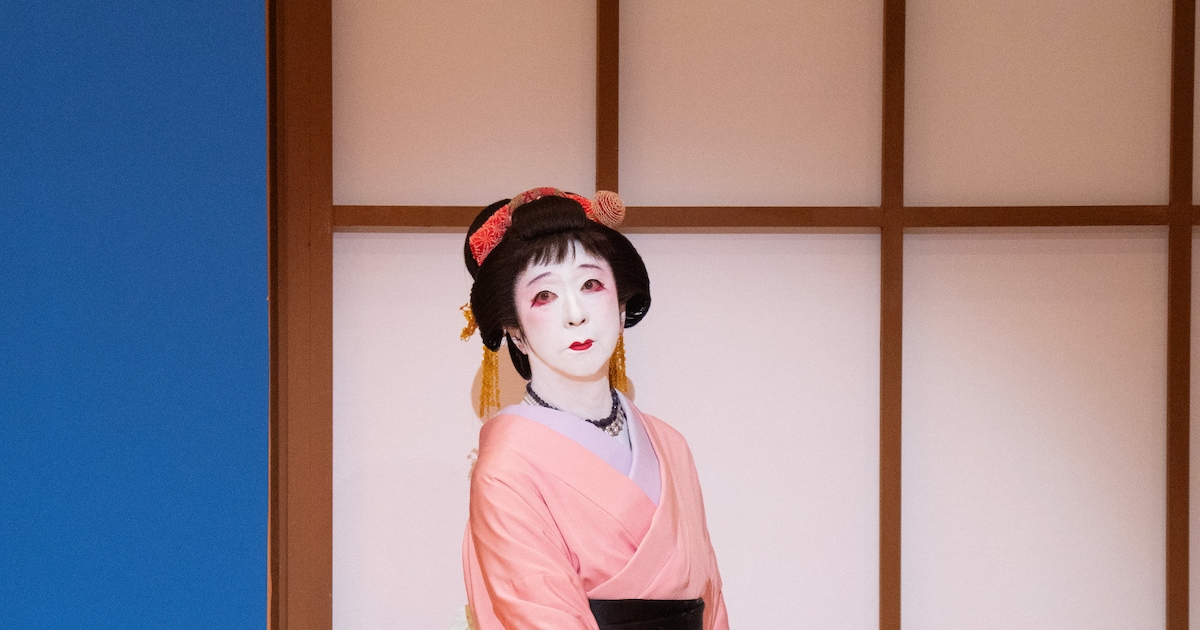
On April 8, 2026, 「坂東玉三郎特別公演」 (Bandō Tamasaburō tokubetsu kōen, “Bando Tamasaburo Special Performance”) officially opened—or 開幕 (kaimaku)—at Tokyo’s Shinbashi Enbujo Theater. It marks his first full performance run at this historic venue in 30 years, a true 〜ぶりの (~buri no) moment for kabuki fans.
For audiences, this isn’t just a stage performance. It’s a rare opportunity to 堪能する (tannou suru), to fully savor, the many artistic talents of one of kabuki’s most celebrated performers.
A Return to Shinbashi Enbujo After 30 Years
Tamasaburo last appeared in a full-scale performance at Shinbashi Enbujo in February 1996. His 2026 return is described as 30年ぶりの本公演 (sanjū-nen buri no honkōen), “a full performance for the first time in 30 years.”
In kabuki, long gaps between major theater appearances can make returns especially meaningful. Shinbashi Enbujo is one of Tokyo’s most important kabuki venues, so this comeback carries both historical and emotional weight.
The special performance runs from April 8 to April 23, 2026.
A Program Showcasing Many Talents
This event is more than a traditional kabuki play. It’s structured as a multi-part program highlighting Tamasaburo’s wide-ranging artistry.
1. A Formal Greeting and Costume Commentary
The performance begins with a 口上 (koujou), a formal stage greeting. In kabuki, a 口上 is a ceremonial speech delivered directly to the audience.
During this segment, Tamasaburo greets the audience と共に (to tomo ni, “together with” or “at the same time as”) offering explanations of costumes from famous works such as:
- 「吉田屋」 (Yoshidaya)
- 「天守物語」 (Tenshu Monogatari)
- 「阿古屋」 (Akoya)
He appears wearing these elaborate costumes—described in Japanese as 衣裳を身にまとう (ishō o mi ni matou), meaning “to wear (elegant attire).” The verb 身にまとう carries a refined nuance, often used for formal or artistic clothing rather than everyday wear.
For learners, this is a great example of how Japanese uses specific verbs to match the cultural weight of an action.
2. Musical Performance: Three String Instruments
Next comes 「三曲糸の調べ」 (Sankyoku Ito no Shirabe), where Tamasaburo performs on three traditional instruments:
- 琴 (koto)
- 三味線 (shamisen)
- 胡弓 (kokyū)
Rather than acting, he demonstrates his musical skill, reminding audiences that kabuki actors often train across multiple traditional arts.
3. Film Screening: “Yumeji Bojo”
The program also includes a screening of 「夢二慕情」 (Yumeji Bojo). Originally staged in 1984, this work has been newly filmed as a visual production for this event.
This blending of stage and film reflects kabuki’s ongoing adaptation to modern media while preserving classical aesthetics.
4. The Grand Finale: “Nagasaki Jūnikei”
The 締めくくり (shimekukuri, “grand finale”) of the performance is the dance drama 「長崎十二景」 (Nagasaki Jūnikei, “Twelve Scenes of Nagasaki”).
The music is based on a suite composed by Yuize Shin’ichi, inspired by famous paintings by Takehisa Yumeji. Tamasaburo plays a beautiful woman, while actor Shindō Gaku portrays the man who spends a romantic meeting with her.
The work is 披露される (hirou sareru, “presented” or “showcased”) as the climactic conclusion of the evening.
A Special Cinema Event on April 24
On April 24, a separate event titled:
「坂東玉三郎 シネマのひととき-口上と衣裳解説付き-」 (Bandō Tamasaburō: Cinema no Hitotoki – with Koujou and Costume Commentary)
will be 開催される (kaisai sareru, “held”).
At this event, Tamasaburo appears in different costumes from the main program and delivers another 口上 before the screening.
Two different cinema kabuki programs will be shown:
- 1:00 PM: 「京鹿子娘二人道成寺」 (Kyōkanoko Musume Ninin Dōjōji)
- 5:00 PM: 「二人藤娘」 (Ninin Fujimusume) and 「鷺娘」 (Saginomusume)
Cinema kabuki allows filmed performances to be shown on screen, expanding access beyond live theater audiences.
Cultural Context: Why This Matters in Kabuki
In kabuki, longevity and continuity are deeply respected. A return after 30年ぶり is not just about time—it highlights endurance, artistic legacy, and the connection between performer and theater.
The inclusion of:
- 口上 (formal greetings)
- Costume explanation
- Instrument performance
- Dance drama
- Film screenings
shows how traditional arts in Japan are preserved と共に evolving with modern formats.
Tamasaburo is especially known for portraying female roles (onnagata), making performances like 「長崎十二景」 particularly anticipated by fans.
Learn Japanese from This Article
Let’s turn this news into a learning opportunity.
Key Vocabulary
| Japanese | Romaji | Meaning |
|---|---|---|
| 開幕 | kaimaku | opening (of a show or event) |
| 堪能する | tannou suru | to fully enjoy; to savor |
| 口上 | koujou | formal stage greeting or speech |
| 身にまとう | mi ni matou | to wear (elegant/formal clothing) |
| 締めくくり | shimekukuri | conclusion; finale |
| 披露する | hirou suru | to present; to showcase |
| 開催される | kaisai sareru | to be held (event) |
Try making your own sentence with 堪能する. For example:
- 日本の伝統芸能を堪能しました。 Nihon no dentō geinō o tannou shimashita. “I fully enjoyed Japan’s traditional performing arts.”
Grammar Spotlight
1. 〜ぶりの — “For the first time in ~”
Structure: [Time period] + ぶりの + Noun
Example from the article:
- 30年ぶりの本公演 Sanjū-nen buri no honkōen “A full performance for the first time in 30 years”
More examples:
- 5年ぶりの再会です。 Go-nen buri no saikai desu. “It’s our first reunion in five years.”
- 1か月ぶりの休みです。 Ikkagetsu buri no yasumi desu. “It’s my first day off in a month.”
2. 〜と共に — “Together with” / “At the same time as”
Structure: Noun + と共に
Example:
- あいさつを述べると共に、衣裳を解説する。 Aisatsu o noberu to tomo ni, ishō o kaisetsu suru. “He gives greetings together with explaining the costumes.”
This pattern sounds formal and is often used in speeches and written Japanese.
Useful Expression
身にまとう vs 着る
- 着る (kiru) = to wear (neutral, everyday)
- 身にまとう (mi ni matou) = to wear (elegant, artistic, dignified nuance)
Kabuki costumes are not simply “worn”—they are 身にまとう.
Continue Learning
📚 Working on your reading skills? Our Katakana Essentials: Adapting Global Words to Japanese lesson is a great next step.
📚 Working on your reading skills? Our Introduction to Kanji: Pictorial Foundations of Japanese Script lesson is a great next step.
Introduction to Kanji: Pictorial Foundations of Japanese Script
📚 Curious about the Japanese used here? Our Basic Vocabulary Building: Embracing Words Without Latin Ties lesson covers this in depth.
Basic Vocabulary Building: Embracing Words Without Latin Ties
これからもよろしくお願いします。 Kore kara mo yoroshiku onegaishimasu.