
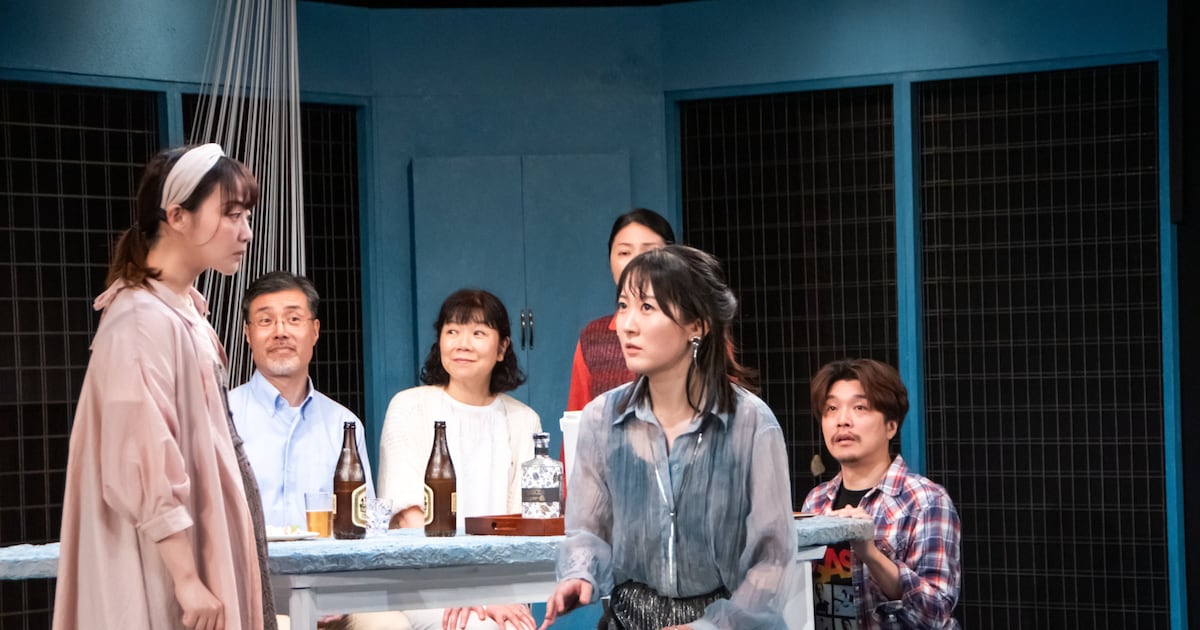
On May 20, 2026, 果報プロデュース vol.3「A Perfect Family」 opened in Tokyo at Kita-Topia Pegasus Hall. The new stage production is described as a “non-romantic comedy” and marks a major milestone for the company.
A Newly Written “Non-Romantic Comedy”
This production features a 書き下ろし (kakioroshi), a script newly written specifically for this project, by playwright 米内山陽子 (Yonebayashi Yōko).
The story centers on Rumi, a 30-year-old woman living in Tokyo who 自認する (jininsuru) as aromantic and asexual. The plot 〜ところから始まる (tokoro kara hajimaru), “begins from the point when,” her parents in Hiroshima suggest she attend a 見合い (miai), an arranged marriage meeting.
From this starting point, the play asks a powerful question: What is an “ideal family”? Rather than presenting a typical love story, it unfolds as a “non-romantic comedy” that challenges conventional expectations about relationships and marriage in Japan.
The production is directed by 須貝英 (Sugai Ei). The cast includes Yamamoto Sara, Kobayashi Chisato, Yamamoto Yoshiki, Zan Yōko, Hatanaka Tomoyuki, Kimura Rei, and Ikeoka Ryōsuke.
The show runs from May 20 (Wednesday) to May 24 (Sunday), 2026, with a performance time of approximately 1 hour and 40 minutes.
A Year and a Half in the Making
At the opening (開幕, kaimaku), producer and cast member Yamamoto Sara shared a heartfelt comment.
She explained that it has been about a year and a half since she first asked Yonebayashi to write a work on the theme of aromantic and asexual identities. This is the first brand-new production for Kahō Produce.
During the 稽古 (keiko), or rehearsal period, the team engaged in many meaningful discussions. As a result, the final performance 仕上がった (shiagatta), “was completed” or “turned out,” in a way that preserved the emotional impact of the original script while incorporating the director’s vision.
She described the finished work as something that feels 人生を象徴するかのような (jinsei o shōchō suru ka no yō na)—“as if it symbolizes life itself”—with intense emotions swirling within moments of laughter.
Yamamoto added that she hopes audiences will walk at least one train stop after seeing the show, continuing to reflect on the play, on themselves, and on their own families. She concluded by warmly inviting audiences, saying she sincerely looks forward to their ご来場 (goraijō), a polite way to say “your attendance.”
Cultural Context: Family, Marriage, and “Miai” in Japan
The word 見合い (miai) refers to a formal arranged meeting between two people considering marriage. While modern Japan includes many different paths to relationships, miai remains a culturally significant concept. It often symbolizes traditional expectations surrounding marriage and family.
By starting the story with parents recommending a miai, the play immediately places Rumi in tension with social norms. In Japanese society, family expectations can be strong—especially for someone in their 30s. The theme of aromantic and asexual identity adds another important layer, encouraging audiences to rethink what a “perfect” family really means.
The phrase “non-romantic comedy” itself is intriguing. Japanese stage productions often play with genre labels, and here the absence of romance is the central point. Instead of building toward a love match, the story questions whether romance is necessary for fulfillment at all.
Learn Japanese from This Article
Let’s look at some key vocabulary and grammar you can take directly from this news.
Key Vocabulary
| Japanese | Romaji | Meaning |
|---|---|---|
| 開幕 | kaimaku | opening (of a show, season) |
| 書き下ろし | kakioroshi | newly written (for a specific project) |
| 見合い | miai | arranged marriage meeting |
| 自認する | jininsuru | to identify oneself as |
| 稽古 | keiko | rehearsal, practice |
| 仕上がる | shiagaru | to be completed; to turn out |
| ご来場 | goraijō | your attendance (honorific) |
Try making your own sentence:
- 新しい脚本を書き下ろしました。 Atarashii kyakuhon o kakioroshimashita. “I wrote a brand-new script.”
Grammar Spotlight ①: 〜ところから始まる
Meaning: “to begin from the point when…”
Structure: Plain form + ところから始まる
Example from the article context:
- 物語は両親が見合いを勧めるところから始まる。 Monogatari wa ryōshin ga miai o susumeru tokoro kara hajimaru. “The story begins from the point when her parents suggest a marriage meeting.”
More examples:
- 映画は彼が東京に来たところから始まる。 Eiga wa kare ga Tōkyō ni kita tokoro kara hajimaru. “The movie begins from the moment he arrives in Tokyo.”
This pattern is common in summaries of books, dramas, and plays.
Grammar Spotlight ②: 〜かのような
Meaning: “as if…” / “like…”
Structure: Noun + かのような + Noun Verb (plain) + かのように (adverbial)
Example inspired by the article:
- 人生を象徴するかのような作品。 Jinsei o shōchō suru ka no yō na sakuhin. “A work that feels as if it symbolizes life.”
Another example:
- 彼は何も知らないかのように話した。 Kare wa nani mo shiranai ka no yō ni hanashita. “He spoke as if he knew nothing.”
This expression is frequently used in reviews and commentary.
Useful Expression
- ご来場、心よりお待ちしています。 Goraijō, kokoro yori omachi shiteimasu. “We sincerely look forward to your attendance.”
This is a polite, formal phrase you’ll often see in theater, concerts, and exhibitions.
Continue Learning
Understanding dates like “May 20 (Wednesday) to May 24 (Sunday)” in Japanese requires comfort with flexible time expressions.
To understand more about 時間, explore our Time and Dates: Tense-Free Expressions
The more you read real Japanese news about theater, culture, and society, the more you’ll see how language reflects deeper questions—about family, identity, and what it means to live authentically.
これからもよろしくお願いします。 Kore kara mo yoroshiku onegaishimasu.