
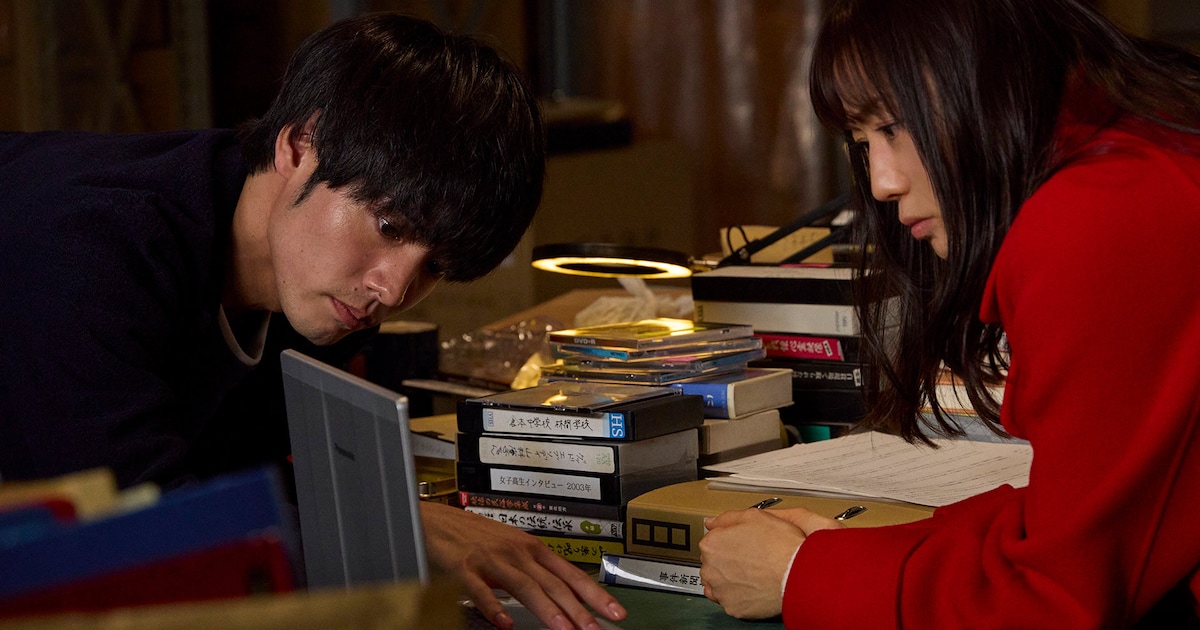
On April 9, the horror film 「近畿地方のある場所について」 (Kinki chihō no aru basho ni tsuite — “About a Certain Place in the Kinki Region”) begins exclusive all-you-can-watch streaming on Netflix in Japan. The film stars Miho Kanno and Eiji Akaso in a double lead role, bringing a chilling mystery to streaming audiences.
Originally released in theaters on August 8, 2025, the film is now available as 見放題 (mihoudai), meaning subscribers can watch it as much as they like, and it will be a 独占配信 (dokusen haishin), streaming exclusively on Netflix.
A Disappearance That Starts It All
The story begins when an editor of an occult magazine becomes 行方不明 (yukue fumei — missing). From that point, the mystery deepens.
In Japanese, the plot is described as unfolding:
オカルト雑誌の編集者が行方不明になることから物語が展開していく。 Okaruto zasshi no henshūsha ga yukue fumei ni naru koto kara monogatari ga tenkai shite iku. “The story develops from the fact that an occult magazine editor goes missing.”
Before he 消息を絶つ (shousoku o tatsu — disappears without a trace), he had been investigating a series of disturbing cases:
- A young girl’s disappearance
- A mass hysteria incident involving middle school students
- Urban legends
- Online video controversies filmed at 心霊スポット (shinrei supotto — haunted locations)
These were all classified as 未解決事件 (mikaiketsu jiken — unsolved cases) and strange 怪現象 (kaigenshou — mysterious phenomena).
As his colleagues begin investigating his disappearance, they discover something unsettling: every one of these incidents occurred in “a certain place in the Kinki region.”
The Cast and Creators
Miho Kanno plays occult writer Chihiro Seno, while Eiji Akaso portrays editor Yūsei Ozawa, who works alongside her to uncover the truth.
The film is directed by Kōji Shiraishi, known for the horror film 「サユリ」 (Sayuri). It is based on a novel of the same name by the author known as 背筋 (Sesuj i).
If you’d like a preview before watching, Netflix has released a trailer on its official streaming page.
Why “A Certain Place”?
The title’s phrasing — 「ある場所」 (aru basho — “a certain place”) — is deliberately vague. In Japanese storytelling, this kind of indirect wording creates unease. Rather than clearly naming the location, it suggests that the place could be anywhere — perhaps even somewhere familiar.
The setting in the Kinki region (which includes cities like Osaka, Kyoto, and Nara) adds another layer of atmosphere. The area is rich in history, folklore, and traditional ghost stories, making it a powerful backdrop for horror rooted in urban legend and unexplained phenomena.
Learn Japanese from This Article
Let’s break down some key vocabulary and grammar used in the original news.
Key Vocabulary
| Japanese | Romaji | Meaning |
|---|---|---|
| 見放題 | mihoudai | all-you-can-watch (streaming) |
| 独占配信 | dokusen haishin | exclusive streaming |
| 行方不明 | yukue fumei | missing (person) |
| 消息を絶つ | shousoku o tatsu | to disappear without a trace |
| 未解決事件 | mikaiketsu jiken | unsolved case |
| 怪現象 | kaigenshou | mysterious phenomenon |
| 心霊スポット | shinrei supotto | haunted spot; ghost site |
Notice how many of these are compound kanji words. Recognizing parts like 未 (mi — not yet) and 解決 (kaiketsu — resolution) helps you decode new vocabulary.
Grammar Spotlight 1: 〜ことから (Because; Starting From the Fact That)
Pattern: Verb (dictionary form) + ことから
This structure explains the reason or starting point for something.
Example from the article:
行方不明になることから物語が展開していく。 “The story develops from the fact that he goes missing.”
More examples:
雨が降ったことから試合は中止になった。 Ame ga futta koto kara shiai wa chūshi ni natta. “Because it rained, the game was canceled.”
彼の発言が問題になったことから議論が始まった。 Kare no hatsugen ga mondai ni natta koto kara giron ga hajimatta. “Discussion began because his remark became an issue.”
This structure feels slightly more formal and explanatory — common in news writing.
Grammar Spotlight 2: 〜ていく (Gradual Change or Ongoing Development)
Pattern: Verb (て-form) + いく
In this article:
物語が展開していく。 Monogatari ga tenkai shite iku. “The story unfolds (and continues developing).”
The nuance of 〜ていく suggests that something will continue progressing from now on.
More examples:
日本語がだんだん上手になっていく。 Nihongo ga dandan jōzu ni natte iku. “Your Japanese gradually improves.”
町が変わっていく。 Machi ga kawatte iku. “The town continues to change.”
It’s a very natural expression you’ll see often in both fiction and news.
Useful Expression
消息を絶つ (shousoku o tatsu) literally means “to cut off news.” It’s commonly used in reports about missing persons and carries a serious tone.
Example:
彼は突然消息を絶った。 Kare wa totsuzen shousoku o tatta. “He suddenly disappeared without a trace.”
Continue Learning
Curious about the kanji used in words like 未解決事件 and 怪現象? Working on your reading skills? Our Introduction to Kanji: Pictorial Foundations of Japanese Script lesson is a great next step.
Want to strengthen your overall vocabulary foundation? Our Basic Vocabulary Building: Embracing Words Without Latin Ties lesson covers this in depth.
And if words like Netflix written in katakana catch your eye, our Katakana Essentials: Adapting Global Words to Japanese lesson will help you read them confidently.
Horror in Japan often blends modern urban legends with deep-rooted folklore — and films like this are a powerful way to experience authentic language in context. Watching while noticing key phrases like 行方不明 and 未解決事件 can turn entertainment into real study time.
これからもよろしくお願いします。 Kore kara mo yoroshiku onegaishimasu.