
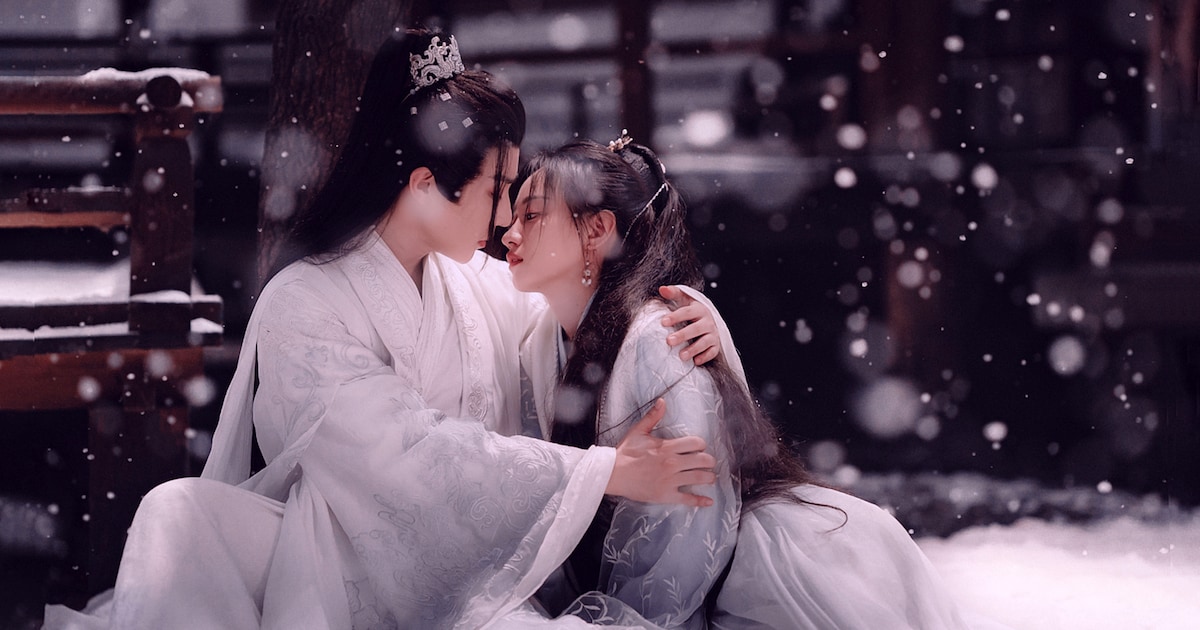
On April 5, 2026, it was announced that the Chinese historical romance drama 「雪月花 ~運命に繋がる愛の軌跡~」 (Setsu Getsu Ka: Unmei ni Tsunagaru Ai no Kiseki) will begin DVD rentals and streaming in Japan on June 3. The original title is 「花月」, and the series runs for nine episodes.
At the heart of the story? A woman who rises from orphan to general, dies after betrayal—and is sent back to the past by the power of a sacred artifact.
A Tragic Love Rewritten by Reincarnation
This drama is described as a 転生ロマンス時代劇 (tensei romansu jidaigeki)—a reincarnation romance set in a historical era.
The story begins in the eighth year of the Tianyuan era. On the northern battlefield of Changping, 月千雪 (Getsu Sensetsu), an orphan who has become a female general, waits for 援軍 (engun), or reinforcements, from 花晴明 (Ka Seimei), the King of Zhenbei.
Instead of rescue, she faces 裏切り (uragiri), betrayal. Lu Qianqian and Lu Li turn against her, and she loses her life 裏切りの末に (uragiri no sue ni)—“as a result of betrayal, after everything that happened.”
The following year, Ka Seimei also falls in battle against another kingdom, and Changping collapses.
But fate is not finished with them.
Two years earlier, the master of the Tianji Pavilion, 諸葛仁楓 (Shokatsu Jinpū), had foreseen their 転生 (tensei), or reincarnation, through the power of a 神器 (jingi), a sacred treasure known as the Eastern Emperor Bell.
On the night of the Zhongyuan Festival, Getsu Sensetsu suddenly regains memories of her previous life. She confronts Ka Seimei, trying to make him understand, and even 問い詰める (toitsumeru) him—pressing him intensely for answers. But he does not believe her.
When the two betrayers appear again, she is overwhelmed with anger and 襲い掛かる (osoikakaru) them—lunging at them in fury.
Sent back to the past by the choice of a sage, Getsu Sensetsu and Ka Seimei struggle against 運命 (unmei), fate itself. With limited time and only fragments of memory, they attempt to rewrite the tragedy that awaits them.
Cast and Production
The role of Getsu Sensetsu is played by ホアン・ティンティン (Huang Tingting), a former member of SNH48. Ka Seimei is portrayed by チュエン・ペイルン (Quan Peilun), known for The Romance of Tiger and Rose.
The series is directed by リ・シャオラン (Li Shaolan), and a trailer is currently available on YouTube.
DVD rentals and streaming both begin on Wednesday, June 3, 2026.
Cultural Context: Why “Reincarnation” Is So Popular
The word 転生 (tensei) appears frequently in East Asian fantasy and historical dramas. Unlike Western time-travel stories that often focus on science fiction, many Chinese and Japanese works blend reincarnation with spiritual beliefs, destiny, and moral consequences.
The idea of changing one’s 運命 (unmei)—fate—is especially powerful in historical settings. In societies structured by hierarchy and warfare, characters have limited freedom. Reincarnation gives them a second chance, but not an easy one.
The use of a 神器 (jingi), a divine artifact, also draws on traditional mythology. In Japanese, 神器 can refer to sacred imperial regalia, so the word carries a sense of deep spiritual authority.
Understanding these cultural layers makes the story much richer than just “a romance.”
Learn Japanese from This Article
Let’s break down some key vocabulary and grammar you can start using right away.
Key Vocabulary
| Japanese | Romaji | Meaning |
|---|---|---|
| 神器 | jingi | sacred treasure; divine artifact |
| 裏切り | uragiri | betrayal |
| 転生 | tensei | reincarnation; rebirth |
| 運命 | unmei | fate; destiny |
| 援軍 | engun | reinforcements |
| 問い詰める | toitsumeru | to press someone for answers |
| 襲い掛かる | osoikakaru | to lunge at; to attack |
Try saying this sentence:
彼女は裏切りの末に命を落とした。 Kanojo wa uragiri no sue ni inochi o otoshita. She lost her life as a result of betrayal.
Grammar Spotlight 1: 〜の末(に)
Pattern: Noun + の末(に)
Meaning: After a long process; as a result of (often something negative or dramatic)
Examples
話し合いの末に、彼らは和解した。 Hanashiai no sue ni, karera wa wakai shita. After long discussions, they reconciled.
努力の末に、夢をかなえた。 Doryoku no sue ni, yume o kanaeta. After much effort, they achieved their dream.
In the article: 裏切りの末に命を落とす — to lose one’s life as a result of betrayal.
Grammar Spotlight 2: 〜ようとする
Pattern: Verb (dictionary form) + ようとする
Meaning: To try to do; to attempt to do
From the story: They try to rewrite fate.
運命を書き換えようとする。 Unmei o kakikaeyō to suru. They attempt to rewrite fate.
More examples:
彼は真実を話そうとした。 Kare wa shinjitsu o hanasō to shita. He tried to tell the truth.
ドアを開けようとしたが、開かなかった。 Doa o akeyō to shita ga, akanakatta. I tried to open the door, but it wouldn’t open.
This pattern is extremely common in drama dialogue.
Useful Expression
問い詰める (toitsumeru) has a strong nuance. It’s not just “to ask”—it’s to corner someone with questions.
彼女は彼を問い詰めた。 Kanojo wa kare o toitsumeta. She pressed him for answers.
This is the kind of emotional verb you’ll hear often in historical and romance dramas.
Continue Learning
📚 Working on your reading skills? Our Katakana Essentials: Adapting Global Words to Japanese lesson is a great next step.
📚 Working on your reading skills? Our Introduction to Kanji: Pictorial Foundations of Japanese Script lesson is a great next step.
Introduction to Kanji: Pictorial Foundations of Japanese Script
📚 Ready to dive deeper? Our lesson on Basic Vocabulary Building: Embracing Words Without Latin Ties will help you master these concepts.
Basic Vocabulary Building: Embracing Words Without Latin Ties
これからもよろしくお願いします。 Kore kara mo yoroshiku onegaishimasu.