
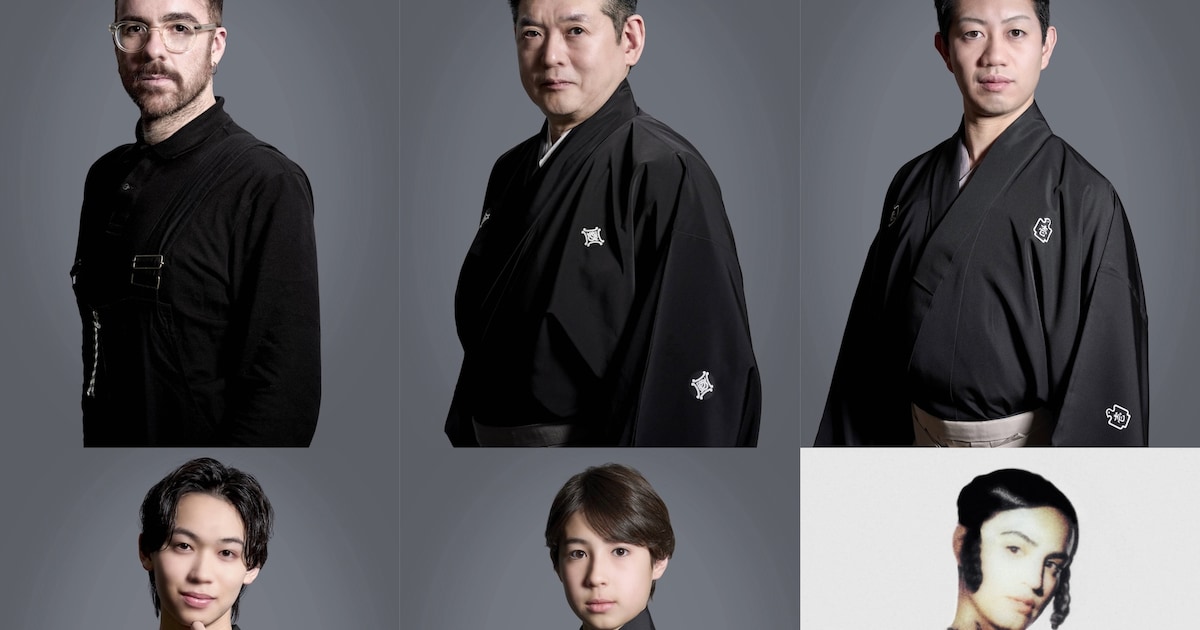
On February 27, 2026, the cast and main visual were revealed for Bunkamura Produce 2026 マルコス浄瑠璃「金閣寺」 (Marukosu Jōruri “Kinkakuji”), a bold new stage production set to run from late August to early September in Tokyo.
This new work will be 上演 (jouen, staged) from August 29 to September 6 at the Tokyo Metropolitan Theatre Playhouse, with general ticket sales beginning on April 25 at 10:00 a.m. But what makes this production especially striking is its creative fusion: it reimagines Yukio Mishima’s novel 「金閣寺」 (Kinkakuji, The Temple of the Golden Pavilion) through a collaboration between European contemporary theater and traditional Japanese performing arts.
A European Director Takes on Mishima
The production is directed by Marcos Morau, known for presenting works across Europe at venues such as the Paris Opera and the Avignon Festival. This project is a joint production between Morau’s company, La Veronal, and Bunkamura.
Rather than simply adapting Mishima’s novel as a dramatic retelling, Morau uses it as a 題材 (daizai, subject matter) to create what he calls a “new puppet jōruri.” The stage will feature a 共演 (kyouen, co-performance) between dancers and puppets, blending different physical traditions into one visual language.
Morau explained his long-standing fascination with Mishima:
“Mishima was not merely a writer who spoke of ideas—he embodied them in his own flesh.”
He sees 「金閣寺」 not as a historical reenactment, but as a story about how the concept of beauty enters a person and transforms them from within. When he encountered bunraku puppet theater, he felt a similar tension: although humans manipulate the puppets, gradually the humans themselves seem to move closer to being like puppets. The relationship between subject and object becomes 曖昧 (aimai, ambiguous), creating a delicate balance that feels as if it could collapse—but doesn’t.
That fragile equilibrium, he says, is what he wants to bring to the stage.
A Cross-Genre Cast
The newly announced cast reflects this boundary-crossing vision.
- Bunraku puppet master 吉田玉助 (Yoshida Tamasuke)
- Kabuki actor 中村壱太郎 (Nakamura Ichitarō)
- Performer 末永光 (Suenaga Hikaru)
- Child actor 尾上眞秀 (Onoe Maho), appearing alongside Ichitarō
In addition, seven dancers selected from over 1,200 applicants will take on central roles as 黒子 (kuroko). In traditional Japanese theater, kuroko are stage assistants dressed in black who “disappear” into the background while supporting the performance. Here, they will form the structural core of the stage itself.
Each performer shared candid thoughts about joining the production.
Tamasuke admitted that although he casually accepted the offer at first, as time passed he felt both fear and excitement. While working alongside kabuki actors—artists from a closely related yet distinct tradition—he hopes to learn eagerly, even though he is senior in age. Collaborating beyond bunraku, he says, will challenge him to find a new “entrance” into theater outside his usual form.
Ichitarō noted that 2025 marked the 100th anniversary of Mishima’s birth, and he had already been reflecting on Mishima’s works when this offer arrived—a meaningful ご縁 (goen, connection or fate). He intends to focus on Japan’s classical aesthetic of stylized movement, building new discoveries both as an actor and as a dancer under Morau’s direction.
Suenaga confessed feeling nervous about working for the first time with such distinguished artists. During Morau’s workshop, he struggled with unfamiliar movements, but Morau’s careful guidance gradually transformed his anxiety into anticipation.
Meanwhile, Maho expressed pure excitement—ワクワク (wakuwaku)—at standing on stage for the world premiere of a production that merges bunraku, kabuki, and dance. He hopes to preserve the kabuki traditions he has learned while absorbing new forms of expression across genres.
Cultural Context: Bunraku, Kabuki, and Mishima
To fully appreciate this production, it helps to understand the traditions involved.
Bunraku is Japan’s classical puppet theater, in which large, intricately controlled puppets are operated by visible puppeteers. It developed alongside 浄瑠璃 (jōruri), a narrative chanting style accompanied by shamisen.
Kabuki, by contrast, features live actors and is known for its highly stylized poses and choreographed gestures—often described as “様式美” (yōshikibi, formalized beauty).
By combining bunraku puppetry, kabuki movement, and contemporary dance, this production challenges the boundaries between human and puppet, tradition and modernity—mirroring the very themes Mishima explored in his novel.
Learn Japanese from This Article
Let’s turn this exciting theater news into a Japanese learning opportunity.
Key Vocabulary
| Japanese | Romaji | Meaning |
|---|---|---|
| 上演 | jouen | stage performance; to put on a play |
| 題材 | daizai | subject matter; theme |
| 共演 | kyouen | co-starring; performing together |
| 黒子 | kuroko | black-clad stage assistant |
| 曖昧 | aimai | ambiguous; vague |
| ワクワク | wakuwaku | excited anticipation |
| ご縁 | goen | fate; meaningful connection |
Try using one of these in a sentence:
- 新しい舞台が来月上演されます。 Atarashii butai ga raigetsu jouen saremasu. A new stage production will be performed next month.
Grammar Spotlight
1. 〜に向けて (toward; in preparation for)
Used to describe movement or preparation toward a goal or event.
Structure: Noun + に向けて
Example:
- 公演に向けて、毎日練習しています。 Kōen ni mukete, mainichi renshū shite imasu. We are practicing every day in preparation for the performance.
In the article, comments were shared 上演に向けて—“toward the staging” of the production.
2. 〜ながら (while doing; although)
Structure: Verb stem + ながら
Examples:
- 緊張しながら、舞台に立ちました。 Kinchō shinagara, butai ni tachimashita. I stood on stage while feeling nervous.
- 伝統を守りながら、新しい表現に挑戦する。 Dentō o mamorinagara, atarashii hyōgen ni chōsen suru. Preserve tradition while challenging new forms of expression.
This pattern is perfect for describing the balance between tradition and innovation—just like this production.
Useful Expression
- よろしくお願い致します。 Yoroshiku onegaishimasu. A polite expression meaning “I look forward to your support” or “Please treat me favorably.”
You’ll often see performers use this at the end of official comments.
Continue Learning
📚 Working on your reading skills? Our Katakana Essentials: Adapting Global Words to Japanese lesson is a great next step.
📚 Working on your reading skills? Our Introduction to Kanji: Pictorial Foundations of Japanese Script lesson is a great next step.
Introduction to Kanji: Pictorial Foundations of Japanese Script
📚 Ready to dive deeper? Our lesson on Basic Vocabulary Building: Embracing Words Without Latin Ties will help you master these concepts.
Basic Vocabulary Building: Embracing Words Without Latin Ties
これからもよろしくお願いします。 Kore kara mo yoroshiku onegaishimasu.