
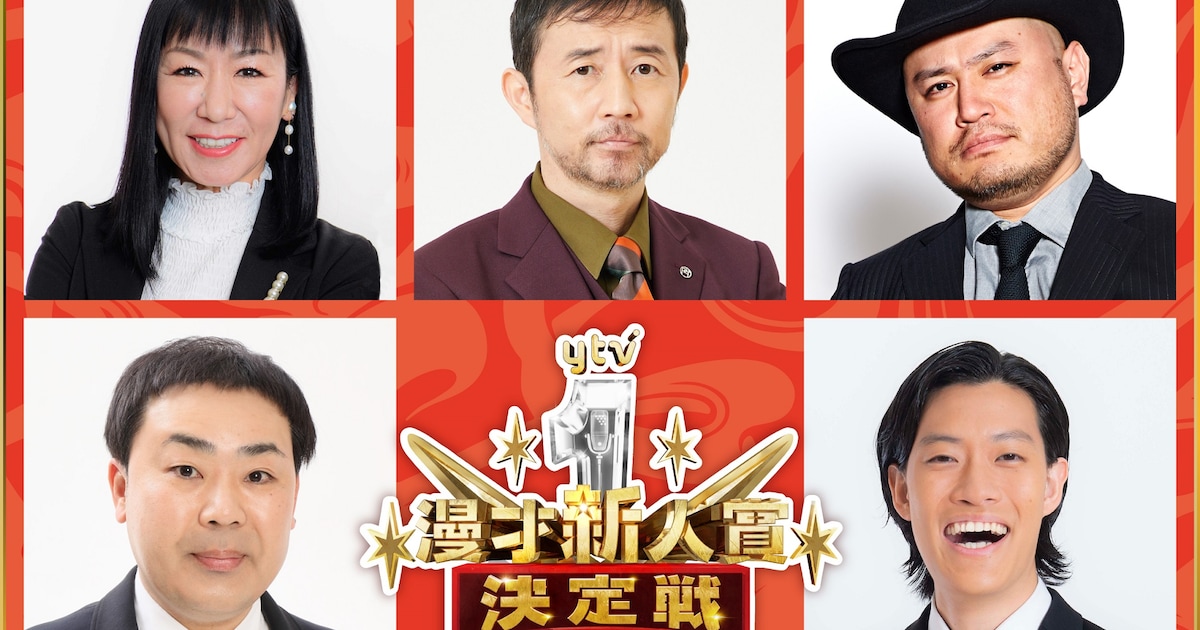
On February 22, 2026, it was revealed that five judges will return for the upcoming 「第15回 ytv漫才新人賞決定戦」 (Dai 15-kai ytv Manzai Shinjinshō Ketteisen), airing March 1 on Yomiuri TV.
All five 審査員 (shinsain, judges) — ハイヒール・リンゴ, ザ・プラン9・お~い!久馬, ハリウッドザコシショウ, フットボールアワー岩尾, and 霜降り明星・粗品 — will continue in their roles from last year, a move described as 続投 (zokutō), meaning they are staying on in the same position.
Let’s take a closer look at this major comedy 賞レース (shō rēsu, award competition) and what makes it such an important stage for rising comedians.
What Is the ytv Manzai Newcomer Award?
The ytv漫才新人賞決定戦 is a competition for 漫才師 (manzai comedians) with an 芸歴 (geireki) of 10 years or less.
- 芸歴 (geireki) literally means “art history,” but in entertainment it refers to the length of a performer’s career.
This year’s finalists will perform their ネタ (neta, comedy routines) in the following order:
- タチマチ
- 生姜猫
- ぎょうぶ
- ぐろう
- マーメイド
- シカノシンプ
- 天才ピアニスト
Each group will 披露する (hirō suru) their material — that is, present their routine publicly on stage.
The program will air on:
- March 1, 2026 (Sunday)
- 15:00–17:30
- Yomiuri TV
The main host will be ブラックマヨネーズ (Black Mayonnaise), with announcer 佐藤佳奈 as assistant MC.
A Public Viewing and Special MCs
At Yomiuri TV’s Osaka headquarters, a special viewing area called the 「新人賞暫定BOX」 will be set up and opened to the public.
Serving as MCs at this venue:
- 2014 champion 藤崎マーケット
- Previous champion フースーヤ
This creates a sense of continuity — past winners supporting the next generation. In Japanese comedy culture, that connection between senpai (seniors) and kōhai (juniors) is very strong.
Judges’ Comments: Serious, Funny, and Very Japanese
The judges shared short but memorable comments.
ハイヒール・リンゴ
「『美味しい』と『面白い』は多種多様。新たなスターが生まれるのが楽しみです。」
“‘Delicious’ and ‘funny’ both come in many varieties. I’m looking forward to seeing a new star born.”
Notice the comparison between 美味しい (oishii, delicious) and 面白い (omoshiroi, funny). In Japanese, both words can describe something that is satisfying in different ways.
ザ・プラン9・お~い!久馬
Referencing last year’s champion フースーヤ, he said:
「漫才も審査も真剣に。スカすのは小杉の頭だけで充分さ!」
“Take both manzai and judging seriously. The only thing that needs to play it cool is Kosugi’s head!”
The word スカす (sukasu) is slang meaning “to act cool” or “to pose.” It’s casual and humorous — perfect for a comedy event.
ハリウッドザコシショウ
With his trademark eccentric style, he enthusiastically cheered for the competition and young comedians, suggesting that the one who really “goes for it” should win.
フットボールアワー岩尾
He reflected on how the competition has grown:
Although it’s now watched nationwide, he encouraged contestants to perform freely, keeping the mindset that it’s still a local contest so they can give it everything they have.
霜降り明星・粗品
True to his sharp image, he stated:
「面白くない人が優勝しないようにしっかり審査します。」
“I’ll judge carefully so that someone who isn’t funny doesn’t win.”
That “so that…” structure is a great example of a useful grammar pattern we’ll look at below.
Why This Competition Matters
In Japan, major comedy contests like M-1 Grand Prix often launch careers. The ytv Manzai Newcomer Award focuses specifically on relatively new performers (10 years or less in the industry), giving them national exposure.
Even though it began as a regional Kansai competition, it now draws attention from across Japan. Being named champion can dramatically raise a comedian’s profile.
For learners of Japanese, manzai is also a window into:
- Kansai dialect
- Fast-paced wordplay
- Cultural references
- The rhythm of Japanese conversation
Learn Japanese from This Article
Let’s break down key vocabulary and grammar you can take from this news.
Key Vocabulary
| Japanese | Romaji | Meaning |
|---|---|---|
| 審査員 | shinsain | judge (in a contest) |
| 続投 | zokutō | continuing in the same role |
| 芸歴 | geireki | length of performing career |
| ネタ | neta | comedy material; routine |
| 披露する | hirō suru | to present publicly |
| 賞レース | shō rēsu | award competition |
| スカす | sukasu | to act cool; to pose |
Notice how many of these are commonly used in entertainment news. Once you know them, reading Japanese articles becomes much easier.
Grammar Spotlight 1: 〜ことがわかった
Structure: Verb (plain form) + ことがわかった
Meaning: “It was revealed that…” / “It became known that…”
Example from this article:
- 審査員を務めることがわかった。 Shinsain o tsutomeru koto ga wakatta. “It was revealed that they will serve as judges.”
This structure is extremely common in news writing. It creates a neutral, report-like tone.
Grammar Spotlight 2: 〜ように (so that…)
Structure: Verb (plain) + ように
Used to express purpose, often to avoid a negative outcome.
From 粗品’s comment:
- 面白くない人が優勝しないようにしっかり審査します。 Omoshirokunai hito ga yūshō shinai yō ni shikkari shinsa shimasu. “I will judge carefully so that someone who isn’t funny doesn’t win.”
You’ll hear this pattern constantly in daily life:
- 忘れないようにメモします。 Wasurenai yō ni memo shimasu. “I’ll make a note so I don’t forget.”
Useful Expression
真剣に
真剣に (shinken ni) — seriously
- 漫才も審査も真剣に。 “Take both the manzai and the judging seriously.”
This word is very common in both formal and casual speech.
Continue Learning
📚 Working on your reading skills? Our Katakana Essentials: Adapting Global Words to Japanese lesson is a great next step.
📚 Working on your reading skills? Our Introduction to Kanji: Pictorial Foundations of Japanese Script lesson is a great next step.
Introduction to Kanji: Pictorial Foundations of Japanese Script
📚 Ready to dive deeper? Our lesson on Basic Vocabulary Building: Embracing Words Without Latin Ties will help you master these concepts.
Basic Vocabulary Building: Embracing Words Without Latin Ties
これからもよろしくお願いします。 Kore kara mo yoroshiku onegaishimasu.