
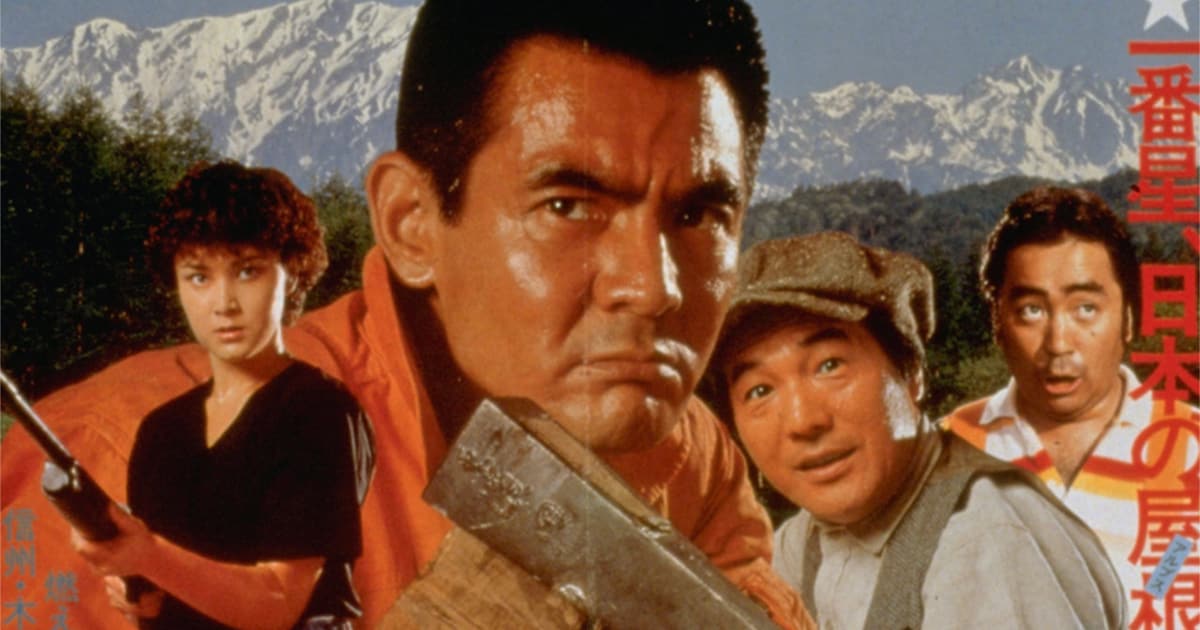
On February 22, 2026, the ninth film in the “Truck Yarō” series, 「トラック野郎 熱風5000キロ」 (Torakku Yarō Neppū 5000-kiro), will be broadcast on TOKYO MX1 from 19:00 to 20:45. Originally released in 1979, this action-packed road movie stars Sugawara Bunta in the 主演 (shuen, starring role).
A Legendary Trucking Duo Returns to TV
The “Truck Yarō” series follows the adventures of two long-distance truck drivers. Sugawara Bunta 演じる (enjiru, plays) Hoshi Momojirō, nicknamed “Ichibanboshi,” while Aikawa Kin’ya plays Matsushita Kinzō, known as “Widowed Jonathan.”
Their partnership is at the heart of the series, which portrays their over-the-top 活躍 (katsuyaku, dynamic exploits) on the road. In this ninth installment, they are joined by a third character: “Sanbanboshi” Okegawa Tamasaburō, played by Senda Mitsuo.
Set along the roads from Tokyo to Nagano, the trio 繰り広げる (kurihirogeru, unfold/carry out) dramatic action scenes across the Shinshū region.
The Madonna and the Rival
Like other films in the series, this installment features a “Madonna” character—the key female figure in the story. Ono Miyuki appears as Nishizawa Natsu, nicknamed “Yamaneko no Onatsu.”
The film also introduces a ライバル (raibaru, rival) character named “Nosappu,” played by Chii Takeo.
According to a viewer reaction shared online, the rival’s storyline involves a powerful theme of 復讐 (fukushuu, revenge). Despite warnings from those around him saying things like “Revenge なんて (nante, such a thing as revenge…) stop it,” he ignores them and continues down a path that leads to 破滅 (hametsu, ruin). Even within an action-comedy framework, the series sometimes explores surprisingly intense emotional conflicts.
The film is directed by Suzuki Norifumi, who also worked on previous entries in the series.
Broadcast Information
「トラック野郎 熱風5000キロ」 Broadcast station: TOKYO MX1 Date and time: February 22, 2026 (Sunday), 19:00–20:45
Cultural Context: What Is “Truck Yarō”?
The word 野郎 (yarō) can mean “guy” or “rascal,” sometimes with a rough nuance. Combined with トラック (torakku, truck), the title suggests something like “Truck Guys” or “Truck Rascals.”
The series became popular in the 1970s and is closely associated with Toei films and actor Sugawara Bunta, who also starred in famous yakuza movies such as “Battles Without Honor and Humanity” (仁義なき戦い, Jingi naki tatakai).
One reason the series remains beloved is its mix of:
- Flashy, decorated trucks
- Strong male friendship
- Humor and melodrama
- Regional travel across Japan
Through the adventures of long-distance drivers, audiences get a glimpse of different parts of Japan—here, the mountainous Shinshū area between Tokyo and Nagano.
Learn Japanese from This Article
Let’s break down key words and grammar that appeared in this news story.
Key Vocabulary
| Japanese | Romaji | Meaning |
|---|---|---|
| 主演 | shuen | starring role |
| 放送される | housou sareru | to be broadcast (passive) |
| 演じる | enjiru | to play (a role) |
| 活躍 | katsuyaku | active performance; 활躍 |
| 繰り広げる | kurihirogeru | to unfold; to carry out |
| ライバル | raibaru | rival |
| 復讐 | fukushuu | revenge |
| 破滅 | hametsu | ruin; destruction |
Notice how ライバル (raibaru) is written in katakana. It comes from the English word “rival.” Many entertainment-related terms use katakana. Working on your reading skills? Our Katakana Essentials: Adapting Global Words to Japanese lesson is a great next step.
Grammar Spotlight
1. 〜による/〜によると (by; according to)
In the original article, information is introduced based on specific sources.
Structure:
- Noun + によると = according to (source)
Example:
報道によると、映画は1979年に公開された。 Hōdō ni yoru to, eiga wa 1979-nen ni kōkai sareta. According to reports, the film was released in 1979.
公式サイトによると、放送は19時からです。 Kōshiki saito ni yoru to, hōsō wa 19-ji kara desu. According to the official site, the broadcast starts at 7 p.m.
This pattern is extremely common in news Japanese.
2. 〜なんて (like ~; such a thing as ~)
In the viewer reaction, people warn the rival against revenge:
- 復讐なんてやめろ。 Fukushuu nante yamero. Forget about revenge!
Here, なんて adds an emotional tone—often dismissive, critical, or surprised.
More examples:
そんなことなんて信じられない。 Sonna koto nante shinjirarenai. I can’t believe something like that.
一人で行くなんて危ないよ。 Hitori de iku nante abunai yo. Going alone like that is dangerous.
This small word adds strong feeling to a sentence.
Kanji Focus
Words like 復讐 (revenge) and 破滅 (ruin) show how kanji combine meanings:
- 復 = return
- 讐 = enemy
- 破 = break
- 滅 = destroy
Studying kanji components makes dramatic vocabulary much easier to understand. Working on your reading skills? Our Introduction to Kanji: Pictorial Foundations of Japanese Script lesson is a great next step.
And if you’d like to expand your core vocabulary, explore our Basic Vocabulary Building: Embracing Words Without Latin Ties lesson.
Classic action, emotional rivalry, and the open road—「トラック野郎 熱風5000キロ」 offers more than just explosions and engines. It’s also a great window into 1970s Japanese film culture and the language of drama, friendship, and revenge.
Continue Learning
📚 Working on your reading skills? Our Katakana Essentials: Adapting Global Words to Japanese lesson is a great next step.
📚 Working on your reading skills? Our Introduction to Kanji: Pictorial Foundations of Japanese Script lesson is a great next step.
Introduction to Kanji: Pictorial Foundations of Japanese Script
📚 Curious about the Japanese used here? Our Basic Vocabulary Building: Embracing Words Without Latin Ties lesson covers this in depth.
Basic Vocabulary Building: Embracing Words Without Latin Ties
これからもよろしくお願いします。 Kore kara mo yoroshiku onegaishimasu.