
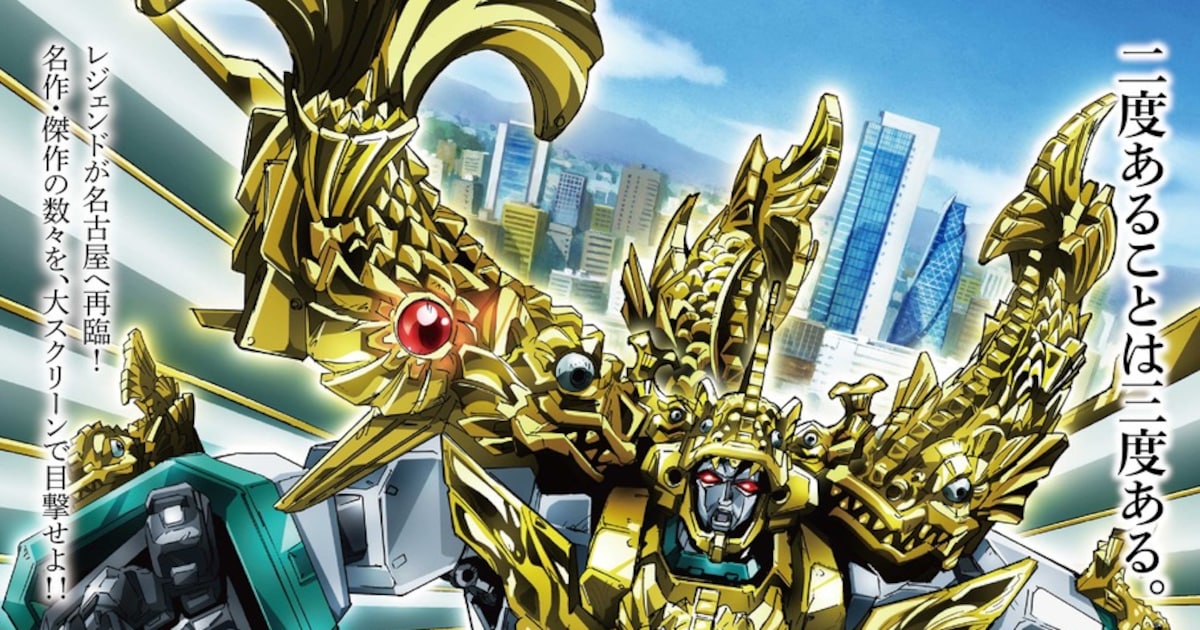
On February 25, 2026, it was announced that the 「第3回 どまんなかアニメ映画祭」 (Dai 3-kai Domannaka Anime Eigasai) will be held in Nagoya this May—bringing classic anime films like 「伝説巨神イデオン」 (Densetsu Kyojin Ideon), 「アリオン」 (Arion), and 「天使のたまご」 (Tenshi no Tamago) back to the big screen.
The festival runs from May 15 to 21 at Midland Square Cinema in Aichi Prefecture.
A Festival “Right in the Middle” of Anime History
The name どまんなか (domannaka) literally means “right in the middle” or “dead center.” The どまんなかアニメ映画祭 focuses primarily on anime films released in the 1980s—placing that era at the very center of attention.
This event isn’t just about watching movies. Its goal is to create a place for 交流 (kouryuu), meaning interaction and exchange, between anime fans and people involved in anime production.
The first festival was held in May 2024, followed by the second in May 2025. Now, the third installment expands its scope.
Expanding the Framework: From the 1980s to the 2000s
While the festival centers on 1980s works, this year it broadens its 枠組み (wakugumi, framework) to include films released in the 2000s as well. From this roughly 30-year span, several major works have been selected for 上映 (jouei, screening).
Here’s what will be shown:
- 「伝説巨神イデオン 接触篇/発動篇」 (Densetsu Kyojin Ideon: Sesshoku-hen / Hatsudou-hen), directed by Tomino Yoshiyuki (also known as Tomino Yoshiyuki under the name 富野喜幸)
- 「アリオン」 (Arion), directed by Yasuhiko Yoshikazu
- 「天使のたまご 4Kリマスター」 (Tenshi no Tamago 4K Remaster), directed by Oshii Mamoru
- 「映画クレヨンしんちゃん 嵐を呼ぶアッパレ!戦国大合戦」 (Crayon Shin-chan the Movie: Arashi o Yobu Appare! Sengoku Daikassen), directed by Hara Keiichi
- 「メトロポリス」 (Metropolis, 2001), directed by Rintaro
- 「火垂るの墓」 (Hotaru no Haka, 1988), directed by Takahata Isao
- 「機動戦士ガンダムF91 完全版」 (Kidou Senshi Gundam F91 Kanzenban), directed by Tomino Yoshiyuki
In addition, the official festival poster features newly created artwork—描き下ろし (kaki-oroshi)—by animator Sano Hirotoshi, who previously worked on 「ヴイナス戦記」 (Venus Wars).
A Special Talk Event: Discussing 80s Anime Thoroughly
As a special project, the festival will host 「80年代アニメを語りつくす会 Ep.1」 (80-nendai Anime o Kataritsukusu Kai Ep.1).
The expression 語りつくす (kataritsukusu) means “to talk about something thoroughly” or “to discuss something to the fullest extent.” In other words, this event promises deep, passionate discussion about 1980s anime.
Guest speakers include:
- Hikawa Ryusuke
- Suwa Michihiko
- Ueda Masuo
- Sano Hirotoshi
- Sasaki Run
The moderator will be Ishii Makoto.
Further details about the festival are scheduled to be announced later.
Cultural Context: Why the 1980s Matter
The 1980s were a defining decade for theatrical anime in Japan. Directors like Tomino Yoshiyuki, Oshii Mamoru, and Takahata Isao pushed animation beyond children’s entertainment, exploring war, philosophy, science fiction, and complex human drama.
Films such as 「火垂るの墓」 (Hotaru no Haka, Grave of the Fireflies) and 「天使のたまご」 (Tenshi no Tamago, Angel’s Egg) are still studied and discussed today for their artistic ambition.
By expanding the 枠組み to include the 2000s, the festival highlights how the legacy of 80s anime influenced later works like 「メトロポリス」 (2001).
For fans, this isn’t just nostalgia—it’s a chance to see these works as they were meant to be experienced: in a cinema.
Learn Japanese from This Article
Key Vocabulary
| Japanese | Romaji | Meaning |
|---|---|---|
| 開催 | kaisai | to hold (an event), to host |
| 上映 | jouei | film screening |
| 交流 | kouryuu | exchange, interaction |
| 描き下ろし | kaki-oroshi | newly drawn (artwork made specifically for something) |
| 枠組み | wakugumi | framework, structure |
| 語りつくす | kataritsukusu | to talk about thoroughly |
| どまんなか | domannaka | right in the middle, dead center |
Try reading this sentence from the article:
- 「第3回 どまんなかアニメ映画祭」が5月15日から21日まで開催される。 Dai 3-kai Domannaka Anime Eigasai ga gogatsu juugo-nichi kara nijuuichi-nichi made kaisai sareru. “The 3rd Domannaka Anime Film Festival will be held from May 15 to 21.”
Notice the passive form 開催される.
Grammar Spotlight
1. 〜が開催される / 〜が上映される (Passive in News)
Pattern: Noun + が + Verb (passive form)
This structure is extremely common in news headlines. It focuses on the event rather than the person organizing it.
映画祭が開催される。 Eigasai ga kaisai sareru. “A film festival will be held.”
名作が上映される。 Meisaku ga jouei sareru. “A masterpiece will be screened.”
In English, we might say “will be held” or “will be shown.” In Japanese news writing, the passive voice sounds formal and objective.
2. 〜に加えて (In Addition To)
Pattern: Noun + に加えて
- 1980年代の作品に加えて、2000年代の作品も上映される。 1980-nendai no sakuhin ni kuwaete, 2000-nendai no sakuhin mo jouei sareru. “In addition to works from the 1980s, films from the 2000s will also be screened.”
This is a useful connector for essays, conversations, and formal writing.
Useful Expression
- 語りつくす (kataritsukusu)
The suffix 〜つくす means “to do something completely.”
For example:
- 食べつくす (tabe-tsukusu) — to eat everything
- 使いつくす (tsukai-tsukusu) — to use up completely
Once you notice 〜つくす, you’ll start seeing it everywhere.
Continue Learning
- Working on your reading skills? Our Introduction to Kanji: Pictorial Foundations of Japanese Script lesson is a great next step.
- Curious about the Japanese used here? Our Basic Vocabulary Building: Embracing Words Without Latin Ties lesson covers this in depth.
- Want help with words like リマスター and メトロポリス? Check out Katakana Essentials: Adapting Global Words to Japanese.
Classic anime, passionate discussion, and a celebration of a defining era—all right in the どまんなか of Japan’s animation history.
これからもよろしくお願いします。 Kore kara mo yoroshiku onegaishimasu.