
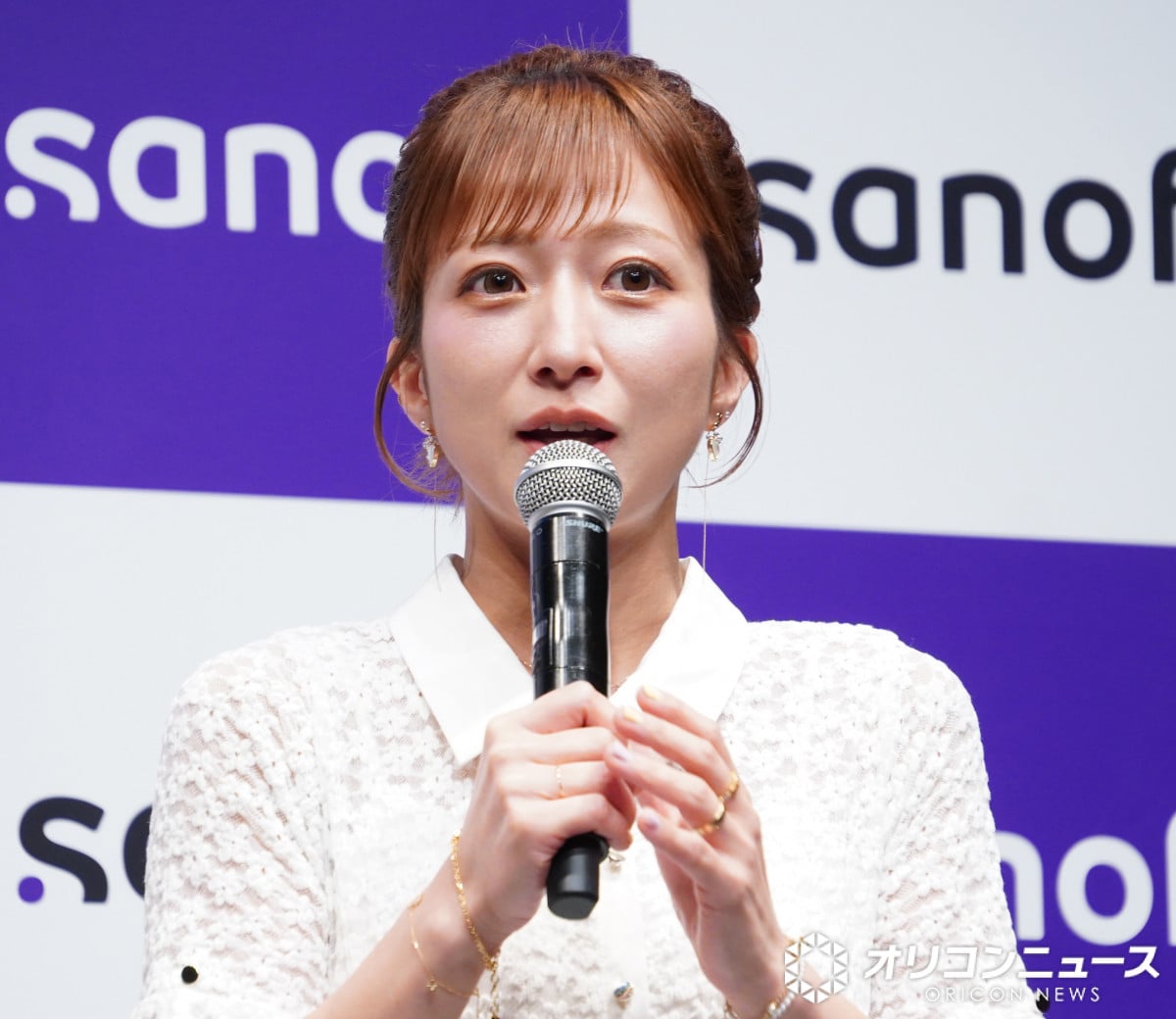
On July 1, talent Nozomi Tsuji (39) took the stage at a pediatric atopic dermatitis seminar in Tokyo—and surprised the audience with a glimpse into her lively home life. When asked how she refreshes herself while raising five children, her answer was simple: karaoke at home.
Nozomi Tsuji Talks Parenting and “Refreshing” at Home
At the seminar, Tsuji 登壇(とうだん) (toudan)—that is, she appeared on stage—to speak about parenting. Currently raising five children, she described herself as working hard every day, or 奮闘(ふんとう) (funtou), to balance family life.
When asked about her リフレッシュ (rifuresshu) method—how she takes a mental and emotional break—she smiled and said:
“I do karaoke at home. I like singing and dancing. It’s small and cozy at home, though.”
She used the word こじんまり(こじんまり) (kojinmari), which describes something modest in size but warm and comfortable. Rather than going out to a big karaoke box, she enjoys a simple setup at home.
In August of last year, her second daughter, Yumea, was born. Tsuji shared that she uses a home karaoke machine and sings and dances while putting her youngest child to sleep. In Japanese, she explained this with the pattern 〜ながら (nagara), meaning “while doing.”
She added:
“We all do it together as a family.”
With a 満面の笑み(まんめんのえみ) (manmen no emi), or a beaming smile, she said that being able to eat meals together and spend 他愛のない(たあいのない) (taai no nai) time—ordinary, trivial moments—with her family is not something to take for granted. She feels that those everyday moments are her greatest happiness.
What Was the Seminar About?
The event focused on pediatric atopic dermatitis, a condition that can change significantly from infancy through school age, both in symptoms and in its impact on daily life.
At the seminar, Mizuo Nagao, director of the Clinical Research Department at Mie National Hospital, gave a lecture titled:
“Ages 3, 6, and 12 — Important Opportunities for Early Consultation and Reviewing Treatment at Your Child’s Life Milestones.”
The message emphasized the importance of early medical visits and re-evaluating treatment at key developmental stages.
Tsuji has also spoken previously about skin care for her baby, saying she moisturizes her 0-year-old daughter’s skin until it becomes テカテカ (tekateka)—shiny and glossy—highlighting how seriously she takes skincare.
A Well-Known Family
Tsuji married fellow talent Taiyo Sugiura in June 2007. Their children were born in:
- November 2007 (eldest daughter, Noa)
- December 2010 (eldest son, Seia)
- March 2013 (second son, Sora)
- December 2018 (third son, Koa)
- August 2025 (second daughter, Yumea)
Her openness about parenting has made her a familiar figure in Japanese entertainment news, especially among fans who have followed her journey for nearly two decades.
Cultural Context: Family Time in Japan
In Japan, the idea that everyday family time is “not something to take for granted” resonates strongly. Long working hours and busy school schedules can make shared meals and relaxed time together rare.
The phrase 他愛のない時間(たあいのないじかん) (taai no nai jikan)—“ordinary, trivial time”—actually carries a warm nuance. It suggests small talk, laughter, and quiet moments that may seem unimportant but are deeply meaningful.
Karaoke, too, is a beloved activity in Japan. While many people go to karaoke boxes with friends, having a home karaoke machine is also popular—especially for families who want to sing freely without worrying about others.
Learn Japanese from This Article
Let’s break down some key vocabulary and grammar you can start using right away.
Vocabulary
| Japanese | Romaji | Meaning |
|---|---|---|
| 登壇 | toudan | to take the stage, appear on stage |
| 奮闘 | funtou | to struggle hard; to work very hard |
| リフレッシュ | rifuresshu | to refresh; take a break |
| こじんまり | kojinmari | small and cozy; modest-sized |
| 他愛のない | taai no nai | trivial; harmless; ordinary |
| 満面の笑み | manmen no emi | a beaming smile |
| テカテカ | tekateka | shiny; glossy |
Grammar Spotlight 1: 〜たり〜たりする
Pattern: Verb (past tense) + り + Verb (past tense) + り + する
This pattern is used to list representative actions (not a complete list). It’s like saying “do things like A and B.”
From the article:
- 歌ったり踊ったりする utattari odottari suru “to sing and dance (and things like that)”
More examples:
週末は映画を見たり本を読んだりします。 Shuumatsu wa eiga o mitari hon o yondari shimasu. On weekends, I watch movies and read books (and so on).
子どもと遊んだり料理をしたりします。 Kodomo to asondari ryouri o shitari shimasu. I play with my child and cook (among other things).
Grammar Spotlight 2: 〜ながら
Pattern: Verb stem + ながら
Meaning: “while doing A”
From the article:
- 歌ったり踊ったりしながら寝かせています。 Utattari odottari shinagara nekasete imasu. I sing and dance while putting my child to sleep.
More examples:
音楽を聞きながら勉強します。 Ongaku o kikinagara benkyou shimasu. I study while listening to music.
歩きながら話しましょう。 Arukinagara hanashimashou. Let’s talk while walking.
Useful Expression: 当たり前じゃない
Tsuji said that being able to spend time together is not something “normal” or guaranteed.
- 当たり前じゃない Atarimae ja nai “It’s not something to take for granted.”
This is a powerful phrase in Japanese, often used to express gratitude.
Continue Learning
Time expressions are everywhere in this article—ages, dates, life milestones, and everyday moments. To understand more about 時間, explore our Time and Dates: Tense-Free Expressions lesson.
Small, こじんまり moments with family may seem simple, but as Tsuji reminds us, they can become the happiest memories of all. And through stories like this, you’re not just learning words—you’re learning how Japanese expresses gratitude, effort, and joy in everyday life.
これからもよろしくお願いします。 Kore kara mo yoroshiku onegaishimasu.