
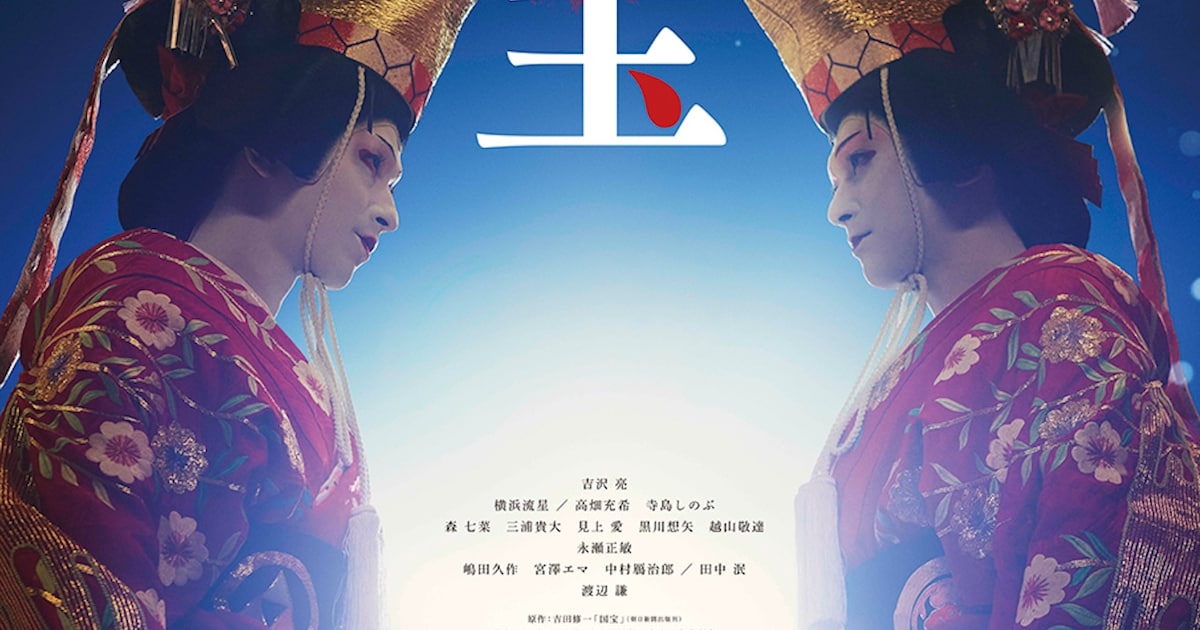
On February 16, 2026, it was announced that the film 「国宝」 (Kokuhō, “National Treasure”) had surpassed 20 billion yen in box office revenue—an unprecedented milestone for a live-action Japanese film.
According to distributor Toho, as of February 15, the film’s total 興行収入 (kougyou shuunyuu, box office revenue) reached 20,008,519,000 yen, with 14,152,409 tickets sold over 255 days since its release. This marks the first time in history that a Japanese live-action film has 200億円を超える (200 oku en o koeru, exceed 20 billion yen) in revenue—a true 快挙 (kaikyo, historic achievement).
A Record-Breaking Run
「国宝」 premiered on June 6, 2025. By August, it had already surpassed 10 billion yen. In November, it became the highest-grossing live-action Japanese film of all time. Now, eight months after its release, the film’s 勢い (ikioi, momentum) shows no signs of slowing.
In the all-time (歴代, rekidai) box office rankings, the film has surpassed Howl’s Moving Castle (2004, 19.6 billion yen) and currently stands at No. 10 overall, just behind Harry Potter and the Sorcerer’s Stone (2001, 20.3 billion yen).
For learners, notice the expression:
- 200億円を超える — “to exceed 20 billion yen” The pattern 〜を超える (~o koeru) means “to go beyond” or “to exceed” a number or limit. We’ll look at this more closely below.
The Story Behind “Kokuhō”
The film is based on the novel of the same name by Shuichi Yoshida and directed by Lee Sang-il. It tells the 一代記 (ichidaiki, life story) of Tachibana Kikuo, a man born into a yakuza family who is taken in by a kabuki actor’s household and dedicates his life to the performing arts.
The phrase 〜ながら appears in the description of the protagonist:
- 任侠の一門に生まれながら (ninkyō no ichimon ni umare nagara) “Although born into a yakuza family…”
Here, 〜ながら means “although” or “while,” showing contrast. Despite his origins, Kikuo chooses a completely different path in life.
Actor Yoshizawa Ryo plays Kikuo, with a cast that includes Yokohama Ryusei, Takahata Mitsuki, Terajima Shinobu, Nagase Masatoshi, Tanaka Min, and Watanabe Ken.
The film has also been ノミネート (nomineeto, nominated) for the Best Makeup and Hairstyling award at the 98th Academy Awards in the United States, reflecting its strong reputation both in Japan and abroad. It is still screening nationwide.
A 4K upconverted version was released on January 16, 2026, further extending its theatrical run.
Cultural Context: Kabuki and “National Treasure”
The title 「国宝」 literally means “national treasure.” In Japan, this term is used for individuals or objects officially recognized as having exceptional cultural value. Kabuki itself is a classical Japanese theater form with a history of over 400 years, known for its stylized performances, elaborate costumes, and dramatic makeup.
By centering on a kabuki actor’s life, the film connects modern audiences with a deeply traditional art form. The Academy Award nomination for makeup and hairstyling makes sense when you consider kabuki’s visually striking kumadori makeup and ornate wigs.
This blending of tradition and contemporary filmmaking may help explain the film’s remarkable 勢い (ikioi).
Learn Japanese from This Article
Key Vocabulary
| Japanese | Romaji | Meaning |
|---|---|---|
| 興行収入 | kougyou shuunyuu | box office revenue |
| 突破 | toppa | breakthrough; to surpass |
| 快挙 | kaikyo | historic achievement |
| 歴代 | rekidai | all-time; successive generations |
| ノミネート | nomineeto | nomination |
| 勢い | ikioi | momentum; energy |
| 一代記 | ichidaiki | biographical life story |
Try reading this sentence from the article:
- 邦画実写で史上初の快挙 Houga jissha de shijō hatsu no kaikyo “A first-ever historic achievement for a Japanese live-action film.”
Notice how compact Japanese headlines are compared to English!
Grammar Spotlight
1. 〜を超える / 〜を超えた (to exceed)
Structure: Noun + を超える (present/future) Noun + を超えた (past)
Examples:
興行収入が200億円を超えた。 Kougyou shuunyuu ga 200 oku en o koeta. The box office revenue exceeded 20 billion yen.
観客動員数が1000万人を超える。 Kankyaku dōinsū ga 1000 man nin o koeru. The number of viewers exceeds 10 million.
You’ll see this pattern constantly in news reports about sales, records, and statistics.
2. 〜ながら (although / while)
Structure: Verb (stem) + ながら
Example from the story:
- 任侠の一門に生まれながら、芸の道に進んだ。 Ninkyō no ichimon ni umare nagara, gei no michi ni susunda. Although he was born into a yakuza family, he pursued the path of the arts.
This structure shows contrast between expectation and reality.
Useful Expression
- 勢いは衰えていない。 Ikioi wa otoroete inai. “The momentum has not faded.”
This is a great phrase for describing trends, popularity, or even your own Japanese studies!
Continue Learning
- Working on your reading skills? Our Introduction to Kanji: Pictorial Foundations of Japanese Script lesson is a great next step.
- Working on your reading skills? Our Katakana Essentials: Adapting Global Words to Japanese lesson is a great next step.
- Ready to dive deeper? Our lesson on Basic Vocabulary Building: Embracing Words Without Latin Ties will help you master these concepts.
Massive box office numbers, classical theater, and Oscar recognition—all in one story. Articles like this are perfect for seeing how Japanese handles big achievements and historical firsts in just a few powerful words.
これからもよろしくお願いします。 Kore kara mo yoroshiku onegaishimasu.