
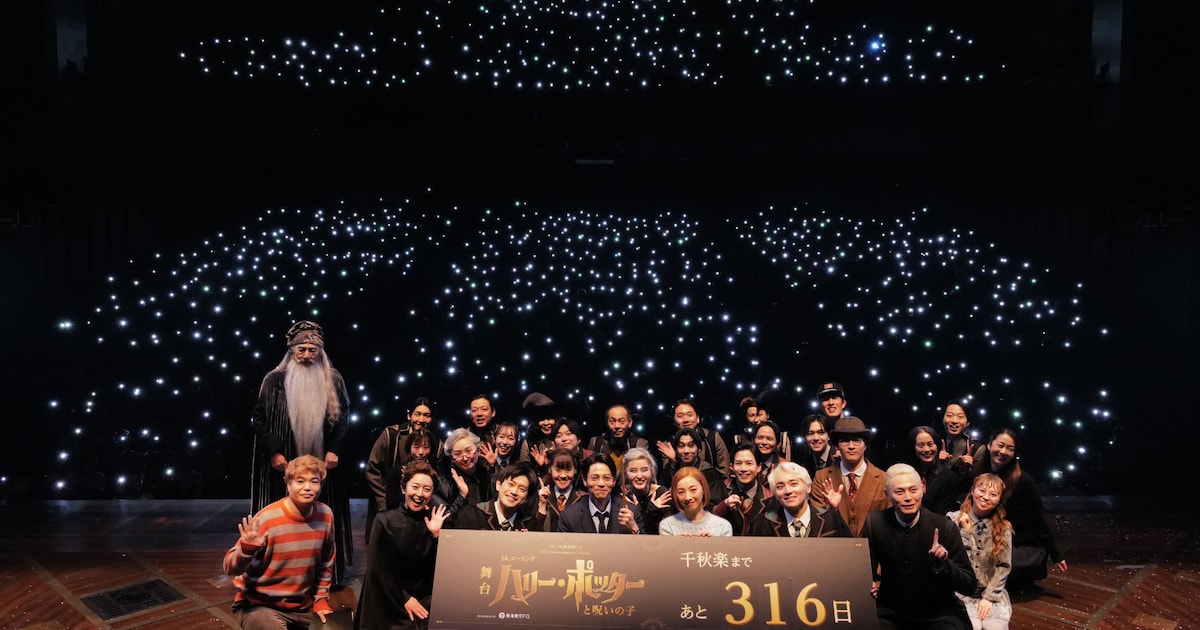
On February 14, actor Yoshizawa Yū stepped back onto the stage as Harry Potter—and the audience responded by lighting up the entire theater at once.
The long-running stage production of 「ハリー・ポッターと呪いの子」 (Harī Pottā to Noroi no Ko, Harry Potter and the Cursed Child), currently performing at TBS Akasaka ACT Theater in Tokyo, welcomed Yoshizawa back in the title role. His カムバック (kamubakku, comeback) was celebrated with a special カーテンコール (kaaten kooru, curtain call) bathed in light.
A Special Comeback Performance
Yoshizawa previously played Harry as part of the show’s third-year cast from July 2024 to June 2025. With this return, he is scheduled to appear through May.
After the February 14 performance, a special curtain call was held. The event was hosted by Sekimachi Tomohiro of the comedy duo Rice, who plays Ron Weasley. Masachika Ichimura, who portrays Albus Dumbledore, called out:
「ルーモス!」 (Rūmosu!) — “Lumos!” (the spell to light a wand)
In response, the audience turned on their smartphone lights 一斉に (issei ni, all at once). The entire theater was wrapped in a magical glow as performers and audience members became one, creating a幻想的な景色 (fantastical scene) to 祝福する (shukufuku suru, celebrate) Yoshizawa’s return.
To mark the occasion, all attendees received a new visual postcard featuring Yoshizawa as Harry.
A Long-Running Stage Phenomenon
The Tokyo production has been a ロングラン (ronguran, long-running) hit since opening on July 8, 2022. The play is officially described as:
東京・TBS赤坂ACTシアターでロングラン上演中 Tokyo TBS Akasaka ACT Shiatā de ronguran jōen-chū “Currently in a long-running engagement at TBS Akasaka ACT Theater in Tokyo.”
The story is based on an original script written for the stage by J.K. Rowling, Jack Thorne, and John Tiffany. It is considered the eighth installment of the Harry Potter series.
The plot is set 19 years after the final novel, 「ハリー・ポッターと死の秘宝」 (Harī Pottā to Shi no Hihō, Harry Potter and the Deathly Hallows). The story unfolds 父親になった37歳のハリー・ポッターとその息子アルバスの関係を軸に chichioya ni natta 37-sai no Harī Pottā to sono musuko Arubasu no kankei o jiku ni “centered on the relationship between 37-year-old father Harry Potter and his son Albus.”
The Tokyo run has been enormously successful, but it has been officially announced that the production will 幕を下ろす (maku o orosu, come to an end) on December 27, 2026. Tickets are currently on sale through July performances.
Cultural Context: Theater in Japan
Stage productions in Japan—especially international hits like Harry Potter and the Cursed Child—often run for years in one dedicated theater. The word ロングラン (ronguran) reflects this style of extended engagement, rather than touring between cities.
The special curtain call also highlights something uniquely powerful about Japanese theater culture: audience participation. The moment when everyone turned on their phone lights 一斉に created a shared emotional experience. It wasn’t just a performance—it was a collective celebration.
Learn Japanese from This Article
Let’s look at some key words and grammar that appeared in this news story.
Vocabulary
| Japanese | Romaji | Meaning |
|---|---|---|
| カムバック | kamubakku | comeback; return |
| ロングラン | ronguran | long-running (show) |
| カーテンコール | kaaten kooru | curtain call |
| 祝福する | shukufuku suru | to celebrate; to congratulate |
| 一斉に | issei ni | all at once; simultaneously |
| 〜を軸に | ~o jiku ni | centered on; focusing on |
| 幕を下ろす | maku o orosu | to close (a show); to come to an end |
| 上演中 | jōen-chū | currently being performed |
Notice how many of these words are written in katakana. Theater and entertainment vocabulary in modern Japanese often borrows from English.
Grammar Spotlight 1: 〜中(ちゅう)
Pattern: Noun + 中(ちゅう)
Meaning: “in the middle of…” or “currently doing…”
Example from the article:
- 上演中(じょうえんちゅう) jōen-chū “currently being performed”
You’ll often see this in public notices:
会議中(かいぎちゅう)です。 Kaigi-chū desu. “We’re in a meeting.”
勉強中(べんきょうちゅう)です。 Benkyō-chū desu. “I’m studying.”
It’s a compact and very useful pattern in daily life.
Grammar Spotlight 2: 〜が決定している
Pattern: Clause + が決定している
Meaning: “It has been decided that…” (formal, official tone)
From the article:
- 12月27日に幕を下ろすことが決定している。 Jūni-gatsu nijūshichi-nichi ni maku o orosu koto ga kettei shite iru. “It has been decided that the show will close on December 27.”
This structure is common in news reports and official announcements.
Useful Expression: 〜を軸に
Pattern: Noun + を軸に
Meaning: “centered on…” / “with … as the focus”
Example:
- 父と息子の関係を軸にした物語。 Chichi to musuko no kankei o jiku ni shita monogatari. “A story centered on the relationship between father and son.”
You can use this in essays or conversation:
- 日本文化を軸に研究しています。 Nihon bunka o jiku ni kenkyū shite imasu. “My research focuses on Japanese culture.”
Continue Learning
📚 Working on your reading skills? Our Katakana Essentials: Adapting Global Words to Japanese lesson is a great next step.
📚 Working on your reading skills? Our Introduction to Kanji: Pictorial Foundations of Japanese Script lesson is a great next step.
Introduction to Kanji: Pictorial Foundations of Japanese Script
📚 Want to learn more about entertainment? Check out our lesson on Basic Vocabulary Building: Embracing Words Without Latin Ties.
Basic Vocabulary Building: Embracing Words Without Latin Ties
これからもよろしくお願いします。 Kore kara mo yoroshiku onegaishimasu.