
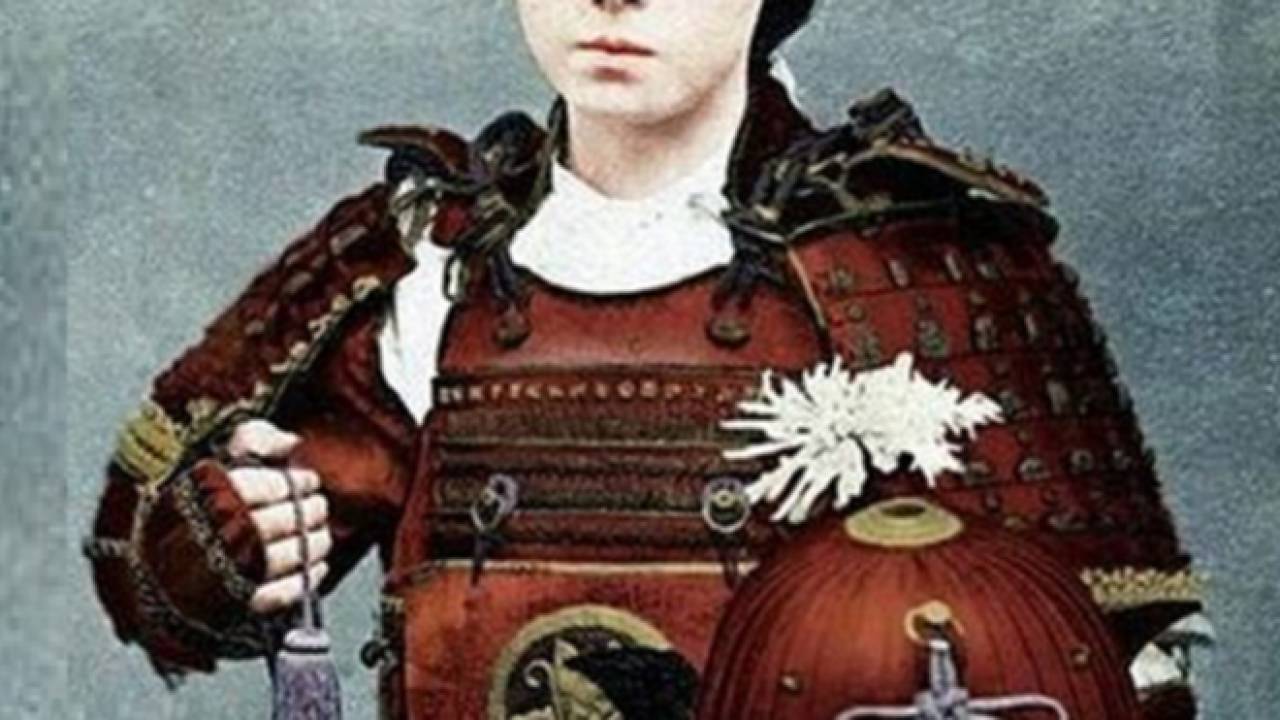
In Tenshō 3 (1575), about 6,500 Mōri troops 包囲 (houi, encircled) Tsunayama Castle, where Ueno Takanori held out with only 200 men. Before the end, he hosted a farewell drinking feast for his family, including the women. The siege comes from a larger Sengoku-era conflict remembered for another striking figure as well: Tsuruhime, the daughter of Mimura Iechika, who fought on the Mimura side and is described as a brave, 勇猛 (yuumou) woman who led attendants into battle.
According to Japaaan, Tsuruhime was the wife of Ueno Takanori and the daughter of Mimura Iechika, lord of Bitchū Matsuyama Castle. The story appears in the context of the Bitchū Heiran, a war between the Mimura and Mōri clans that began in Tenshō 2 (1574). The source introduces why Tsuruhime fought, what she did in the conflict, and the fate of her husband.
How the Bitchū Heiran began
Before the war, much of Bitchū Province, now the western part of Okayama Prefecture, was controlled by Mimura Iechika, who had risen under Mōri Motonari. In Eiroku 9 (1566), however, Iechika was killed in an 暗殺 (ansatsu, assassination) carried out by Ukita Naoie.
His heir, Mimura Motochika, fought again and again 仇敵 (kyuuteki, sworn enemy) Naoie in an effort to avenge his father, but he could not kill him. Then, in Tenshō 2 (1574), Naoie formed an alliance with the Mōri clan. After learning this, Motochika pushed past the objections of his retainers and joined forces with Oda Nobunaga.
Mōri Terumoto treated Motochika’s break with the Mōri as a major crisis. He sent Kobayakawa Takakage as commander, leading about 80,000 troops against the Mimura clan.
The fall of the Mimura and the siege of Tsunayama Castle
In response to the Bitchū Heiran, Ueno Takanori, one of Motochika’s retainers, supported the Mimura together with Tsuruhime. In Tenshō 3 (1575), Bitchū Matsuyama Castle fell in a 落城 (rakujou, fall of a castle), and Tsuruhime’s brother Motochika took his own life. His son, Katsubōshimaru, was also killed, and the Mimura ceased to exist as a Sengoku daimyo house.
After Motochika’s death, Takakage turned his army toward Tsunayama Castle, which Takanori defended. The Mōri force of about 6,500 surrounded the castle, while Takanori fought with just 200 men. The situation had become hopeless.
Takanori then decided that his family would die by 自害 (jigai, suicide in a historical samurai context). After the farewell feast, his 57-year-old stepmother tied a sword hilt to a pillar with rope and threw herself onto it. Takanori’s eldest son, Takahide, cut his abdomen in the shape of a cross and died; Takanori killed his second son; and Takanori’s younger sister used the same sword as the stepmother to die as well. Takanori then performed 介錯 (kaishaku), assisting and ending the suffering of his stepmother, Takahide, and his sister.
The source excerpt ends here, just before the next page begins with Tsuruhime heading to the battlefield with a naginata and 34 侍女 (jijo, lady attendants).
Learn Japanese from This Article
Vocabulary
| Japanese | Romaji | Meaning |
|---|---|---|
| 侍女 | jijo | lady attendant, female servant serving a noblewoman |
| 勇猛 | yuumou | brave, valiant |
| 仇敵 | kyuuteki | sworn enemy, bitter foe |
| 暗殺 | ansatsu | assassination |
| 落城 | rakujou | fall of a castle |
| 包囲 | houi | encirclement, siege |
| 自害 | jigai | suicide, especially in a historical or samurai context |
| 介錯 | kaishaku | assistance in ritual suicide; beheading to end suffering |
Grammar Spotlight
〜べく — in order to; for the purpose of doing
Pattern: Verb dictionary form + べく
From the article: 跡を継いだ三村元親は仇を討つべく何度も戦いますが、直家を討てずに時間だけが経過していきました。 Ato o tsuida Mimura Motochika wa kataki o utsu beku nando mo tatakaimasu ga, Naoie o utezu ni jikan dake ga keika shite ikimashita. “Mimura Motochika, who succeeded the family, fought many times in order to avenge his father, but time passed without his being able to kill Naoie.”
Example: 日本語を深く理解するべく、歴史の記事も読んでいます。 Nihongo o fukaku rikai suru beku, rekishi no kiji mo yonde imasu. “I also read history articles in order to understand Japanese more deeply.”
Example: 城を守るべく、兵たちは最後まで戦いました。 Shiro o mamoru beku, heitachi wa saigo made tatakaimashita. “The soldiers fought to the end in order to defend the castle.”
Use 〜べく in formal or written Japanese. It often appears in historical writing, news, and essays.
〜を受けて — in response to; following
Pattern: Noun + を受けて
From the article: 備中兵乱を受けて元親の家臣・上野隆徳は鶴姫と共に三村氏に味方しました。 Bitchū Heiran o ukete Motochika no kashin, Ueno Takanori wa Tsuruhime to tomo ni Mimura-shi ni mikata shimashita. “In response to the Bitchū Heiran, Motochika’s retainer Ueno Takanori supported the Mimura together with Tsuruhime.”
Example: 先生の助言を受けて、勉強のやり方を変えました。 Sensei no jogen o ukete, benkyou no yarikata o kaemashita. “Following my teacher’s advice, I changed the way I study.”
Example: 雨の予報を受けて、試合は中止になりました。 Ame no yohou o ukete, shiai wa chuushi ni narimashita. “In response to the rain forecast, the game was canceled.”
This pattern is common in news Japanese. It connects one event to the action that follows.
Useful Expressions
味方する (mikata suru) — to support; to take someone’s side 上野隆徳は三村氏に味方しました。 Ueno Takanori wa Mimura-shi ni mikata shimashita. “Ueno Takanori supported the Mimura clan.”
手を結ぶ (te o musubu) — to join forces; to form an alliance 元親は織田信長と手を結びました。 Motochika wa Oda Nobunaga to te o musubimashita. “Motochika joined forces with Oda Nobunaga.”
柱に突進する (hashira ni tosshin suru) — to charge into a pillar 継母は柱に刀を固定し、そこに突進しました。 Mamahaha wa hashira ni katana o kotei shi, soko ni tosshin shimashita. “His stepmother fixed a sword to a pillar and charged into it.”
これからもよろしくお願いします。 Kore kara mo yoroshiku onegaishimasu.