
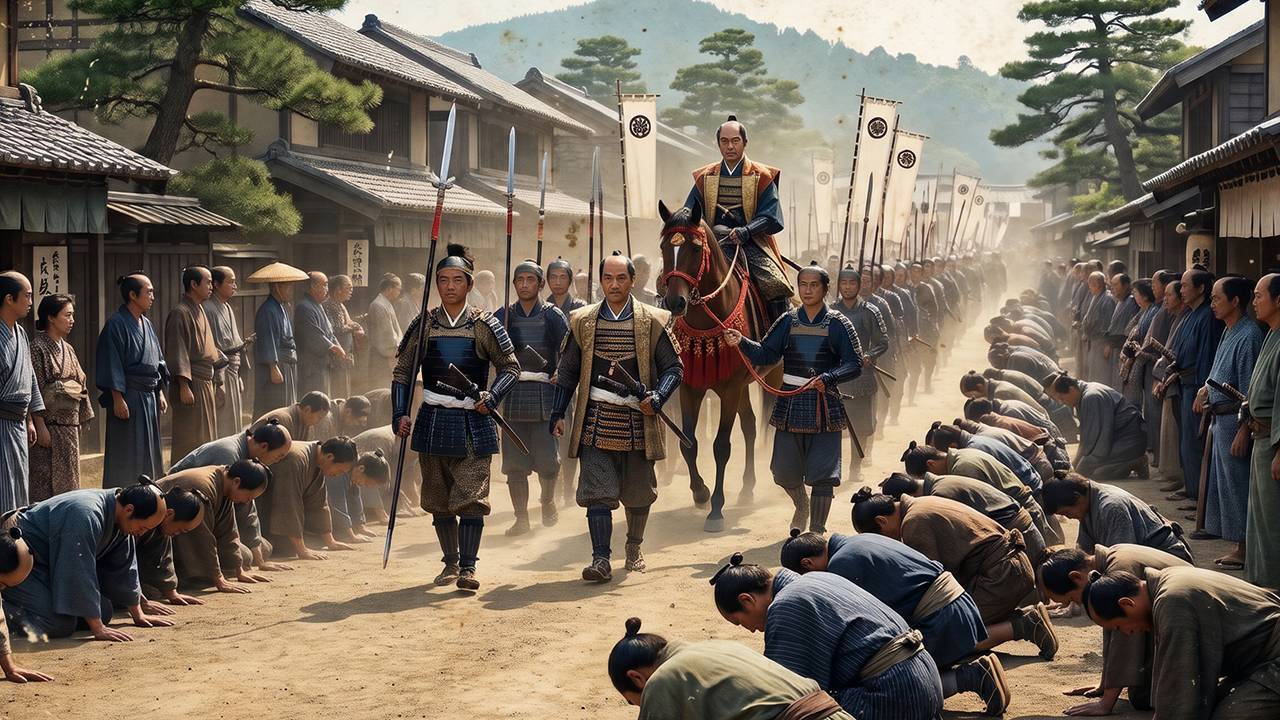
A deep bow with your forehead on the ground may look like a dramatic apology today, but Japaaan explains that 土下座 (dogeza) was originally the highest form of 敬意 (keii), or respect. The custom reaches much further back than many people expect, with traces that may go as far as the Kofun period and written descriptions from the 2nd to 3rd centuries.
In its latest culture piece, Japaaan follows the history of 土下座 (dogeza) across different eras and explains how it gradually shifted toward the meaning of 謝罪 (shazai), or apology. The source also mentions a unique “dogeza festival,” but the section provided here focuses on the older meaning of the gesture and the early reasons it carried such weight.
From noble respect to formal etiquette
The roots of 土下座 (dogeza) are older than the samurai era. Haniwa figures from the Kofun period include examples that appear to be lying flat on the ground, though the source does not say they can be identified with certainty as dogeza.
A clearer written record appears in 『魏志倭人伝』. It describes a custom in Yamataikoku around the 2nd to 3rd centuries in which common people, upon meeting a 貴人 (kijin), or person of high rank, by the roadside, would 平伏 (heifuku), prostrate themselves, and clap their hands.
In its original form, 土下座 (dogeza) was a 礼法 (reihou), a formal rule of etiquette, used when a noble person passed by. Kneeling and placing one’s forehead on the ground showed the highest possible respect. The source adds that forms of bowing with the head to the ground already appear in texts from China’s Western Zhou period, and were likely spread to Korea and Japan as part of Buddhist worship.
What dogeza meant in the samurai and Edo periods
In warrior society, 土下座 (dogeza) was also a 作法 (sahou), a formal act showing one’s readiness to accept even being cut down without protest. That gives the gesture a much heavier meaning than a simple apology.
The image many people have of Edo-period processions is also more dramatic than reality. The source says the familiar scene of everyone along the roadside crawling down at once before a daimyo procession may be an exaggerated image created by period dramas. With around 300 domains moving back and forth under 参勤交代 (sankin koutai), the system that required feudal lords to travel between their domains and Edo, the city could hardly have functioned if everyone had always been forced flat to the ground.
There were exceptions. According to the source, processions of the Owari and Kishu domains, two of the Tokugawa Gosanke houses, were said to require dogeza. Even so, the older meaning of the act remained tied to status and respect, and only later, as time passed, did it shift toward the meaning of apology.
Learn Japanese from This Article
Vocabulary
| Japanese | Romaji | Meaning |
|---|---|---|
| 土下座 | dogeza | prostrating oneself deeply on the ground; formal act of extreme apology or respect |
| 謝罪 | shazai | apology |
| 平伏 | heifuku | prostration; bowing flat to the ground |
| 貴人 | kijin | person of high rank; noble person |
| 礼法 | reihou | etiquette; formal rules of manners |
| 作法 | sahou | manners; proper way of doing something; formal conduct |
| 参勤交代 | sankin koutai | the Edo-period system requiring feudal lords to alternate residence between their domain and Edo |
| 敬意 | keii | respect; esteem |
Grammar Spotlight
〜とともに — together with; along with
From the article: この記事では、時代ごとの土下座の歴史や文化を解説するとともに、ユニークな「土下座まつり」についてもご紹介します。 Kono kiji de wa, jidai goto no dogeza no rekishi ya bunka o kaisetsu suru to tomo ni, yuniiku na “dogeza matsuri” ni tsuite mo goshoukai shimasu. This article explains the history and culture of dogeza in each period, together with an introduction to a unique “dogeza festival.”
Example: 日本語を勉強するとともに、日本の歴史も学ぶと理解が深まります。 Nihongo o benkyou suru to tomo ni, Nihon no rekishi mo manabu to rikai ga fukamarimasu. As you study Japanese, learning Japanese history as well deepens your understanding.
Example: 語彙を増やすとともに、実際の文章を読むことも大切です。 Goi o fuyasu to tomo ni, jissai no bunshou o yomu koto mo taisetsu desu. Along with increasing your vocabulary, it is also important to read real texts.
Use 〜とともに when two actions or topics go together in a formal, written style.
〜につれて — as; with the gradual change of
From the article: しかし時代が下るにつれて土下座は「謝罪」の意味へと変化していきます。 Shikashi jidai ga kudaru ni tsurete dogeza wa “shazai” no imi e to henka shite ikimasu. However, as time goes on, dogeza changes toward the meaning of “apology.”
Example: 日本語に慣れるにつれて、ニュースも少しずつ読めるようになります。 Nihongo ni nareru ni tsurete, nyuusu mo sukoshi zutsu yomeru you ni narimasu. As you get used to Japanese, you gradually become able to read the news too.
Example: 時代が変わるにつれて、言葉の意味も変わることがあります。 Jidai ga kawaru ni tsurete, kotoba no imi mo kawaru koto ga arimasu. As times change, the meanings of words can change too.
Use 〜につれて for changes that happen gradually alongside another change.
Useful Expressions
最高度の敬意を示す礼 saikoudo no keii o shimesu rei a gesture showing the highest degree of respect
道端で貴人に出会う michibata de kijin ni deau to encounter a noble person by the roadside
額を地面につける hitai o jimen ni tsukeru to place one’s forehead on the ground
そのまま斬られても異存はない sono mama kirarete mo izon wa nai to have no objection even to being cut down as one is
Continue Learning
- Context in Meaning: Implicature in Discourse: Want to use 〜れて from this article yourself? Our Context in Meaning: Implicature in Discourse lesson covers it.
これからもよろしくお願いします。 Kore kara mo yoroshiku onegaishimasu.