
Nagoya miso katsu chain Yabaton opened a new facility called Boo-chan House in September 2026, and it is exactly as pig-themed as the name suggests. Located in Kiyosu, Aichi Prefecture, the new spot combines a compact character space filled with Yabaton’s mascot Boo-chan and an eating area where visitors can order the restaurant’s famous miso katsu.
Rocket News visited on a rainy Saturday around lunchtime and found the 駐車場 (chuushajou) already crowded with cars. There is also parking a little farther away, so drivers may want to check the location in advance. Even through the rain, the building’s 外観 (gaikan), or exterior, had something of a castle-like feel.
A small world full of Boo-chan
Inside, the first thing visitors see is a shop lined with Boo-chan goods. The selection includes T-shirts, stuffed toys, blankets, and even frozen foods. Everywhere you look, there is Boo-chan.
Boo-chan is Yabaton’s official character and has been loved since the company’s founding days. According to the shop’s profile, Boo-chan was created out of a wish to become “the yokozuna of the tonkatsu world.” The character’s job is publicity and promotions manager for Yabaton, with the unusual profile details of blood type B for “Buta,” height 190 cm, and weight 0.2 pigs.
Farther inside, the Boo-chan theme gets even stronger. Visitors can take 記念撮影 (kinen satsuei), or souvenir photos, with sumo-wrestler Boo-chan figures, and there is even a display where Boo-chan and miso katsu share an umbrella. One button-triggered music feature was described as especially catchy. The exhibition area itself is fairly small: about five minutes if you walk through quickly, or around 20 minutes if you stop for photos and read the displays.
Miso katsu, sauce poured right in front of you
When hunger sets in, Boo-chan House also has a space for both eat-in and takeout meals. The writer ordered the small hire tonkatsu teishoku for 1,450 yen and a dessert called “Okami-san’s Apple Pie Soft” for 700 yen.
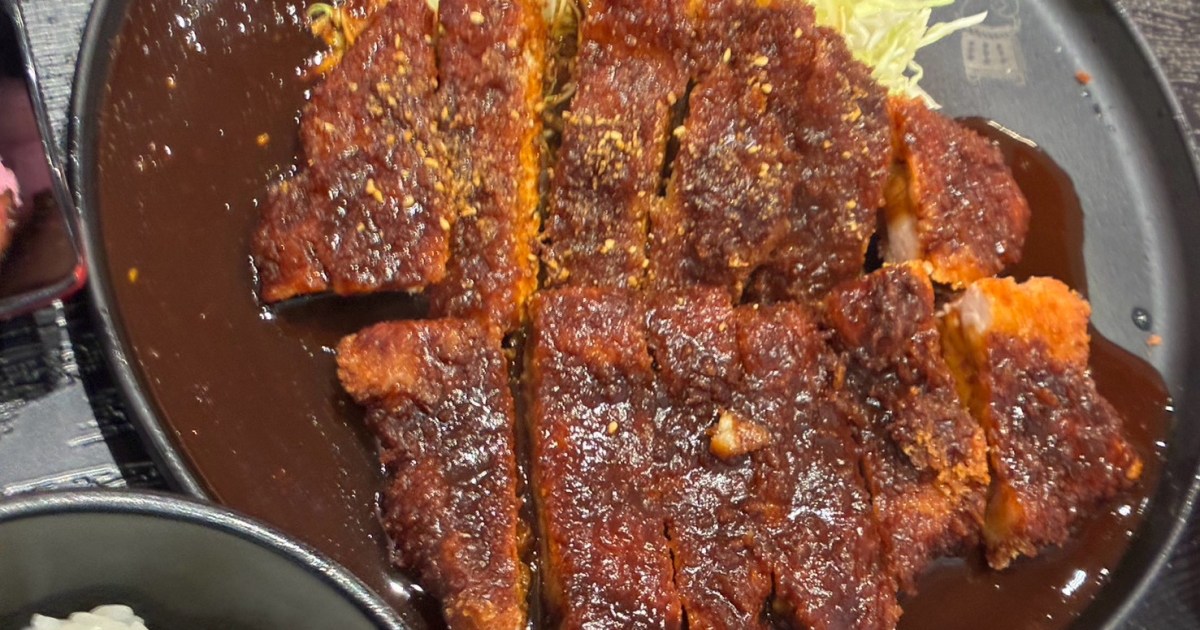
Meals are called by numbered tickets, and the finishing touch on the miso katsu happens in front of the customer: a generous pour of miso sauce over the cutlet. The result looked rich enough to build instant 食欲 (shokuyoku), or appetite. The pork was described as surprisingly tender, and the sauce paired well with 千切りキャベツ (sen-giri kyabetsu), shredded cabbage.
A friend ordered the waraji tonkatsu set meal for 1,800 yen. That version uses loin meat and has a noticeable amount of 脂身 (aburami), the fatty part of the meat, so it may be worth choosing based on how much fat you like. The report also noted that the same set costs 2,000 yen at Yabaton’s main store, making this one 200 yen cheaper. You can read the original report from Rocket News.
Limited sweets and one more detail on the grounds
The apple pie soft-serve dessert came topped with a cute Boo-chan cookie. The soft cream was rich and milky but finished surprisingly light, while the apple pie itself made a more ordinary impression because it was served cold. The writer felt a warm pie with cold soft cream would have been even better.
Inside the shop, there is also a stage, and Boo-chan shows are apparently held on some days. Boo-chan House also has a factory 敷地内 (shikichinai), meaning on the same grounds, though general factory tours do not seem to be available. For visitors heading toward Nagoya, it is a place where a mascot-filled stop and a solid plate of miso katsu come together.
Learn Japanese from This Article
Vocabulary
| Japanese | Romaji | Meaning |
|---|---|---|
| 駐車場 | chuushajou | parking lot |
| 外観 | gaikan | exterior, outside appearance |
| 記念撮影 | kinen satsuei | commemorative photo, souvenir photo |
| 食欲 | shokuyoku | appetite |
| 千切りキャベツ | sen-giri kyabetsu | shredded cabbage |
| 脂身 | aburami | fatty part of meat |
| 敷地内 | shikichinai | within the premises, on the grounds |
Grammar Spotlight
〜ておく
Pattern: verb in て-form + おく Meaning: do something in advance; do something beforehand for preparation
From the article: 少し離れた場所にも駐車場があるようなので、車で訪れる場合は事前に場所を確認しておくと安心だ。 Sukoshi hanareta basho ni mo chuushajou ga aru you na no de, kuruma de otozureru baai wa jizen ni basho o kakunin shite oku to anshin da. Since there also seems to be parking a little farther away, it’s reassuring to check the location beforehand if you plan to visit by car.
Example: 行く前に営業時間を調べておくと安心です。 Iku mae ni eigyou jikan o shirabete oku to anshin desu. It’s reassuring to check the business hours beforehand before you go.
Example: 写真を撮るなら、スマホを充電しておくといいです。 Shashin o toru nara, sumaho o juuden shite oku to ii desu. If you want to take photos, it’s good to charge your phone in advance.
〜てみる
Pattern: verb in て-form + みる Meaning: try doing something
From the article: さっそく中へ入ってみよう。 Sassoku naka e haitte miyou. Let’s go in and take a look right away.
Example: 名古屋に行ったら、味噌カツを食べてみたいです。 Nagoya ni ittara, misokatsu o tabete mitai desu. If I go to Nagoya, I want to try eating miso katsu.
Example: このボタンを押してみてください。 Kono botan o oshite mite kudasai. Please try pressing this button.
Useful Expressions
いただきます Itadakimasu “Let’s eat” / “I humbly receive.” Said before eating.
お腹が空いた Onaka ga suita “I’m hungry.”
少し足を延ばす Sukoshi ashi o nobasu Literally “stretch your legs a bit,” meaning to go a little farther than usual.
Continue Learning
- Compound Verbs: Nuanced Action Layers: Want to use 〜てみる from this article yourself? Our Compound Verbs: Nuanced Action Layers lesson covers it.
- Time and Dates: Tense-Free Expressions: Curious about the Japanese used here? Our Time and Dates: Tense-Free Expressions lesson covers this in depth.
これからもよろしくお願いします。 Kore kara mo yoroshiku onegaishimasu.