
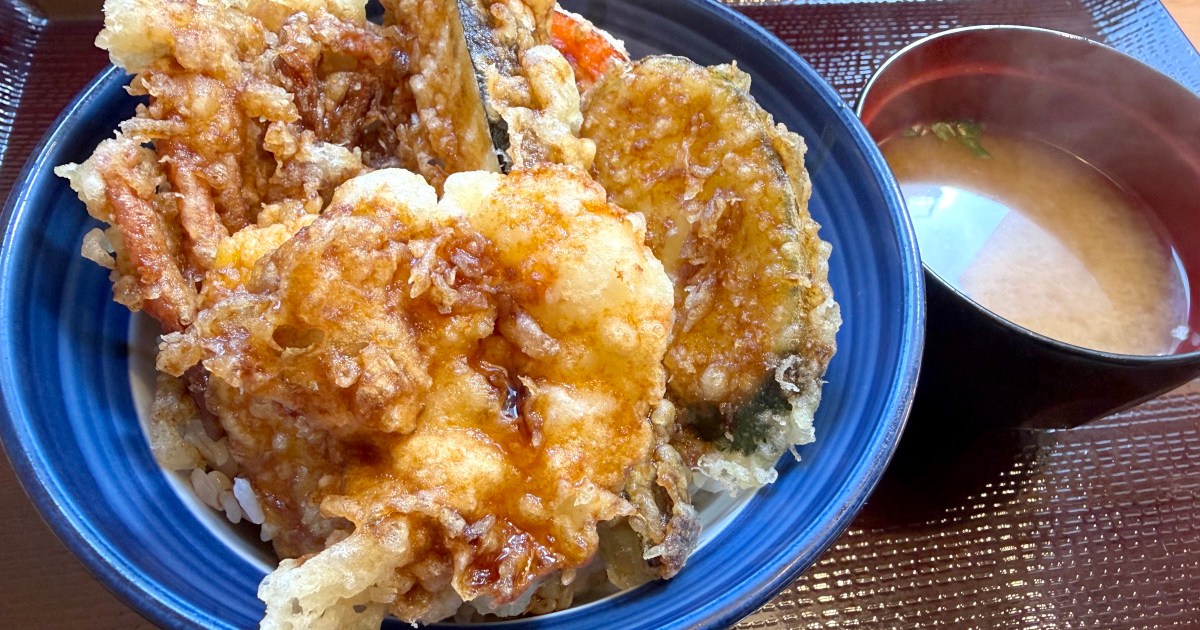
Tenya started selling 鮮やか ベジポテ天丼 (azayaka bejipote tendon), “Colorful Veggie Potato Tempura Rice Bowl,” on October 22, 2026. The new bowl was created by a Tenya staff member and won the gold prize in the chain’s in-house tempura bowl contest, beating 112 entries.
The most unusual item is the ポテサラ天 (potesara ten), a tempura made from potato salad. According to Rocket News, the dish is priced at 790 yen, can also be ordered as a takeout bento, and is 限定 (gentei), with 8,000 servings available in total. Sales end once that number is reached.
A staff contest turned into a real menu item
This year was the sixth 俺と私の天丼コンテスト (ore to watashi no tendon kontesuto), an internal contest where Tenya staff submit new tempura bowl ideas. The winning dish is then turned into a real product. Past winners have included いか旨天丼 (ikauma tendon), a squid-heavy tempura bowl.
This year’s gold-prize winner came from a staff member at Tenya’s Chigasaki branch. The source says the branch had strong feelings about the contest and had been aiming for a comeback after the previous two years.
The bowl’s name is 鮮やか ベジポテ天丼 (azayaka bejipote tendon). The word 彩り (irodori), meaning colorfulness or visual appeal, fits it well: the toppings are potato salad tempura, paprika, zucchini, eggplant, corn, and red-hearted daikon radish.
What it tasted like on the first day
Rocket News tried the dish on its first day of sale. The standout was the potato salad tempura, which had a crisp coating, a soft inside, and small chunks of potato. That mix gave it a changing 食感 (shokkan), or texture, in a single bite.
The writer felt that potato salad tempura would not normally become the kind of star topping that shrimp or conger eel can be. Still, as tempura on its own, it was judged very successful and distinctly original for Tenya.
The other vegetables also made a strong impression. The paprika and red-hearted daikon added bright color, while the corn tempura was described as a reliable, satisfying choice. The eggplant and zucchini were said to be unbelievably hot, with the writer again noticing how well oily frying suits those vegetables.
A neat variation on the vegetable tempura bowl
The final impression was that this is a stylish version of a vegetable tempura bowl. People who already tend to order vegetable tendon at Tenya will probably enjoy it without any 違和感 (iwakan), or sense that something feels off.
The dish was 考案 (kouan), devised, by a Tenya staff member rather than a product team working from the top down. That helps explain why the story opens by saying that when workers clearly love their own shop, customers feel a little happier too.
Learn Japanese from This Article
Vocabulary
| Japanese | Romaji | Meaning |
|---|---|---|
| 発売 | hatsubai | release; start of sales |
| 限定 | gentei | limited; exclusive |
| 応募 | oubo | application; submission; entry |
| 考案 | kouan | idea creation; devising |
| 彩り | irodori | colorfulness; visual appeal |
| 食感 | shokkan | texture; mouthfeel |
| 違和感 | iwakan | sense of discomfort; something feeling off |
Grammar Spotlight
〜に達し次第 Meaning: “as soon as it reaches” or “once it hits the limit”
From the article: 数量に達し次第販売が終了する suuryou ni tasshi shidai hanbai ga shuuryou suru Sales will end once the quantity limit is reached.
Use this pattern when something changes immediately after a number, limit, or condition is met.
Example: 定員に達し次第、受付を終了します。 teiin ni tasshi shidai, uketsuke o shuuryou shimasu. Registration will close as soon as capacity is reached.
〜てみる Meaning: “to try doing something”
From the article: まずは主役の「ポテサラ天」を食べてみると mazu wa shuyaku no “potesara ten” o tabete miru to First, when I tried eating the star item, the potato salad tempura…
Use 〜てみる when you try an action to see what it is like.
Example: 新しいメニューを食べてみます。 atarashii menyuu o tabete mimasu. I’ll try the new menu item.
Useful Expressions
金賞を受賞した kinshou o jushou shita won the gold prize
初日のてんやで味わってみる shonichi no Tenya de ajiwatte miru try it at Tenya on the first day
ご賞味いただきたい goshoumi itadakitai we’d like you to give it a try / please enjoy tasting it
Continue Learning
- Masu Form: Mastering Polite Everyday Speech: Want to understand the verb forms used here? Check out Masu Form: Mastering Polite Everyday Speech.
- Basic Vocabulary Building: Embracing Words Without Latin Ties: Ready to dive deeper? Our lesson on Basic Vocabulary Building: Embracing Words Without Latin Ties will help you master these concepts.
- Greetings and Self-Introductions: Authentic Entry Phrases: To understand more about Japanese, explore our Greetings and Self-Introductions: Authentic Entry Phrases lesson.
これからもよろしくお願いします。 Kore kara mo yoroshiku onegaishimasu.