
Deep-fried black broth soaking into oden, a ramen shop that attracts a 行列 (gyouretsu) from 2 a.m., and a roadside station split across two cities and a national highway—Shizuoka’s 道の駅 (michi no eki) are anything but ordinary rest stops.
Rocket News recently featured a road-trip roundup by a self-proclaimed roadside station maniac who has visited over 900 locations across Japan. After conquering all 27 道の駅 (michi no eki) in Shizuoka Prefecture, he selected 10 must-visit spots. Here are five highlights from that list—each one packed with food, culture, and views you won’t forget.
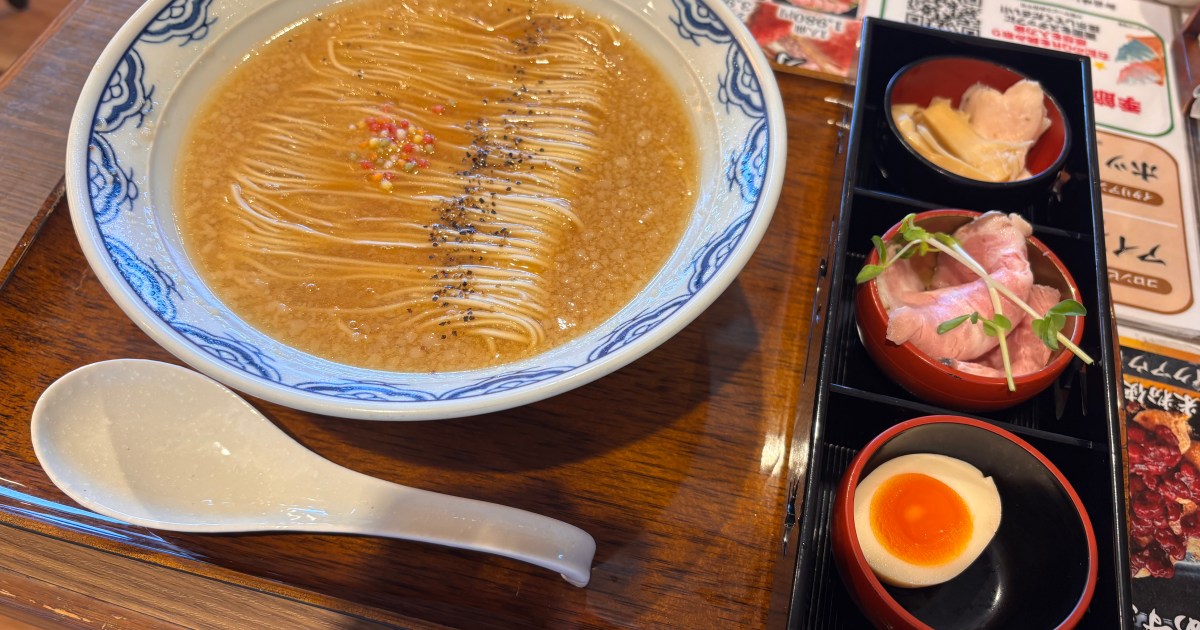
Omaezaki: Ramen Worth Waking Up At 2 A.M.
道の駅風のマルシェ御前崎 (Michi no Eki Kaze no Marche Omaezaki) sits at the southernmost tip of Shizuoka.
Inside, the restaurant “Omaezaki Restaurant Tawara-ya” has been attracting ramen fans from across Japan. The excitement has 続けている (tsuzukete iru, continues) for years—so much so that people start lining up at 2 a.m. for its legendary “morning ramen.”
You can try luxurious bowls like:
- Kagoshima black pork back-fat black ramen
- Miyazaki wagyu salt ramen
- Light niboshi (dried sardine) ramen
All are served as morning-only 限定 (gentei) items.
Even more intense? A special mixed-noodle side dish called a-dama, available only through 抽選 (chuusen, lottery). Even if there’s a long line, only three people can win the right to order it.
After eating, visitors are encouraged to drive to nearby Hamaoka Sand Dunes and enjoy the Pacific Ocean breeze. Ramen plus ocean 絶景 (zekkei)—a perfect early-morning reward.
Makinohara: A Tea-Themed Food Paradise
Opened in July 2025, 道の駅そらっと牧之原 (Michi no Eki Soratto Makinohara) is Shizuoka’s 26th roadside station and one of its newest attractions.
Makinohara is known as the birthplace of deep-steamed tea and sits in Japan’s top tea-producing prefecture. This station blends tea culture with local ingredients in what the article calls a “food theme park.”
At the 直売所 (chokubaijo), you’ll find sweets made with Makinohara matcha supervised by long-established tea shops, as well as local specialties like:
- Shirasu (whitebait) from Suruga Bay
- Sakura shrimp
- Large displays of shiitake mushrooms
The takeaway corner sells an intensely rich matcha soft-serve called “O-Matcha Daikanzan Koicha Soft” (650 yen). The slogan claims it’s “so good you’ll choke”—and the writer says he actually did.
In the food court, tea-inspired dishes shine. The must-order item? “Shirasu Dossari Soba” (1,650 yen), tea-infused soba noodles topped generously with shirasu piled on in front of you. It’s entertainment and lunch in one.
This is Makinohara ならでは (narade wa)—an experience unique to its tea heritage.
Shiosaka: Foot Bath with an Ocean View
On the western side of Lake Hamana, facing the Pacific Ocean, sits 道の駅潮見坂 (Michi no Eki Shiosaka).
The location alone creates instant excitement. Historically, this area was a scenic stop along the old Tokaido road. (And remember—Lake Hamana is a brackish lake where seawater mixes with freshwater.)
The biggest healing feature? A free 足湯 (ashiyu) overlooking the ocean. Soak your feet while listening to the waves and feeling the sea breeze. It’s the perfect cure for long-drive fatigue.
For breakfast, try the “Kamaage Shirasu Don” (1,080 yen), made with freshly caught whitebait from the Enshu-nada Sea. The fluffy texture and rich flavor are only possible because it’s sourced locally.
You can also enjoy “Nama Nori Don” (870 yen), topped with seasoned fresh seaweed from Lake Hamana—or order a half-and-half bowl (980 yen).
Utsunoya Pass: A Roadside Station Like No Other
道の駅宇津ノ谷峠 (Michi no Eki Utsunoya Toge) is structurally unique. It’s divided into three areas across National Route 1 and even spans two cities: Shizuoka City and Fujieda City.
One section consists of only a restroom and parking lot—a charmingly unusual detail that makes roadside station fans smile.
The must-try food here is Shizuoka’s soul food: dark-broth oden from the famous shop Tenjinya. The skewered ingredients soak in a rich, almost black broth and are topped with special fish powder. Local favorites include:
- 黒はんぺん (kuro hanpen) – dark fish cake
- 富士の白雪 (Fuji no shirayuki) – a soft, chewy white item
Surrounded by quiet mountains and remnants of the old Tokaido road, this stop offers both history and comfort.
Shimoda: A Port Town Food Theme Park
At the southern tip of the Izu Peninsula stands 道の駅開国下田みなと (Michi no Eki Kaikoku Shimoda Minato).
Facing the historic port of Shimoda—famous for the arrival of the “Black Ships” that opened Japan to the world—this large facility feels more like a commercial complex than a typical roadside station.
With its scale, sea views, and historical atmosphere, it serves as a massive food and shopping theme park representing the region.
Cultural Context: What Makes 道の駅 Special?
A 道の駅 (michi no eki) is more than a rest stop. Established nationwide, these government-registered roadside stations provide:
- Parking and rest facilities
- Tourist information
- Local products and regional cuisine
They connect travelers with local culture. That’s why each station highlights ingredients and traditions ならでは (narade wa) of its area—tea in Makinohara, seafood in Shiosaka, oden in Shizuoka City.
For road-trippers in Japan, collecting stamps and visiting different 道の駅 (michi no eki) is almost a hobby of its own.
Learn Japanese from This Article
Vocabulary
| Japanese | Romaji | Meaning |
|---|---|---|
| 道の駅 | michi no eki | roadside station |
| 行列 | gyouretsu | line; queue |
| 限定 | gentei | limited (offer/item) |
| 抽選 | chuusen | lottery; drawing |
| 絶景 | zekkei | spectacular view |
| 直売所 | chokubaijo | direct sales shop; farmers’ market |
| 足湯 | ashiyu | foot bath |
Grammar Spotlight
1. 〜続けている (tsuzukete iru) — “to continue doing”
Structure: Verb (て-form) + 続けている
Example from the article concept:
- ラーメン店は人気を集め続けている。 Rāmen-ten wa ninki o atsume tsuzukete iru. “The ramen shop continues to attract popularity.”
This pattern emphasizes an action that has been ongoing.
2. 〜ならでは (narade wa) — “unique to; only because of”
Structure: Noun + ならでは
- 牧之原ならではの茶グルメ。 Makinohara narade wa no cha gurume. “Tea cuisine unique to Makinohara.”
It highlights something special that exists precisely because of that place or condition.
Useful Expressions
早起きは三文の徳 (hayaoki wa sanmon no toku) “The early bird gets the worm.” (Literally: Waking up early brings three mon of profit.)
スルー厳禁 (surū genkin) “Absolutely must not skip.”
Continue Learning
To understand more about how Japanese handles time expressions (like early morning openings or ongoing actions), explore our lesson:
Shizuoka’s roadside stations prove that a “rest stop” in Japan can mean ramen at dawn, tea-infused soba at noon, and an ocean-view foot bath in the afternoon. Each one teaches you not just new flavors—but new Japanese words and cultural insights along the way.
これからもよろしくお願いします。 Kore kara mo yoroshiku onegaishimasu.