
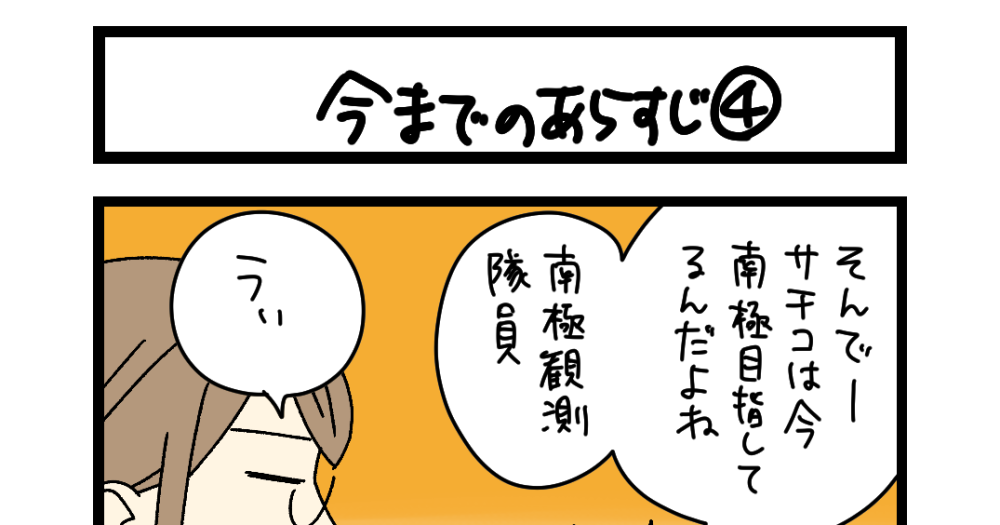
On August 6, 2026, Rocket News published Episode 2687 of the 4-panel manga サチコと神ねこ様 (Sachiko to Kami Neko-sama), titled 「今までのあらすじ④」 (Ima made no arasuji ④), meaning “The Story So Far (4).”
This installment continues a recap arc, helping readers catch up on Sachiko’s journey—especially her ambitious goal of becoming a 南極観測隊員 (nankyoku kansokutaiin), an Antarctic research expedition member.
Catching Up with Sachiko
The article includes a 参考リンク (sankō rinku, reference link) to earlier episodes beginning with Episode 2657, where Sachiko starts aiming to join the Antarctic research team. For readers who may have joined midway, this recap provides helpful context.
There’s also a link to a 【マンガ体験レポ】大南極展 (manga taiken repo: Dainan-kyokuten), an “experience report” manga about the Great Antarctica Exhibition, which is 開催予定 (kaisai yotei, scheduled to be held) until September 27, 2026.
In other words, this episode doesn’t just move the story forward—it connects readers to a broader Antarctic theme running through the series.
From Transfer to New Beginnings
The page navigation notes:
- « 前の話へ (mae no hanashi e) — “To the previous story”
- 移籍初回から (isek i shokai kara) — “From the first episode after the transfer”
The word 移籍 (isek i) means “transfer,” often used when someone moves to a different company, publisher, or team. In the manga world, this can refer to a series moving to a new platform or publication. 初回 (shokai) means “first time” or “first episode.”
These small phrases reflect how Japanese manga platforms carefully organize content, making it easy for readers to jump between arcs or restart from key turning points.
A Message from the Creator
At the end, manga artist wako shares a casual, friendly comment:
「コミックスが10巻まで出てるし、買って読んじゃってほしい」
Komikkusu ga jukkan made deteru shi, katte yonjatte hoshii.
“The comic volumes are out up to volume 10, so I’d love for you to go ahead and buy and read them!”
Here, コミックス (komikkusu) refers to collected comic book volumes. The phrase 10巻まで (jukkan made) uses 〜まで to mean “up to volume 10.”
Notice the casual verb form 読んじゃって (yonjatte). This comes from 読んでしまって (yonde shimatte), which often implies completing something—sometimes with a nuance of “just go ahead and do it.” In this context, it feels like a warm, slightly playful suggestion: “Why not just buy them and read them?”
This kind of friendly tone is very common in Japanese creator comments.
Cultural Context: Antarctic Dreams in Japan
Japan has a long history of Antarctic research, and becoming a 南極観測隊員 (nankyoku kansokutaiin) is a prestigious and challenging goal. By weaving this dream into a lighthearted 4-panel manga, the series blends everyday humor with a surprisingly grand ambition.
The inclusion of a 体験レポ (taiken repo, experience report) about the Great Antarctica Exhibition shows how manga often connects entertainment with real-world events. It’s not unusual in Japan for exhibitions to collaborate with media, and for manga artists to create special reports about them.
Through Sachiko’s story, readers are gently introduced to scientific and cultural topics—while still enjoying the charm of a comedic strip.
Learn Japanese from This Article
Key Vocabulary
| Japanese | Romaji | Meaning |
|---|---|---|
| 南極観測隊員 | nankyoku kansokutaiin | Antarctic research expedition member |
| 参考リンク | sankō rinku | reference link |
| 体験レポ | taiken repo | experience report |
| 開催予定 | kaisai yotei | scheduled to be held |
| 移籍 | isek i | transfer (to another team/company/publisher) |
| 初回 | shokai | first time; first episode |
| コミックス | komikkusu | comic book volumes |
| 〜巻まで | ~kan made | up to volume ~ |
Grammar Spotlight 1: 〜まで (until; up to)
Pattern: Noun + まで
Used to indicate a limit—either in time or quantity.
Example from the article:
- 10巻まで出てる Jukkan made deteru “(They’re) out up to volume 10.”
More examples:
9月27日まで開催予定です。 Kugatsu nijūshichi-nichi made kaisai yotei desu. “It is scheduled to be held until September 27.”
ここまで読みました。 Koko made yomimashita. “I’ve read up to here.”
Grammar Spotlight 2: 〜ちゃって (casual 〜てしまって)
Pattern: Verb (て-form) + しまって → casual ちゃって / じゃって
This form comes from 〜てしまう, which often implies completion, regret, or “just go ahead and do it.”
From the article:
- 読んじゃってほしい Yonjatte hoshii “I want you to just go ahead and read it.”
Here, it softens the request and makes it sound friendly and conversational.
More examples:
食べちゃった。 Tabechatta. “I ended up eating it (all).”
忘れちゃってごめん。 Wasurechatte gomen. “Sorry, I completely forgot.”
You’ll hear 〜ちゃって constantly in casual spoken Japanese—especially in manga dialogue.
Useful Expressions
- 前の話へ (mae no hanashi e) — “To the previous story”
- 初回から読む (shokai kara yomu) — “Read from the first episode”
- 〜を目指す (~ o mezasu) — “To aim for ~”
- 南極観測隊員を目指す。 Nankyoku kansokutaiin o mezasu. “To aim to become an Antarctic research expedition member.”
Continue Learning
📚 Want to understand the verb forms used here? Check out Masu Form: Mastering Polite Everyday Speech.
📚 Want to learn more about lifestyle? Check out our lesson on Greetings and Self-Introductions: Authentic Entry Phrases.
📚 Curious about the Japanese used here? Our Basic Vocabulary Building: Embracing Words Without Latin Ties lesson covers this in depth.
Basic Vocabulary Building: Embracing Words Without Latin Ties
これからもよろしくお願いします。 Kore kara mo yoroshiku onegaishimasu.