
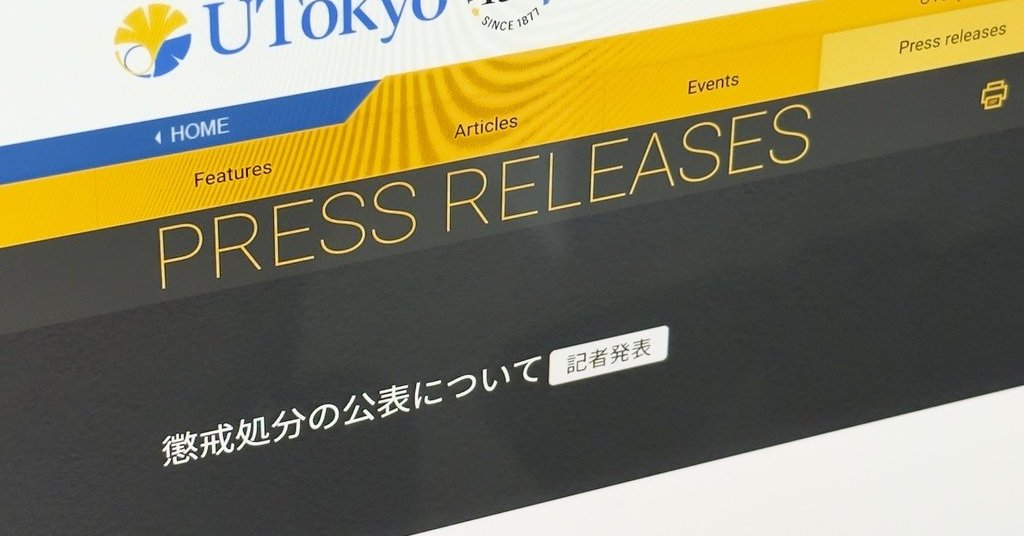
On August 4, the University of Tokyo announced that it had taken disciplinary action against a professor in his 60s for writing inappropriate words in the HTML source of a laboratory website.
What Happened at the University of Tokyo?
According to the university’s announcement, the professor belonged to a specific 所属 (shozoku)—an academic affiliation within the university—and had written inappropriate language in the HTMLソース (eichi-ti-emu-ru soosu), or HTML source code, of the website for his 研究室 (kenkyuushitsu), his research laboratory.
The university stated that this language was 不適切 (futekisetsu), meaning inappropriate or improper. As a result, the professor received a three-day 出勤停止 (shukkin teishi), or suspension from work, as a 懲戒処分 (choukai shobun), disciplinary action.
In Japanese, the official phrasing was that the university 〜と発表した (to happyou shita)—“announced that” it had taken this step.
Why Is HTML Source Mentioned?
One interesting detail in this case is the reference to HTMLソース (eichi-ti-emu-ru soosu). This is the underlying code that structures a webpage. Normally, visitors see the visual layout of a site, but the source code can be viewed separately.
The fact that the issue occurred in the HTML source rather than the visible text highlights how even technical or behind-the-scenes content is subject to professional and institutional standards.
For Japanese learners, notice how technical English terms like “HTML” are written in katakana as エイチティーエムエル and shortened in pronunciation to eichi-ti-emu-ru. This reflects how Japanese adapts global tech vocabulary into its own sound system.
Understanding the Language of Discipline
Japanese institutions often use very specific terminology when describing official actions. Two key words in this report are:
- 懲戒処分 (choukai shobun) — disciplinary action
- 出勤停止 (shukkin teishi) — suspension from work
These terms are commonly used in news reports about public officials, teachers, or corporate employees. The phrasing is formal and neutral, focusing on the action taken rather than emotional commentary.
Another important structure used in the original article is:
- 不適切な言葉を書き込んだとして (futekisetsu na kotoba o kakikonda to shite) “on the grounds that he wrote inappropriate words”
Here, 〜として (to shite) means “as” or “on the grounds that,” explaining the reason for the action.
Cultural Context: Public Accountability in Japan
Major Japanese institutions such as the University of Tokyo—often called 東大 (Tōdai)—are highly respected. When issues arise, they are typically addressed through formal announcements.
The use of precise administrative language reflects a broader cultural emphasis on responsibility and transparency in official matters. Even actions involving website code fall under institutional rules and professional expectations.
For learners, news articles like this are valuable because they show how Japanese handles formal communication, especially in academic and governmental settings.
Learn Japanese from This Article
Key Vocabulary
| Japanese | Romaji | Meaning |
|---|---|---|
| 所属 | shozoku | affiliation; belonging to an organization |
| 研究室 | kenkyuushitsu | laboratory; research room |
| HTMLソース | eichi-ti-emu-ru soosu | HTML source (code) |
| 不適切 | futekisetsu | inappropriate; improper |
| 出勤停止 | shukkin teishi | suspension from work |
| 懲戒処分 | choukai shobun | disciplinary action |
Try reading this sentence structure aloud:
東京大学は教授を出勤停止3日の懲戒処分にしたと発表した。 Tōkyō Daigaku wa kyōju o shukkin teishi mikka no choukai shobun ni shita to happyou shita. “The University of Tokyo announced that it imposed a three-day suspension as disciplinary action on the professor.”
Grammar Spotlight
1. 〜として (as; on the grounds that)
Structure: [Reason clause] + として
Example from this case:
- 不適切な言葉を書き込んだとして、懲戒処分にした。 Futekisetsu na kotoba o kakikonda to shite, choukai shobun ni shita. “He was given disciplinary action on the grounds that he wrote inappropriate words.”
More examples:
- 学生であるとして扱われる。 Gakusei de aru to shite atsukawareru. “He is treated as a student.”
- 規則違反をしたとして注意された。 Kisoku ihan o shita to shite chūi sareta. “He was warned on the grounds that he violated the rules.”
2. 〜と発表した (announced that…)
Structure: [Statement] + と発表した
- 大学は処分を行ったと発表した。 Daigaku wa shobun o okonatta to happyou shita. “The university announced that it carried out disciplinary action.”
This pattern is extremely common in news writing. When reading Japanese articles, spotting 〜と発表した quickly tells you that an official announcement is being reported.
Useful Expression
- 不適切な言葉 (futekisetsu na kotoba) — “inappropriate words” This phrase appears frequently in media reports when specific details are not publicly disclosed.
Continue Learning
Curious about the katakana used in words like HTMLソース? Our Katakana Essentials: Adapting Global Words to Japanese lesson is a great next step.
Want to expand your tech vocabulary further? Check out Basic Vocabulary Building: Embracing Words Without Latin Ties.
If you’d like to strengthen your reading foundation, our Reading and Writing in Japanese II: Hiragana and Katakana lesson covers the scripts used in this article in depth.
これからもよろしくお願いします。 Kore kara mo yoroshiku onegaishimasu.