
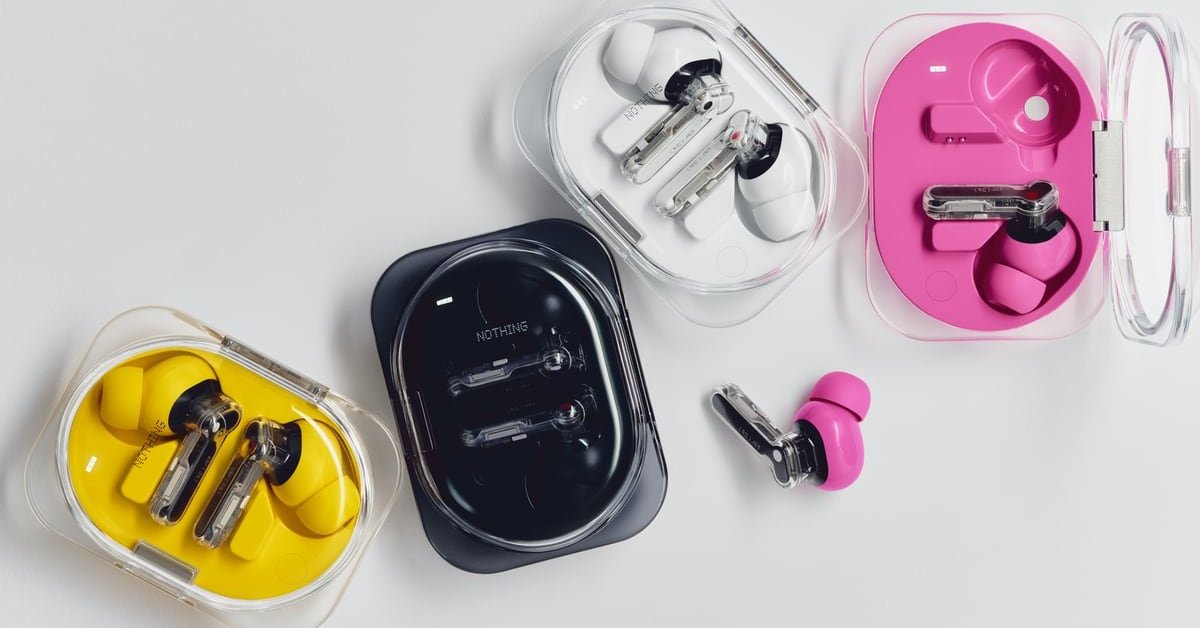
London-based technology brand Nothing has released its latest wireless earphones, the 「Ear (3a)」—and the highlight is a feature called “Audio Snapshot.”
A New Release from London
The company is described as a London-based テクノロジー (tekunorojī) ブランド (burando), and its newest ワイヤレス (waiyaresu) イヤフォン (iyahon) has officially 登場しました (tōjō shimashita)—“has appeared” or “has been released.”
In Japanese tech reporting, 登場する (tōjō suru) is commonly used when a new product hits the market. It literally means “to appear on stage,” which gives product launches a slightly dramatic feel—almost like a performer entering the spotlight.
The Ear (3a) is noted for its strong design and solid basic performance. However, what really stands out is a feature called 「オーディオスナップショット」 (Audio Snapshot).
The Highlight: “Audio Snapshot”
The article describes this feature as the product’s 目玉 (medama), meaning “highlight” or “main attraction.”
Originally, 目玉 literally means “eyeball,” but in everyday Japanese it’s often used to describe the most eye-catching or exciting part of something—whether that’s a sale at a supermarket or a new function in a gadget.
Here, the “Audio Snapshot” is introduced as a key 機能 (kinō)—a function or feature—that fulfills the feeling of:
「あ、その情報メモしたい!」 “Ah, I want to jot down that information!”
Even from that short quote, you can sense the intended use: capturing information at the moment you hear it. The feature’s name suggests quickly “snapping” an audio moment, like taking a mental note—but in sound form.
Cultural Context: Katakana and Global Tech
Nearly every key term in this article is written in katakana:
- テクノロジー
- ブランド
- ワイヤレス
- イヤフォン
- オーディオスナップショット
Katakana is commonly used for loanwords, especially in tech. Japan’s technology industry frequently adopts English-based terminology, adapting pronunciation into Japanese sound patterns.
For learners, this is great news. Once you get comfortable reading katakana, entire tech articles suddenly become much easier to understand.
Learn Japanese from This Article
Key Vocabulary
| Japanese | Romaji | Meaning |
|---|---|---|
| テクノロジー | tekunorojī | technology |
| ブランド | burando | brand |
| ワイヤレス | waiyaresu | wireless |
| イヤフォン | iyahon | earphones |
| 登場する | tōjō suru | to appear; to be released |
| 目玉 | medama | highlight; main attraction |
| 機能 | kinō | function; feature |
Grammar Spotlight
1. 〜から (source/origin)
Used to indicate origin or source—“from.”
Example from the article:
- ロンドン発のテクノロジーブランド、Nothingから最新のワイヤレスイヤフォンが登場しました。 Rondon-hatsu no tekunorojī burando, Nothing kara saishin no waiyaresu iyahon ga tōjō shimashita. “The latest wireless earphones have been released from the London-based technology brand Nothing.”
Here, から shows the origin—who or where something comes from.
You’ll use this constantly in daily Japanese:
- 日本から来ました。 Nihon kara kimashita. “I came from Japan.”
2. 〜といえる (can be said to…)
This pattern softens statements and makes them sound more analytical or journalistic.
- 今回の目玉といえるのが「オーディオスナップショット」という機能です。 Konkai no medama to ieru no ga “Ōdio Sunappushotto” to iu kinō desu. “What can be said to be the highlight this time is a feature called ‘Audio Snapshot.’”
This structure is very common in news writing. It allows the writer to suggest an evaluation without sounding overly strong.
Useful Expression
- メモしたい (memo shitai) — “I want to make a note.”
From the quote:
- あ、その情報メモしたい! A, sono jōhō memo shitai! “Oh, I want to make a note of that information!”
This uses the pattern:
Verb stem + たい → “want to do”
For example:
- 食べたい (tabetai) — want to eat
- 行きたい (ikitai) — want to go
Continue Learning
Working on your reading skills? Our Katakana Essentials: Adapting Global Words to Japanese lesson is a great next step.
Ready to dive deeper? Our lesson on Reading and Writing in Japanese II: Hiragana and Katakana will help you master these concepts.
Ready to expand your word power? Our lesson on Basic Vocabulary Building: Embracing Words Without Latin Ties will help you master these concepts.
Technology news is one of the most accessible—and exciting—ways to build your real-world Japanese vocabulary. The more you read, the more these katakana words will start to feel natural rather than foreign.
これからもよろしくお願いします。 Kore kara mo yoroshiku onegaishimasu.