
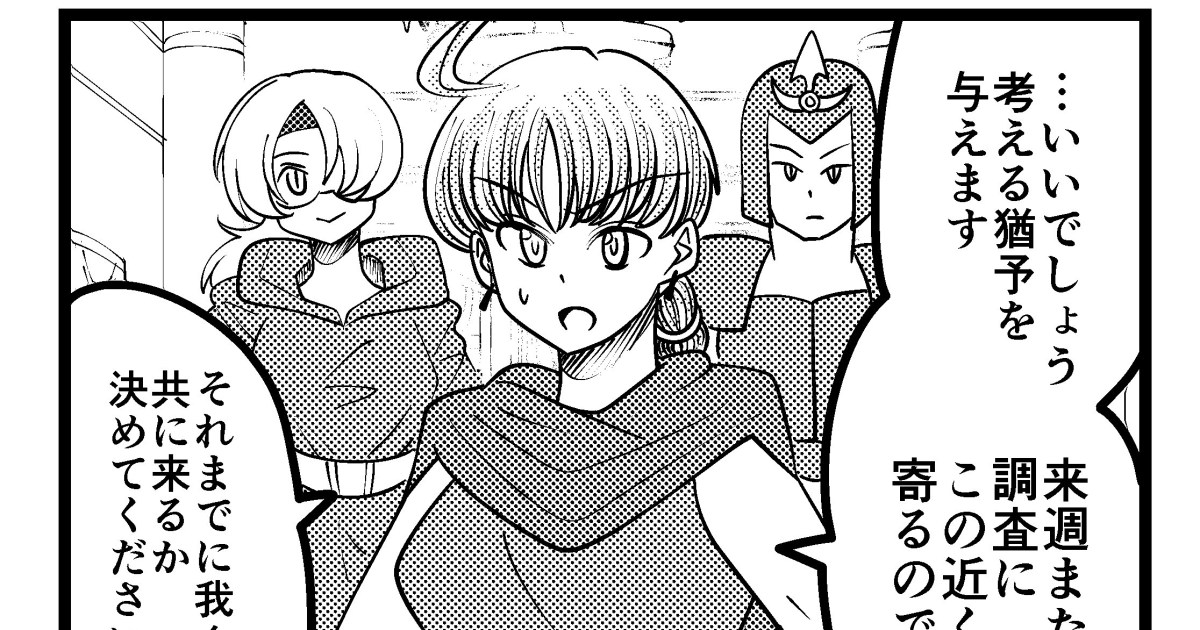
【4コマ】魔王軍はホワイト企業 2054話目「ヤマダの選択④」 was published on July 18, 2026, continuing the long-running comic series by スガラジカル.
This installment is the 2054話目 (ni-sen go-jū yon wa-me) — the 2,054th episode — of the popular 漫画 (manga) series 魔王軍はホワイト企業 (Maō-gun wa howaito kigyō), which literally means “The Demon King’s Army Is a White Company.” The subtitle of this episode is 「ヤマダの選択④」 (Yamada no sentaku yon), or “Yamada’s Choice (4),” indicating it’s the fourth part of an ongoing storyline.
Readers are invited to navigate the series with links such as:
- « 前の話へ » (mae no hanashi e) — “To the previous episode”
- 第1回から読む (dai ik-kai kara yomu) — “Read from episode 1”
- ▼キャラ一覧はこちら (kyara ichiran wa kochira) — “Character list is here”
Even in these short navigation phrases, there’s a lot of practical Japanese you’ll see again and again on real websites in Japan.
A Long-Running 4-Panel Comic
The label 【4コマ】 (yon-koma) tells us this is a four-panel comic. In Japan, 4-panel 漫画 (manga) are a classic format. Each strip typically follows a structure of setup, development, twist, and punchline. It’s a style that’s been used in newspapers, magazines, and online platforms for decades.
Reaching 第2054話 (dai ni-sen go-jū yon wa) is no small feat. The counter shows how long-running and episodic this series is. In Japanese media, numbering episodes with 第〜回 (dai~kai) or 第〜話 (dai~wa) is standard practice for everything from TV dramas to blog series.
How Navigation Language Teaches You Real Japanese
What makes this short article interesting for learners isn’t just the comic itself — it’s the everyday Japanese surrounding it.
Let’s look at a few key phrases:
前の話へ (mae no hanashi e) Literally, “to the previous story.” The particle へ (e) marks direction — in this case, the direction of navigation (to the previous episode).
第1回から読む (dai ik-kai kara yomu) “Read from episode 1.” The particle から (kara) means “from,” indicating a starting point.
キャラ一覧はこちら (kyara ichiran wa kochira) “The character list is here.” こちら (kochira) is a polite way to say “this way” or “here,” often used on websites and in customer-facing language.
This is the kind of Japanese native speakers encounter naturally — not isolated textbook sentences, but functional language used in context.
Cultural Context: Why Episode Numbers Matter
In Japan, long-running serialized content is common. Manga, light novels, and even web comics often use clear numbering like:
- 第1回 (dai ik-kai) — Episode 1
- 第2054話 (dai ni-sen go-jū yon wa) — Episode 2054
The prefix 第 (dai) formalizes the number, turning it into an ordinal: “the first,” “the second,” “the 2054th.”
You’ll see this structure everywhere — from school events (第10回大会, dai jukkai taikai, “10th tournament”) to company anniversaries.
Understanding this pattern helps you read Japanese websites the way native speakers do — starting 第1回から (dai ik-kai kara), from the very beginning.
Learn Japanese from This Article
Key Vocabulary
| Japanese | Romaji | Meaning |
|---|---|---|
| 漫画 | manga | comic, manga |
| 前 | mae | before, previous |
| 話 | hanashi | story; episode; talk |
| 第〜回 | dai~kai | number ~ (for events/episodes) |
| 読む | yomu | to read |
| 一覧 | ichiran | list; overview |
| こちら | kochira | this way; here (polite) |
Grammar Spotlight
1. 〜から (Starting Point)
Noun + から = “from (a starting point)”
Example from the article:
- 第1回から読む Dai ik-kai kara yomu “Read from episode 1.”
More examples:
日本から来ました。 Nihon kara kimashita. “I came from Japan.”
9時から始まります。 Ku-ji kara hajimarimasu. “It starts from 9 o’clock.”
2. N + へ (Direction Marker)
Noun + へ = “to” (direction)
From the article:
- 前の話へ Mae no hanashi e “To the previous episode.”
More examples:
学校へ行きます。 Gakkō e ikimasu. “I go to school.”
日本へようこそ。 Nihon e yōkoso. “Welcome to Japan.”
Notice how へ focuses on direction, while に can also mark destination. In website navigation, へ feels natural and slightly more directional.
Useful Expressions from Web Japanese
- こちら (kochira) — A polite “here” Often used in customer service and websites.
Example: お問い合わせはこちら。 O-toiawase wa kochira. “Click here for inquiries.”
Learning words like こちら helps you sound more natural and polite — closer to how Japanese is actually used in daily life.
Continue Learning
- Want to understand the verb forms used here? Check out Masu Form: Mastering Polite Everyday Speech.
- Curious about the Japanese used here? Our Basic Vocabulary Building: Embracing Words Without Latin Ties lesson covers this in depth.
- Want to learn more about lifestyle? Check out our lesson on Greetings and Self-Introductions: Authentic Entry Phrases.
Small phrases like 前の話へ and 第1回から読む might seem simple, but they reflect how Japanese is naturally structured and used online. The more you notice these patterns, the more confident you’ll feel navigating real Japanese content — starting from 第1回から and moving forward one 話 at a time.
これからもよろしくお願いします。 Kore kara mo yoroshiku onegaishimasu.