
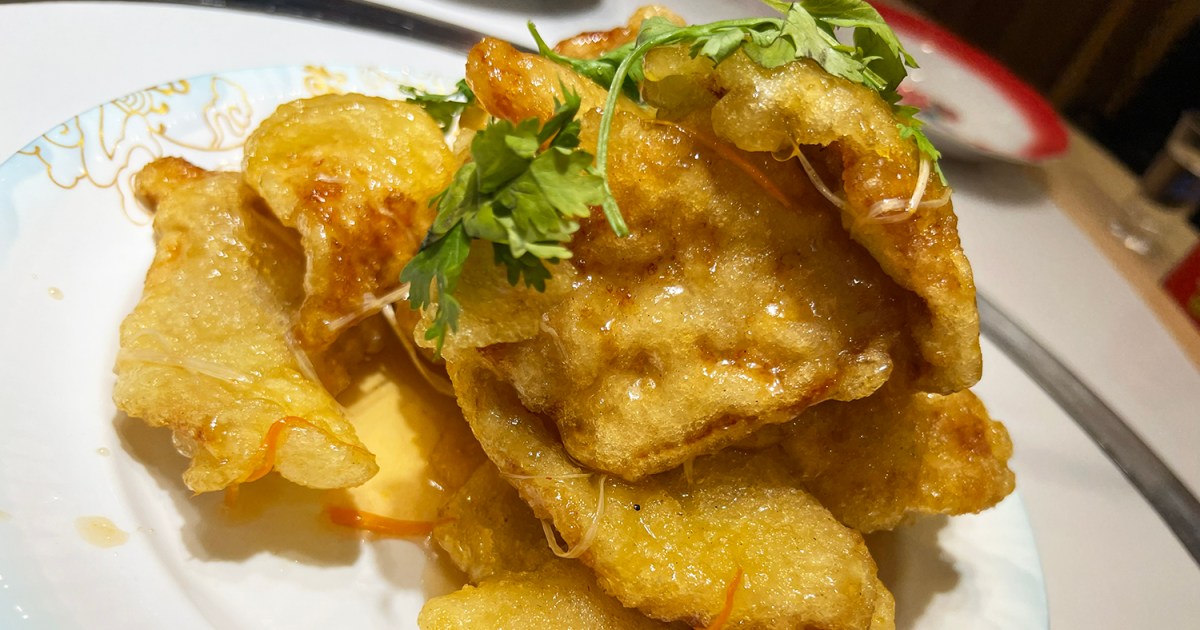
Thin slices of pork stacked like tempura, barely any vegetables, and a texture that’s crispy outside and chewy inside—that’s the “sweet and sour pork” that appeared at a restaurant just two minutes on foot from Ikebukuro Station.
The dish came from a place called 大豊収鉄鍋炖 池袋西口店 (Taihōshū Tekkadon Ikebukuro Nishiguchi-ten), a restaurant in Ikebukuro’s Chinatown area. And it looked nothing like the お馴染み (onajimi, familiar) version most people imagine.
Ikebukuro’s “Little China”
Ikebukuro Chinatown is known for its authentic Chinese atmosphere. Climb up a 雑居ビル (zakkyo biru, multi-tenant building), step into a restaurant, and you’ll find yourself surrounded by Chinese customers and staff. According to the restaurant’s manager, Mr. Li—who 取り仕切る (torishikiru, manages) the place—about 80–90% of the customers are Chinese.
That makes it popular not just with Japanese diners, but with Chinese people themselves. In other words, it’s the real deal.
The restaurant specializes in Northeastern Chinese and Manchurian cuisine, including 郷土料理 (kyoudo ryouri, regional dishes) like iron pot stews (鉄鍋炖).
Sweet and Sour Pork… Or Is It?
In Japan, 酢豚 (subuta, sweet and sour pork) usually means bite-sized fried pork with green peppers, onions, and carrots, all coated in a glossy sweet vinegar sauce. If you search for it online, the images look mostly the same—maybe different vegetables, maybe pineapple (a classic 議論の余地 (giron no yochi, debatable point)!), but generally the same idea.
So when the writer 注文する (chuumon suru, ordered) sweet and sour pork at this restaurant, he expected exactly that.
Instead, he got something that looked almost like pork tempura.
The menu item was called 東北風カリカリ酢豚 (Touhokufū karikari subuta, Northeastern-style crispy sweet and sour pork), priced at 1848 yen (tax included). The plate was piled with thin slices of battered pork. There were almost no vegetables—just a small amount of finely shredded carrot.
At first glance, it was different ほど (hodo, to the extent that) you might wonder, “In what way is this sweet and sour pork?”
But yes, there was sweet vinegar sauce. So technically, it was pork and vinegar. Just… not the Japanese version.
A “Parallel Universe” Version of 酢豚
The writer described it as a kind of “parallel” sweet and sour pork—like a branching future of the same dish.
The coating was crispy on the outside but chewy inside, creating a texture not commonly found in Japan. Even the frying method felt unfamiliar.
When asked, Mr. Li explained that this dish is “a type of sweet and sour pork from the Northeastern region” of China.
Interestingly, the restaurant also offers another dish closer to the Japanese image: 酢豚スペアリブ (subuta supearibu, sweet and sour pork spare ribs), also 1848 yen. According to Mr. Li, the difference is whether soy sauce is included.
The writer humorously suggests there are more differences than that—but that’s what makes exploring authentic cuisine fun.
Two Minutes from the Station, A Different World
The restaurant is located about two minutes 徒歩 (toho, on foot) from Ikebukuro Station’s west exit:
- 店名 (tenmei, store name): 大豊収鉄鍋炖 池袋西口店
- 住所 (juusho, address): 東京都豊島区西池袋1-23-1 エルクルーゼビル5階
- 営業時間 (eigyou jikan, business hours): 11:00–15:00, 15:00–00:00
- 定休日 (teikyuu-bi, regular holiday): Irregular holidays
Despite being so close to the station, stepping inside feels like entering another country. The writer described it as truly “Little China.”
Sometimes, it only takes one dish to realize how deep a neighborhood’s cultural layers go.
Cultural Context: Japanese vs. Chinese “Chinese Food”
In Japan, many Chinese dishes have been adapted over decades. They’ve become part of everyday Japanese dining—comfortable, predictable, and お馴染み.
But in places like Ikebukuro Chinatown, you’ll find restaurants serving food closer to what’s eaten in specific regions of China. That’s why the same dish name—酢豚—can refer to something surprisingly different.
It’s a reminder that cuisine travels, evolves, and branches. Just like language.
Learn Japanese from This Article
Key Vocabulary
| Japanese | Romaji | Meaning |
|---|---|---|
| 雑居ビル | zakkyo biru | multi-tenant building |
| お馴染み | onajimi | familiar; well-known |
| 注文する | chuumon suru | to order (food, items) |
| 郷土料理 | kyoudo ryouri | local/regional cuisine |
| 取り仕切る | torishikiru | to manage; to be in charge of |
| 徒歩 | toho | on foot; walking |
| 議論の余地 | giron no yochi | room for discussion; debatable point |
| 酢豚 | subuta | sweet and sour pork |
Grammar Spotlight 1: 〜と言えば (Speaking of…)
Pattern: Noun + と言えば
Used to bring up a typical example or common association.
Example from this topic:
酢豚と言えば、甘酢あんの料理だ。 Subuta to ieba, amazu-an no ryouri da. Speaking of sweet and sour pork, it’s a dish with sweet vinegar sauce.
池袋と言えば、中華街を思い出す人も多い。 Ikebukuro to ieba, Chuukagai o omoidasu hito mo ooi. Speaking of Ikebukuro, many people think of Chinatown.
This structure is extremely common in conversation when introducing a shared cultural image.
Grammar Spotlight 2: 〜ほど (To the extent that…)
Pattern: Verb / adjective + ほど
Indicates degree—“so much that…” or “to the extent that…”
違いすぎるほど、別の料理に見える。 Chigai sugiru hodo, betsu no ryouri ni mieru. It looks so different that it seems like another dish.
駅から近いほど、通いやすい。 Eki kara chikai hodo, kayoi yasui. The closer it is to the station, the easier it is to visit.
You’ll see this pattern often in descriptions and reviews.
Useful Expression
- 議論の余地がある Giron no yochi ga aru “There’s room for debate.”
Example: パイナップルを入れるかどうかは議論の余地がある。 Painappuru o ireru ka dou ka wa giron no yochi ga aru. Whether to add pineapple is open to debate.
Perfect for food discussions!
Continue Learning
Ready to dive deeper? Our lesson on Time and Dates: Tense-Free Expressions will help you master these concepts.
Exploring real restaurants, real menus, and real cultural differences is one of the best ways to deepen your Japanese. A single dish—like 酢豚—can open the door to vocabulary, grammar, and a richer understanding of Japan’s multicultural food scene.
これからもよろしくお願いします。 Kore kara mo yoroshiku onegaishimasu.