
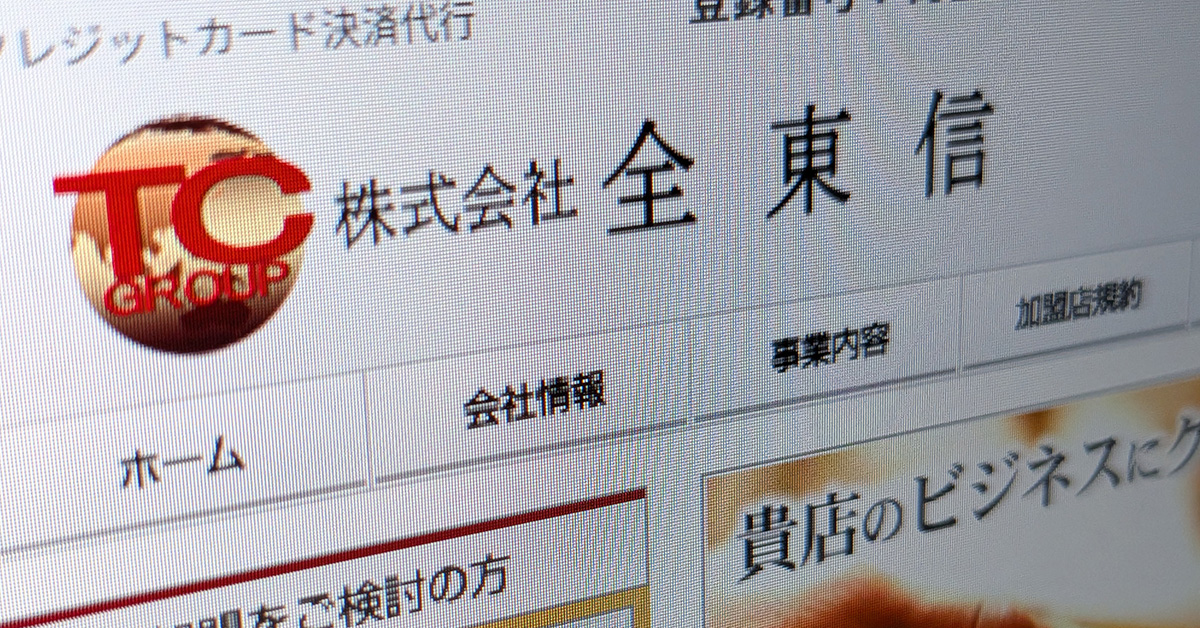
On July 6, credit card payment processor Zentoshi (全東信) filed for personal bankruptcy at the Osaka District Court and immediately received a decision to begin bankruptcy proceedings. Known for providing card services to restaurants and nightlife establishments, the company’s collapse was the result of what the article describes as “two incidents” that ultimately pushed it over the edge.
Let’s look at what happened — and what it means for businesses that relied on it.
A “Last Resort” for Nightlife Businesses
Zentoshi operated as a 決済代行 (kessai daikō) — a payment processing service that connects merchants with credit card companies. In other words, it functioned as a PSP(ペーエスピー) (pī esu pī, Payment Service Provider).
Although officially focused on restaurants, it is said that 70–80% of its member stores were actually part of Japan’s broad “nightlife” sector — businesses regulated under the Entertainment Business Act (風営法), including:
- Cabaret clubs
- Host clubs
- High-end clubs
- Snack bars
These are places that serve food and drinks but also provide in-person entertainment and customer service.
Zentoshi’s roots go back to 1987, when it was founded as the Osaka Minami Restaurant Business Cooperative. Its original purpose was mutual support among restaurant and adult entertainment business owners in Osaka’s Minami entertainment district. In the 1990s, it began handling credit cards in partnership with international brands such as American Express. By 1999, it adopted the Zentoshi name and expanded nationwide.
What made Zentoshi unique?
Nightlife and late-night businesses often struggle to pass strict screening by card companies. New restaurants, especially those with high turnover, may lack a financial track record. As a result, screening can be severe.
Zentoshi gained a reputation as:
“The last refuge for nightlife and restaurant businesses.”
This reputation helped it grow into one of the larger PSPs in Japan.
But that same business model carried risk.
The Hidden Risk: Chargebacks
Nightlife establishments are statistically more likely to face disputes such as:
- Overcharging (“ぼったくり”)
- Customers claiming they were too intoxicated to remember ordering
These disputes often result in チャージバック (chājibakku, chargebacks). A chargeback occurs when a cardholder requests a refund through their credit card company, reversing a payment already made to the merchant.
In such cases, the PSP — here, Zentoshi — bears part of the financial burden.
This risk is one reason screening for nightlife businesses is typically strict. By actively approving these merchants, Zentoshi was also accepting higher exposure to chargebacks.
That risk became critical when two major events occurred.
The First Incident: COVID-19 and Cash Flow Pressure
The first blow came in the early 2020s during the COVID-19 pandemic.
Restaurants and nightlife venues — Zentoshi’s main clients — were forced to suspend operations. Transaction volume dropped sharply.
The problem became serious due to Zentoshi’s early payment services. Normally, credit card payments operate on a “monthly clear” cycle (paid once a month the following month). However, Zentoshi offered accelerated payouts, including “six payments per month.”
This helped merchants maintain キャッシュフロー (kyasshu furō, cash flow) by quickly converting sales into cash.
But to provide this service, Zentoshi borrowed substantial sums from banks. When transaction volume collapsed during COVID, the company was left with heavy interest burdens. Reduced revenue made those obligations increasingly difficult to sustain.
The pandemic damage alone did not immediately destroy the company — but it weakened its financial foundation.
The Second Incident: Fraudulent Merchant Scandal
The second incident proved fatal.
In 2024, Zentoshi became involved in what was described as a “fraudulent merchant” problem. The Tokyo Metropolitan Police arrested related employees in January 2024 on suspicion that the company attempted to sign contracts under other people’s names for businesses that normally would not pass screening — including malicious operators and certain foreign-run nightlife establishments.
Later, it was revealed that this was not the action of a single rogue employee but allegedly conducted at an organizational level. The company itself was referred to prosecutors under the Organized Crime Punishment Act — a process known as 書類送検 (shorui sōken), meaning referral without arrest.
This development led financial institutions — which had been providing loans — to halt funding all at once. The company quickly ran out of cash.
The article suggests that efforts to compensate for pandemic-related losses may have accelerated violations of コンプライアンス (konpuraiansu, regulatory compliance).
Adding to the pressure, international card brands such as Visa and Mastercard are generally strict about industries linked to マネーロンダリング (manē rondaringu, money laundering) or adult content. Zentoshi had reportedly approved such businesses under various justifications. The 2024 incident triggered contract reviews by international and domestic card companies.
While some high-risk businesses use overseas PSPs with looser screening, their fees are said to exceed 10%. Zentoshi had occupied this “gray zone,” offering an alternative within Japan.
The two incidents — pandemic financial strain and the compliance scandal — ultimately 破産に至った (hasan ni itatta, led to bankruptcy).
Cultural Context: Why Nightlife and Payments Collide
Japan’s nightlife sector operates under strict regulation through the Entertainment Business Act (風営法). At the same time, Japan remains a society where cash has traditionally been dominant, though card usage has grown.
For regulated industries, access to card processing is not just convenience — it can determine survival. Being denied merchant approval effectively limits business opportunities.
Zentoshi filled that gap. But by positioning itself as a “refuge,” it absorbed higher structural risks — financial, legal, and reputational.
Learn Japanese from This Article
Key Vocabulary
| Japanese | Romaji | Meaning |
|---|---|---|
| 決済代行 | kessai daikō | payment processing service |
| PSP(ペーエスピー) | pī esu pī | Payment Service Provider |
| チャージバック | chājibakku | chargeback |
| キャッシュフロー | kyasshu furō | cash flow |
| コンプライアンス | konpuraiansu | compliance |
| マネーロンダリング | manē rondaringu | money laundering |
| 書類送検 | shorui sōken | referral to prosecutors (without arrest) |
| 破産に至る | hasan ni itaru | to end up in bankruptcy |
Notice how many of these are written in katakana. Japanese business and tech news frequently uses loanwords.
Grammar Spotlight
1️⃣ 〜に至る / 〜に至った
Meaning: to lead to; to result in (formal, often used in news)
Structure: Noun + に至る
Example from this case:
- 破産に至った。 Hasan ni itatta. It led to bankruptcy.
More examples:
協議の末、合意に至った。 Kyōgi no sue, gōi ni itatta. After discussions, they reached an agreement.
問題は裁判に至った。 Mondai wa saiban ni itatta. The issue escalated to a lawsuit.
This expression is common in formal reporting.
2️⃣ 〜を契機に
Meaning: triggered by; taking the opportunity of (formal)
Structure: Noun + を契機に
Example:
- 2024年の事件を契機に、契約の見直しが行われた。 2024-nen no jiken o keiki ni, keiyaku no minaoshi ga okonawareta. Triggered by the 2024 incident, contracts were reviewed.
This phrase often appears in political, economic, and legal news.
Useful Expression
- 最後の駆け込み寺 Saigo no kakikomi-dera “A last refuge” or “last resort.”
Originally, 駆け込み寺 (kakikomi-dera) referred to temples where people — especially women — could seek protection in the Edo period. Today, it metaphorically means a final place to seek help.
Continue Learning
📚 Working on your reading skills? Our Katakana Essentials: Adapting Global Words to Japanese lesson is a great next step.
📚 Ready to dive deeper? Our lesson on Basic Vocabulary Building: Embracing Words Without Latin Ties will help you master these concepts.
Basic Vocabulary Building: Embracing Words Without Latin Ties
📚 Ready to dive deeper? Our lesson on Reading and Writing in Japanese II: Hiragana and Katakana will help you master these concepts.
これからもよろしくお願いします。 Kore kara mo yoroshiku onegaishimasu.