
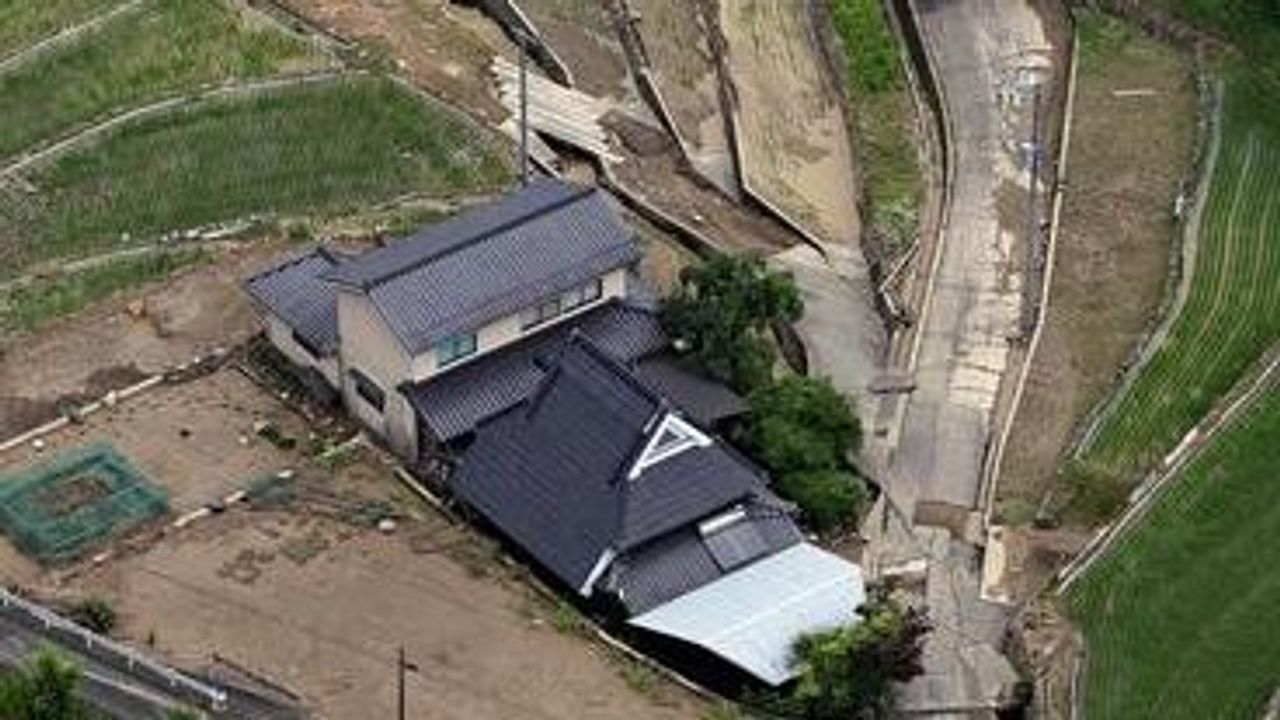
On the night of the 26th through the 27th, multiple disasters struck western Japan as a typhoon drew closer. Reservoir embankments collapsed and landslides occurred one after another across the Kinki, Chugoku, and Shikoku regions.
Typhoon Approaches Western Japan
According to reports, the damage occurred 台風の接近に伴い (taifuu no sekkin ni tomonai) — “as the typhoon approached.” The word 台風 (taifuu) means “typhoon,” and 接近 (sekkin) means “approach.”
The phrase 〜に伴い (ni tomonai) expresses that something happens in connection with, or as a result of, something else. In this case, the disasters happened as a direct result of the typhoon’s approach.
Between the evening of the 26th and the 27th — expressed in Japanese as 26日夜から27日にかけて (nijuu-roku nichi yoru kara nijuu-shichi nichi ni kakete) — several types of damage were reported.
Collapsed Reservoirs and Landslides
Among the reported incidents were:
- ため池の決壊 (tameike no kekkai) — the collapse of irrigation ponds or reservoirs
- 土砂崩れ (dosha kuzure) — landslides
These incidents resulted in 被害 (higai), meaning “damage” or “harm.” The article notes that such damage 相次いだ (aitsugida), meaning it “occurred one after another.”
Even in this short report, the language conveys urgency. The verb 相次ぐ (aitsugu) is often used in news reporting when events happen in quick succession, especially accidents, disasters, or crimes.
Cultural Context: Why “Tameike” Matter in Japan
The word ため池 (tameike) refers to irrigation ponds that store water for agriculture. In many parts of western Japan, especially rural areas, these reservoirs are essential for rice farming.
Because Japan is mountainous and receives heavy seasonal rain, water management has always been crucial. When a 台風 (taifuu) approaches, intense rainfall can put pressure on embankments, sometimes leading to 決壊 (kekkai), or collapse.
Understanding these terms gives you insight into Japan’s geography and agricultural traditions — and why typhoon season is taken so seriously.
Learn Japanese from This Article
Key Vocabulary
| Japanese | Romaji | Meaning |
|---|---|---|
| 台風 | taifuu | typhoon |
| 接近 | sekkin | approach |
| 伴う | tomonau | to accompany; to be associated with |
| 決壊 | kekkai | collapse (of a dam/embankment) |
| 土砂崩れ | dosha kuzure | landslide |
| 被害 | higai | damage; harm |
| 相次ぐ | aitsugu | to occur one after another |
| ため池 | tameike | irrigation pond; reservoir |
Grammar Spotlight
1. 〜に伴い (ni tomonai)
Meaning: As a result of; accompanied by
Structure: Noun + に伴い
Example from the article:
- 台風の接近に伴い、被害が相次いだ。 Taifuu no sekkin ni tomonai, higai ga aitsugida. Damage occurred one after another as the typhoon approached.
More examples:
- 気温の上昇に伴い、氷が溶けた。 Kion no joushou ni tomonai, koori ga toketa. As the temperature rose, the ice melted.
This pattern is common in formal writing and news reports.
2. 〜にかけて (ni kakete)
Meaning: From (time/place) to; over a span of
Structure: Time/Place + から + Time/Place + にかけて
Example from the article:
- 26日夜から27日にかけて、被害が発生した。 Nijuu-roku nichi yoru kara nijuu-shichi nichi ni kakete, higai ga hassei shita. Damage occurred from the night of the 26th through the 27th.
More examples:
- 大阪から京都にかけて雨が降った。 Osaka kara Kyoto ni kakete ame ga futta. It rained from Osaka to Kyoto.
You’ll often hear this in weather forecasts and news broadcasts.
Useful Expression for News Reading
- 被害が相次ぐ (higai ga aitsugu) “Damage occurs one after another.”
This is a classic news phrase. Once you recognize 相次ぐ, you’ll start noticing it frequently in reports about natural disasters or accidents.
Continue Learning
- Reading and Writing in Japanese II: Hiragana and Katakana: Curious about the Japanese used here? Our Reading and Writing in Japanese II: Hiragana and Katakana lesson covers this in depth.
- Introduction to Kanji: Pictorial Foundations of Japanese Script: Working on your reading skills? Our Introduction to Kanji: Pictorial Foundations of Japanese Script lesson is a great next step.
- Basic Vocabulary Building: Embracing Words Without Latin Ties: To understand more about general, explore our Basic Vocabulary Building: Embracing Words Without Latin Ties lesson.
Typhoon reports are a powerful way to build real-world vocabulary — the kind Japanese children encounter in school and on the evening news. By learning expressions like 〜に伴い and 相次ぐ, you're stepping into authentic Japanese as it’s actually used.
これからもよろしくお願いします。 Kore kara mo yoroshiku onegaishimasu.