
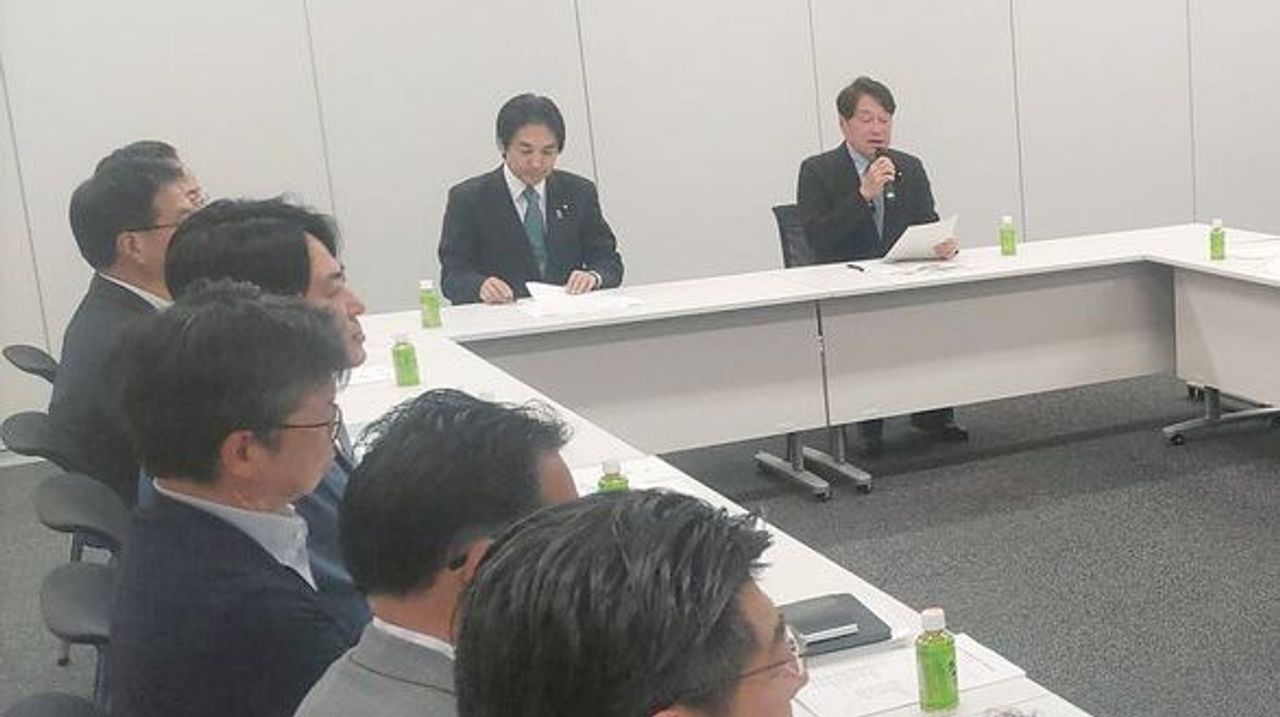
On June 17, a proposal was presented to lower Japan’s tax on food and beverages to just 1%—but only for two years starting next April. What sounds simple on the surface has quickly turned into a heated political debate.
A 1% Tax Plan on Food and Drinks
The issue centers on Japan’s 消費税 (shōhizei), or consumption tax, specifically on food and beverage products.
At a meeting of a 超党派 (chōtōha) council called the Social Security National Conference, a chairperson’s proposal was introduced. The plan would reduce the tax rate to 1% beginning in April next year, and apply it for two years に限り (ni kagiri)—that is, limited to that specific period.
In Japanese news style, the article says the debate is 飲食料品の消費税減税を巡り (inshokuryōhin no shōhizei genzei o meguri)—“concerning” or “over” a tax reduction on food and drink. The expression 〜を巡り (o meguri) often signals controversy or disagreement.
The ruling Liberal Democratic Party (LDP) aims to compile an interim summary by the end of June and is rushing to consolidate opinions.
Opposition Pushback and Internal Divisions
However, opposition parties reacted strongly.
Some are calling for a 恒久的 (kōkyūteki) zero tax rate—a permanent elimination of the consumption tax on food. Others oppose any tax reduction at all. They criticized the proposal as having a predetermined conclusion, and they responded 一斉に (issei ni)—all at once—in opposition.
Even within the LDP itself, there are strong 異論 (iron), or differing opinions. Because of these disagreements both inside and outside the ruling party, the future 行方 (yukue)—the outcome or direction—of the discussions remains uncertain.
The article concludes that the path forward is difficult to predict.
Cultural Context: Why Food Taxes Matter in Japan
Consumption tax is a sensitive topic in Japan. The 消費税 (shōhizei) applies broadly to goods and services, and changes to it often spark nationwide debate.
Food and beverages are everyday essentials, so even a small percentage change affects households directly. That’s why proposals like a temporary 1% rate—or a permanent zero rate—become political flashpoints.
You’ll also notice how Japanese news language emphasizes process: meetings, proposals, interim summaries, and opinion consolidation. Political reporting in Japan frequently focuses on internal party discussions and whether consensus can be reached.
Learn Japanese from This Article
Let’s turn this news story into practical Japanese study.
Key Vocabulary
| Japanese | Romaji | Meaning |
|---|---|---|
| 消費税 | shōhizei | consumption tax |
| 減税 | genzei | tax reduction |
| 超党派 | chōtōha | cross-party; bipartisan |
| 恒久的 | kōkyūteki | permanent; lasting |
| 異論 | iron | objection; different opinion |
| 行方 | yukue | outcome; future course |
| 一斉に | issei ni | all at once; simultaneously |
Try reading this key sentence from the article:
飲食料品の消費税減税を巡り、超党派の社会保障国民会議で議長案が示された。 Inshokuryōhin no shōhizei genzei o meguri, chōtōha no shakai hoshō kokumin kaigi de gichōan ga shimesareta. “A chairperson’s proposal was presented at a bipartisan Social Security National Conference concerning a tax reduction on food and beverages.”
Notice how formal and compact news Japanese is.
Grammar Spotlight 1: 〜を巡り
Pattern: Noun + を巡り (o meguri) = concerning; over; regarding (often used for disputes or issues)
Example from the article:
- 飲食料品の消費税減税を巡り、議論が続いている。 Inshokuryōhin no shōhizei genzei o meguri, giron ga tsuzuite iru. “Discussions are continuing over the tax reduction on food and beverages.”
This pattern is very common in headlines and political reporting.
Grammar Spotlight 2: 〜に限り
Pattern: Noun + に限り (ni kagiri) = limited to; only for (a specific time, place, or condition)
Example:
- 来年4月から2年間に限り、税率を1%に下げる。 Rainen shigatsu kara ninenkan ni kagiri, zeiritsu o ichi-pāsento ni sageru. “The tax rate will be lowered to 1% only for two years starting next April.”
You’ll often see this in announcements about special rules or temporary measures.
Useful News Expressions
- 意見集約を急ぐ (iken shūyaku o isogu) — to rush to consolidate opinions
- 結論ありき (ketsuron ariki) — having a predetermined conclusion
- 見通せない (mitōsenai) — cannot foresee; unclear
These expressions appear frequently in political and economic news, so mastering them will dramatically improve your reading ability.
Continue Learning
Want to strengthen your foundation so you can read articles like this more smoothly?
- Working on your reading skills? Our Introduction to Kanji: Pictorial Foundations of Japanese Script lesson is a great next step.
- Curious about the Japanese used here? Our Basic Vocabulary Building: Embracing Words Without Latin Ties lesson covers this in depth.
- To understand more about culture, explore our Honorifics: Keigo for Respectful Dialogue lesson.
By reading real news and breaking it down piece by piece, you’re training yourself to understand Japanese the way it’s actually written and spoken in society—not just in textbooks.
これからもよろしくお願いします。 Kore kara mo yoroshiku onegaishimasu.