
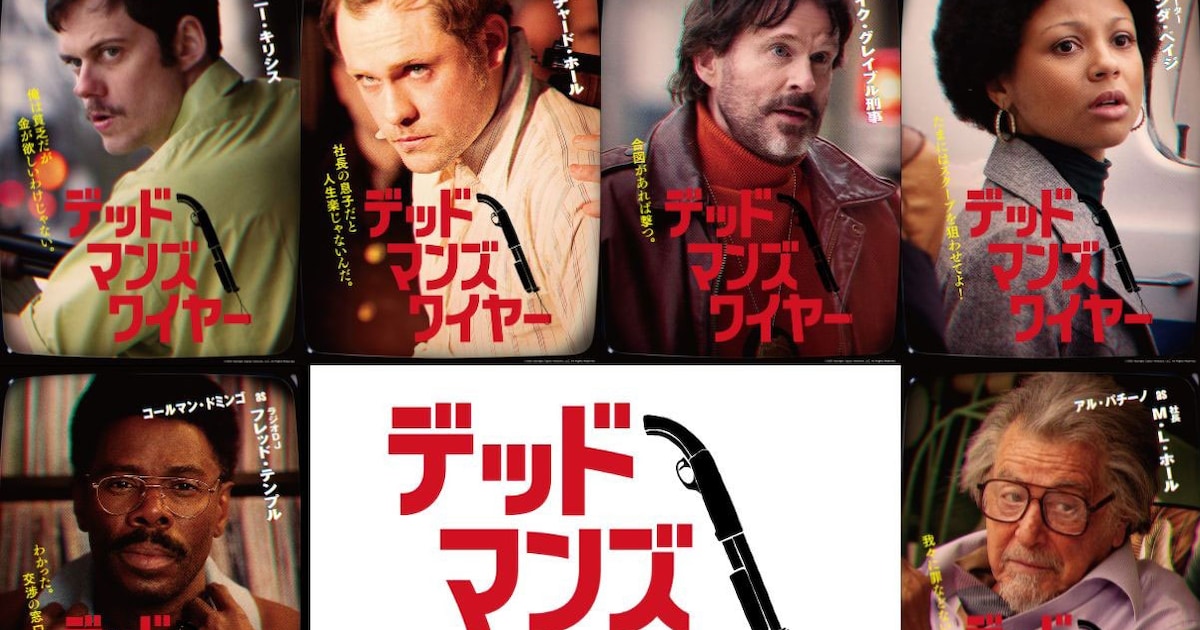
On June 10, 2026, six character posters for Gus Van Sant’s latest film 「デッドマンズ・ワイヤー」 (Deddomanzu Wiyā, “Dead Man’s Wire”) were officially released — each revealing the hidden 思惑 (omowaku, motives) of the people caught in a shocking hostage case.
A Real 1977 Hostage Standoff Reimagined
The film is directed by Gus Van Sant, known for works such as 「マイ・プライベート・アイダホ」 (Mai Puraibēto Aidaho, My Own Private Idaho) and 「エレファント」 (Erefanto, Elephant). His new project takes as its 題材 (daizai, subject matter) a real-life hostage 立てこもり (tatekomori, barricade standoff*) that occurred in Indianapolis, USA, in 1977.
In the story, a man who claims he was swindled out of his property by a real estate loan company takes an executive hostage. He binds both his own neck and the hostage’s to a shotgun using a wire rigged to fire automatically if either of them moves. This deadly device is known as a “dead man’s wire.”
With police unable to intervene, the man turns to the media to 訴える (uttaeru, appeal/claim) his demands for apology and compensation. As he continues to speak publicly, the public gradually begins to *同情を抱く (doujou o idaku, feel sympathy*) toward him.
Notice that shift. At first, he is simply the criminal. But as he communicates through the media, society’s perception begins to change.
A Powerful Cast Brings the Tension to Life
Bill Skarsgård plays the real-life perpetrator, Tony Kiritsis. Dacre Montgomery appears as Dick, the hostage and son of the company president. Al Pacino plays M. L. Hall, the company president who becomes the criminal’s greatest adversary.
The cast also includes:
- Cary Elwes as Detective Grable, who leads the case
- Maihara as Linda, a local TV reporter
- Colman Domingo as Fred Temple, a popular radio DJ drawn into the incident
Each of the six character posters was 解禁 (kaikin, officially released to the public*) along with a striking quote that reveals the character’s inner thoughts.
For example:
Tony: 「俺は貧乏だが金が欲しいわけじゃない」 Ore wa binbou da ga kane ga hoshii wake ja nai. “I’m poor, but it’s not money that I want.”
Dick (the hostage): 「社長の息子だと人生楽じゃないんだ」 Shachou no musuko da to jinsei raku ja nain da. “Life isn’t easy when you’re the company president’s son.”
Detective Grable: 「合図があれば撃つ」 Aizu ga areba utsu. “If I get the signal, I shoot.”
Reporter Linda: 「たまにはスクープを狙わせてよ!」 Tama ni wa sukūpu o nerawasete yo! “Let me chase a scoop for once!”
DJ Fred: 「わかった。交渉の窓口になればいいんだな?」 Wakatta. Koushou no madoguchi ni nareba ii n da na? “Got it. You want me to be the point of contact for negotiations?”
President Hall: 「我々に罪などないのだ」 Wareware ni tsumi nado nai no da. “We bear no guilt.”
Through these lines, we see how each character’s position — criminal, hostage, executive, police, media — shapes their perspective. Their 思惑 (omowaku) intersect, creating tension far beyond a simple crime story.
The film opens nationwide in Japan on July 17.
Cultural Context: Media, Sympathy, and Public Opinion
One striking element of this story is how public opinion changes over time. The man uses the media to speak directly to society. As he explains his situation, people begin to reconsider their view of him.
In Japanese, this gradual change is often expressed with the grammar pattern 〜ようになる (~you ni naru), meaning “to come to” or “to start to.” We’ll look at that more closely below.
The phrase 交渉の窓口 (koushou no madoguchi) is also interesting. Literally, 窓口 (madoguchi) means “window,” but in Japanese it often refers to a service counter or official contact point. In this case, the radio DJ becomes the negotiation “window” between the criminal and authorities — showing the unusual role of media in the incident.
Learn Japanese from This Article
Key Vocabulary
| Japanese | Romaji | Meaning |
|---|---|---|
| 解禁 | kaikin | official release; lifting of a ban |
| 題材 | daizai | subject matter; source material |
| 立てこもり | tatekomori | barricade; standoff |
| 訴える | uttaeru | to appeal; to claim; to sue |
| 同情を抱く | doujou o idaku | to feel sympathy |
| 交渉の窓口 | koushou no madoguchi | point of contact for negotiations |
| 思惑 | omowaku | motives; hidden intentions |
Try making your own sentence with 思惑 (omowaku):
- 彼の思惑はまだわからない。 Kare no omowaku wa mada wakaranai. “His true intentions are still unclear.”
Grammar Spotlight
1. 〜をはじめ
Meaning: “starting with…” / “including…”
Structure: Aをはじめ、BやC…
Example from this context:
- ビル・スカルスガルドをはじめ、アル・パチーノなどが出演している。 Biru Sukarusugarudo o hajime, Aru Pachīno nado ga shutsuen shite iru. “Starting with Bill Skarsgård, including Al Pacino, the film features…”
This pattern highlights a representative example, then implies others follow.
2. 〜ようになる
Meaning: to come to; to start to; a change over time
Structure: Verb (dictionary form) + ようになる
From the story’s development:
- 世間は犯人に同情を抱くようになる。 Seken wa hannin ni doujou o idaku you ni naru. “The public comes to feel sympathy for the perpetrator.”
This grammar is perfect for describing gradual change — opinions, habits, abilities, and emotions.
Useful Expressions from the Posters
- 〜わけじゃない (wake ja nai) “It’s not that…” (softening or clarifying meaning)
金が欲しいわけじゃない。 Kane ga hoshii wake ja nai. “It’s not that I want money.”
- 〜ばいいんだな? (~ba ii n da na?) “So I should…?” (confirming understanding)
交渉の窓口になればいいんだな? Koushou no madoguchi ni nareba ii n da na? “So I should act as the negotiation contact?”
These are natural, conversational structures you’ll hear often in Japanese dramas and films.
Continue Learning
Want to read more entertainment news confidently in Japanese?
- Working on your reading skills? Our Katakana Essentials: Adapting Global Words to Japanese lesson is a great next step.
- Working on your reading skills? Our Introduction to Kanji: Pictorial Foundations of Japanese Script lesson is a great next step.
- Curious about the Japanese used here? Our Basic Vocabulary Building: Embracing Words Without Latin Ties lesson covers this in depth.
Japanese entertainment news is full of powerful expressions about emotion, motive, and social change. By learning the language behind stories like 「デッドマンズ・ワイヤー」, you’re not just expanding vocabulary — you’re learning how Japanese captures tension, sympathy, and shifting public opinion.
これからもよろしくお願いします。 Kore kara mo yoroshiku onegaishimasu.