
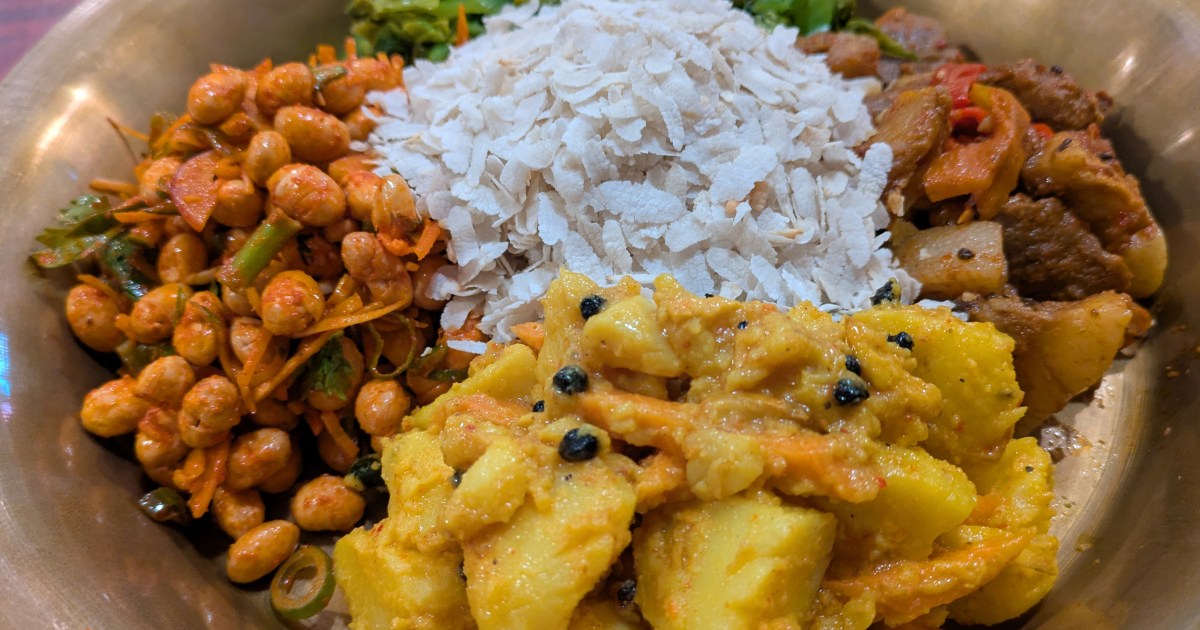
On a quiet street away from Sugamo’s famous shopping arcade, a bowl the size of a washbasin arrived at the table—filled with five unfamiliar Nepalese dishes and a mound of something called チウラ (chiura). One bite of its crunchy texture was enough to surprise even a seasoned food writer.
A Back-Alley Discovery in Tokyo
The journey began earlier in a Tokyo 路地裏 (rojiura, back alley) in Koenji, where the writer first tried Nepalese street food made with puffed rice. Even though Nepalese restaurants feel relatively common in Tokyo, he realized he didn’t actually know what authentic Nepalese food tasted like. It was cuisine that should have been familiar—身近に存在するはずなのに (mijika ni sonzai suru hazu na no ni)—and yet it wasn’t.
Determined to learn more, he searched for a highly rated 専門店 (senmonten, specialty shop) and found one in Sugamo: Purja Dining. This restaurant has been selected four times as one of Tabelog’s “Top 100 Restaurants” (twice for curry, twice for Asian ethnic cuisine in Tokyo). In other words, it’s a hidden gem for those in the know.
Sugamo といえば (to ieba, speaking of Sugamo), most people think of Jizō-dōri Shopping Street. But instead of heading toward the crowds, he walked in the opposite direction, toward Sengoku Station. After about three minutes, he spotted the Nepalese flag and a sign reading 本格ネパール料理 (honkaku Nepāru ryōri) — “authentic Nepalese cuisine.”
What Is “Chiura”?
The most surprising discovery was チウラ (chiura), dried and flattened rice.
At the center of the colorful platter called a “Kaja Set” (¥1500) sat a generous portion of chiura. When eaten, it made a pleasant crunching sound—ポリポリ—with a light, dry texture. This distinctive 食感 (shokkan, texture) immediately stood out.
For many learners, rice in Japan means steamed white rice. But in Nepalese cuisine, rice can be puffed, dried, flattened, or fried. That variety reflects a different food culture built around the same staple ingredient.
A Colorful One-Dish Feast
The Kaja Set was a large 盛り合わせ (moriawase, assorted platter) containing five different items:
- マス (masu) — In this context, it refers to meat, usually lamb (kashiko masu). The stir-fried lamb had no unpleasant odor, and the gentle spices stimulated the appetite.
- サグブテコ (sagubuteko) — Spinach stir-fried with cumin and lightly scented with garlic. It paired beautifully with the chiura.
- バトマスサデコ (batomasu sadeko) — Fried soybeans mixed with vegetables and spices. The crispy beans burst in the mouth.
- アルコアチャール (aruko achar) — A potato dish seasoned with spices and mustard oil, offering a refreshing 酸味 (sanmi, sour taste) despite its simple appearance.
Each bite introduced a new flavor, yet none felt overwhelming. The seasonings were gentle and seemed to “blend into the body,” as the writer described it. Nepalese home-style cooking, at least here, highlights the natural flavors of vegetables and rice.
The only challenge? The portion size. The bowl was so large that it felt like the food never decreased. Normally he doesn’t push himself to eat more, but this time he had to 鼓舞する (kobu suru, encourage himself): “I’ve got to make an effort to finish this…”
And yet, thanks to the balanced flavors, he never grew tired of it.
Ending with a Traditional Sweet
Even after such a filling meal, dessert was impossible to ignore.
He ordered ハルワ (haruwa, halwa), a traditional sweet enjoyed in Nepal and India. While carrot halwa is common, this version was made with pumpkin. It had a chewy texture and natural sweetness, light rather than heavy, with a comforting homemade taste.
Even the mango lassi was described as rich yet gentle—and generous in size.
Cultural Context: Nepalese Food in Tokyo
Tokyo is home to many Nepalese restaurants, often categorized broadly as “Asian ethnic” or “curry” spots. However, as this experience shows, what many people know may only scratch the surface.
Words like カナ (kana, set meal in Nepal) and dishes such as グンドゥルック (gundruk, fermented and dried vegetable soup) reveal a food culture rooted in preservation techniques, fermentation, and balanced spice use.
Exploring these dishes not only expands your palate but also your Japanese vocabulary—especially since menus in Japan often explain foreign foods in Japanese terms.
Learn Japanese from This Article
Key Vocabulary
| Japanese | Romaji | Meaning |
|---|---|---|
| 路地裏 | rojiura | back alley |
| 専門店 | senmonten | specialty shop |
| 本格 | honkaku | authentic, genuine |
| 盛り合わせ | moriawase | assorted platter |
| 食感 | shokkan | texture (of food) |
| 酸味 | sanmi | sour taste |
| 鼓舞する | kobu suru | to encourage oneself |
Try using these when describing food. For example:
食感が面白いです。 Shokkan ga omoshiroi desu. “The texture is interesting.”
本格ネパール料理を食べました。 Honkaku Nepāru ryōri o tabemashita. “I ate authentic Nepalese cuisine.”
Notice the polite 〜ました form? You’ll see this everywhere in food reviews.
Grammar Spotlight
1. 〜といえば
Meaning: Speaking of…, when it comes to…
Structure: Noun + といえば
Example from the article concept:
- 巣鴨といえば、地蔵通り商店街です。 Sugamo to ieba, Jizō-dōri shōtengai desu. Speaking of Sugamo, it’s the Jizō-dōri Shopping Street.
Use this when introducing a well-known association.
2. 〜はずなのに
Meaning: Even though it should be…, contrary to expectation
Structure: Plain form + はずなのに
- ネパール料理は身近なはずなのに、味を知りませんでした。 Nepāru ryōri wa mijika na hazu na no ni, aji o shirimasen deshita. Nepalese food should have been familiar, yet I didn’t know its taste.
This pattern expresses surprise or mild disappointment when reality differs from expectation.
Useful Expressions
おまかせでお願いします。 Omakase de onegaishimasu. “I’ll leave it up to you.”
量が多いですね。 Ryō ga ōi desu ne. “That’s a large portion, isn’t it?”
さっぱりした味です。 Sappari shita aji desu. “It’s a refreshing/light flavor.”
Continue Learning
📚 Want to understand the verb forms used here? Check out Masu Form: Mastering Polite Everyday Speech.
📚 Ready to dive deeper? Our lesson on Greetings and Self-Introductions: Authentic Entry Phrases will help you master these concepts.
📚 To understand more about lifestyle, explore our Basic Vocabulary Building: Embracing Words Without Latin Ties lesson.
Basic Vocabulary Building: Embracing Words Without Latin Ties
これからもよろしくお願いします。 Kore kara mo yoroshiku onegaishimasu.