
On June 3 at 9 p.m., Typhoon No. 6 changed into an extratropical cyclone east of the Kanto region. While that may sound like the end of the story, changes in 気圧 (kiatsu, atmospheric pressure) over the coming days are expected to affect people across Japan.
Let’s take a closer look at what’s happening—and what you can learn from the Japanese used in this report.
Typhoon No. 6 Becomes an Extratropical Cyclone
According to the report, 台風6号は、昨日3日午後9時に関東の東で温帯低気圧に変わりました。 Taifū rokugō wa, kinō mikka gogo ku-ji ni Kantō no higashi de ontai teikiatsu ni kawarimashita. “Typhoon No. 6 changed into an extratropical cyclone east of Kanto at 9 p.m. on the 3rd.”
Here, the typhoon became a 温帯低気圧 (ontai teikiatsu), an extratropical (temperate) low-pressure system. In Japanese weather reports, this term is common after a typhoon loses its tropical characteristics.
The grammar pattern 〜に変わる (〜ni kawaru) means “to change into.” We’ll look at this more closely in the learning section below.
Rising Pressure—Then Another Drop
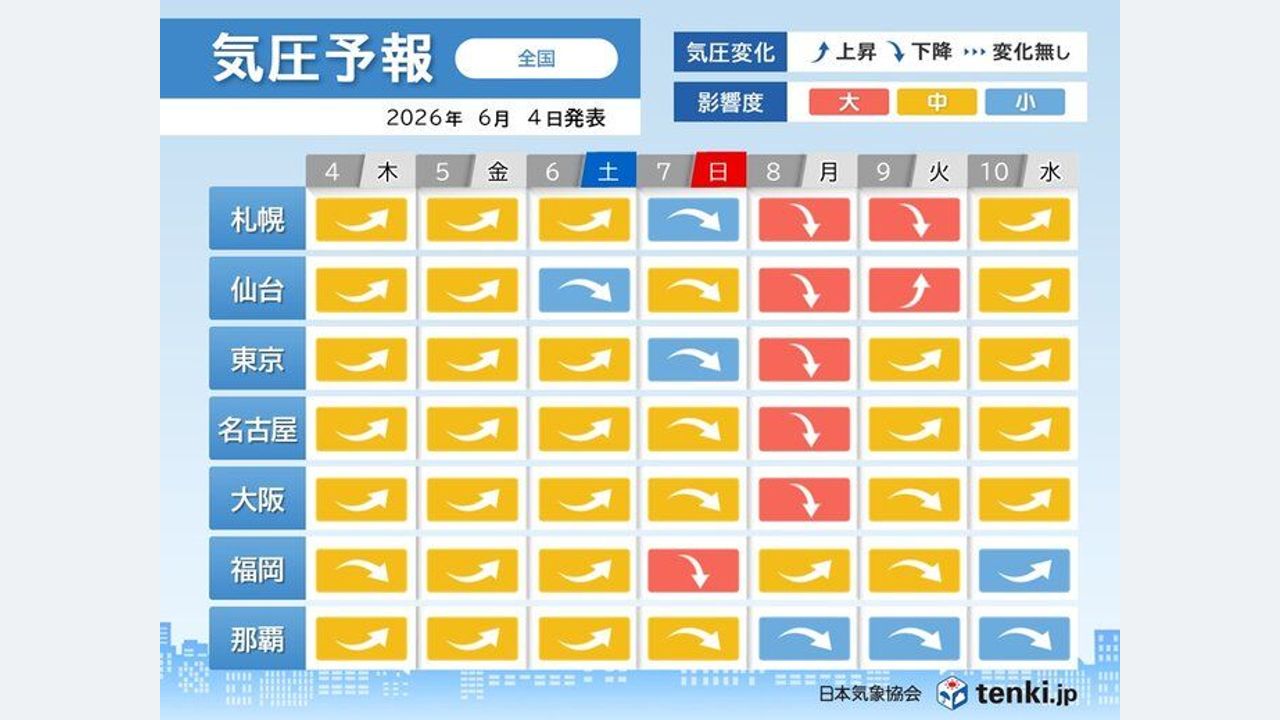
From Thursday the 4th through around Saturday the 6th, atmospheric pressure is expected to rise in many areas:
今日4日(木)から6日(土)頃までは気圧が上昇する所が多いでしょう。 Kyō yokka (moku) kara muika (do) goro made wa kiatsu ga jōshō suru tokoro ga ōi deshō. “From today, the 4th (Thursday), until around the 6th (Saturday), many places will likely see rising atmospheric pressure.”
However, the situation changes again starting Sunday the 7th:
7日(日)から8日(月)は低気圧が本州付近を進み、広く気圧が低下する見込みです。 Nananoka (nichi) kara yōka (getsu) wa teikiatsu ga Honshū fukin o susumi, hiroku kiatsu ga teika suru mikomi desu. “From Sunday the 7th to Monday the 8th, a low-pressure system is expected to move near Honshu, and atmospheric pressure is forecast to drop widely.”
The word 見込み (mikomi) means “forecast,” “expectation,” or “prospect.” It’s often used in news and formal reports.
Here, the low-pressure system will move near 本州 (honshū), Japan’s main island, where major cities like Tokyo, Osaka, and Hiroshima are located.
Regional Impact and Health Warnings
The report also highlights regional 影響 (eikyō, impact):
- On Sunday the 7th, the impact will be “large” in Fukuoka.
- On Monday the 8th, the impact will increase from Osaka to Sapporo.
Finally, the article warns readers to be careful of symptoms 伴う (tomonau, accompanied by) falling pressure:
気圧低下に伴う頭痛、首や肩のこり、めまい、全身倦怠感、関節痛、低血圧などにご注意ください。 Kiatsu teika ni tomonau zutsū, kubi ya kata no kori, memai, zenshin kentai-kan, kansetsu-tsū, teiketsuatsu nado ni go-chūi kudasai. “Please be careful of headaches, neck and shoulder stiffness, dizziness, general fatigue, joint pain, low blood pressure, and other symptoms accompanying a drop in atmospheric pressure.”
The word 倦怠感 (kentai-kan) refers to a general feeling of fatigue or malaise—something many people in Japan associate with sudden weather changes.
Cultural Context: Weather and Health in Japan
Weather reports in Japan often include warnings about how changes in 気圧 (kiatsu) may affect the body. Many people believe that low pressure can cause headaches or fatigue. You’ll frequently see phrases like:
- 気圧の変化 (kiatsu no henka) — changes in atmospheric pressure
- 体調に影響する (taichō ni eikyō suru) — to affect one’s physical condition
Unlike some English-language weather reports, Japanese forecasts often directly mention possible physical symptoms. This reflects how closely daily life and seasonal changes are connected in Japan.
Learn Japanese from This Article
Key Vocabulary
| Japanese | Romaji | Meaning |
|---|---|---|
| 温帯低気圧 | ontai teikiatsu | extratropical cyclone |
| 気圧 | kiatsu | atmospheric pressure |
| 見込み | mikomi | forecast; expectation |
| 影響 | eikyō | influence; impact |
| 伴う | tomonau | to accompany |
| 倦怠感 | kentai-kan | feeling of fatigue |
| 本州 | honshū | Honshu (Japan’s main island) |
Grammar Spotlight
1. 〜に変わる — “to change into”
Structure: Noun + に変わる
Example from the article: 温帯低気圧に変わりました。 Ontai teikiatsu ni kawarimashita. “It changed into an extratropical cyclone.”
More examples:
水が氷に変わる。 Mizu ga kōri ni kawaru. “Water changes into ice.”
信号が青に変わった。 Shingō ga ao ni kawatta. “The traffic light turned green.”
This pattern is essential for describing transformation.
2. 〜に伴う — “accompanied by; due to” (formal)
Structure: Noun + に伴う + Noun
From the article: 気圧低下に伴う頭痛 Kiatsu teika ni tomonau zutsū “Headaches accompanying a drop in atmospheric pressure”
More examples:
地震に伴う停電 Jishin ni tomonau teiden “Power outage caused by an earthquake”
価格上昇に伴う影響 Kakaku jōshō ni tomonau eikyō “Impact accompanying a price increase”
This expression is common in news reports and formal writing.
Useful Expression
ご注意ください。 Go-chūi kudasai. “Please be careful.”
You’ll often see this in public announcements, weather reports, and official notices. It’s polite and slightly formal.
Continue Learning
- Ready to dive deeper? Our lesson on Basic Vocabulary Building: Embracing Words Without Latin Ties will help you master these concepts.
- Working on your reading skills? Our Introduction to Kanji: Pictorial Foundations of Japanese Script lesson is a great next step.
- Ready to dive deeper? Our lesson on Reading and Writing in Japanese II: Hiragana and Katakana will help you master these concepts.
Weather reports are a goldmine for practical Japanese—formal expressions, regional names, and everyday vocabulary all in one place. By reading them closely, you’re learning the kind of Japanese used in real life across Japan.
これからもよろしくお願いします。 Kore kara mo yoroshiku onegaishimasu.