
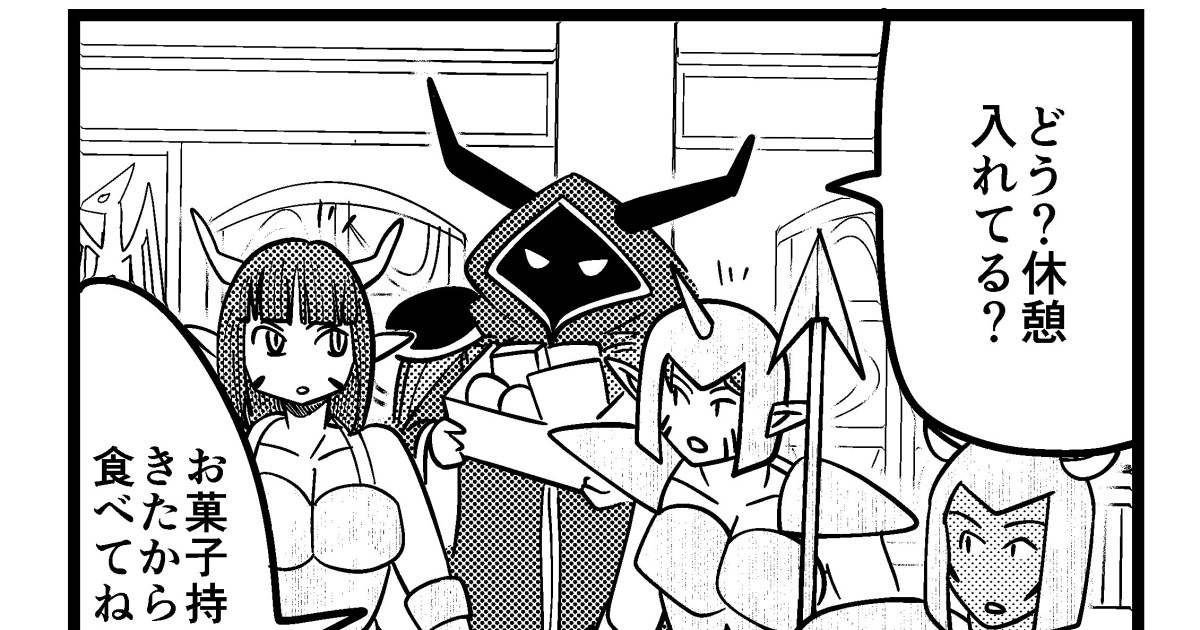
【4コマ】魔王軍はホワイト企業 2003話目「休暇明け⑤」 was published by Rocket News on May 28, 2026. The comic is illustrated by スガラジカル and marks the 2003rd installment of this long-running series.
A Long-Running 4-Panel Manga
The title begins with 【4コマ】 (yon-koma), meaning “four-panel comic.” A 漫画 (manga) in this format typically tells a short, punchy story in just four frames. It’s a classic style in Japan, often used for comedy and quick daily-life moments.
This particular series is called 魔王軍はホワイト企業 (Maō-gun wa howaito kigyō), which literally means “The Demon King’s Army Is a White Company.” In Japanese, a ホワイト企業 (howaito kigyō) is a “white company” — a business known for treating employees well, offering fair hours, and respecting work-life balance. That contrast between a “demon king’s army” and a “good workplace” is part of the humor.
This episode is labeled 2003話目 (ni-sen san hanashi-me), meaning “the 2003rd episode.” The counter 話 (hanashi) is used for stories or episodes, and 〜話目 adds the nuance of “the ~th episode.”
The subtitle is 「休暇明け⑤」 (kyūka ake go), or “After the Vacation (5).” The circled number indicates this is the fifth part in a continuing mini-series about returning from vacation.
Navigation Phrases You’ll See on Japanese Sites
Below the main credit line 漫画:スガラジカル (“Manga by Sugarajikaru”), the page includes standard navigation links:
- « 前の話へ (mae no hanashi e) — “To the previous episode”
- 第1回から読む (dai-ikkai kara yomu) — “Read from Episode 1”
- ▼キャラ一覧はこちら (kyara ichiran wa kochira) — “Character list is here”
These short phrases are extremely common on Japanese websites, especially for ongoing series.
Let’s break them down:
- 前 (mae) means “before” or “previous.”
- 話 (hanashi) means “story” or “episode.”
- 第〜回 (dai~kai) is used to number events or installments, like “Episode 1.”
- 読む (yomu) means “to read.”
- 一覧 (ichiran) means “list” or “overview.”
- こちら (kochira) is a polite way to say “this way” or “here.”
Even without reading the comic itself, just navigating a Japanese 漫画 site exposes you to useful, real-world Japanese.
Cultural Context: 4コマ and Workplace Humor
The 4コマ format has a long tradition in Japan. It usually follows a structure called:
- 起 (ki) – introduction
- 承 (shō) – development
- 転 (ten) – twist
- 結 (ketsu) – conclusion
This rhythm trains readers to expect a punchline in the fourth panel.
The phrase ホワイト企業 reflects modern Japanese work culture. It developed as a contrast to ブラック企業 (burakku kigyō), or “black companies,” known for overwork and poor conditions. A story about a demon king’s army being a model workplace playfully flips expectations — something Japanese comedy often does.
Learn Japanese from This Article
Key Vocabulary
| Japanese | Romaji | Meaning |
|---|---|---|
| 漫画 | manga | comic, manga |
| 前 | mae | before, previous, front |
| 話 | hanashi | story, episode, talk |
| 第〜回 | dai~kai | number ~ (counter for episodes/occurrences) |
| 読む | yomu | to read |
| 一覧 | ichiran | list, overview |
| こちら | kochira | this way, here (polite) |
Grammar Spotlight ①: 〜から (Starting Point)
In 第1回から読む (dai-ikkai kara yomu), the particle から means “from.”
Structure: N + から + verb
Examples:
第1回から読む。 Dai-ikkai kara yomu. I’ll read from Episode 1.
今日から始めます。 Kyō kara hajimemasu. I’ll start from today.
ここから行きます。 Koko kara ikimasu. I’ll go from here.
The nuance is always a starting point — in time, place, or sequence.
Grammar Spotlight ②: NのN (Noun Modifying Noun)
In 前の話 (mae no hanashi), the particle の connects two nouns.
Structure: N1 + の + N2
It often shows description, possession, or relationship.
Examples:
前の話 Mae no hanashi The previous episode
魔王軍の会社 Maō-gun no kaisha The Demon King’s company
キャラの一覧 Kyara no ichiran A list of characters
This pattern is everywhere in Japanese. Mastering it lets you combine nouns naturally and think more like a native speaker.
Useful Expressions from Websites
- こちら — A polite “here,” often used in links or customer service.
- 〜はこちら — “~ is here.” Example: 詳細はこちら。 Shōsai wa kochira. Details are here.
These are practical phrases you’ll see constantly on Japanese sites.
Continue Learning
📚 Want to understand the verb forms used here? Check out Masu Form: Mastering Polite Everyday Speech.
📚 To understand more about lifestyle, explore our Greetings and Self-Introductions: Authentic Entry Phrases lesson.
📚 Want to learn more about lifestyle? Check out our lesson on Basic Vocabulary Building: Embracing Words Without Latin Ties.
Basic Vocabulary Building: Embracing Words Without Latin Ties
これからもよろしくお願いします。 Kore kara mo yoroshiku onegaishimasu.