
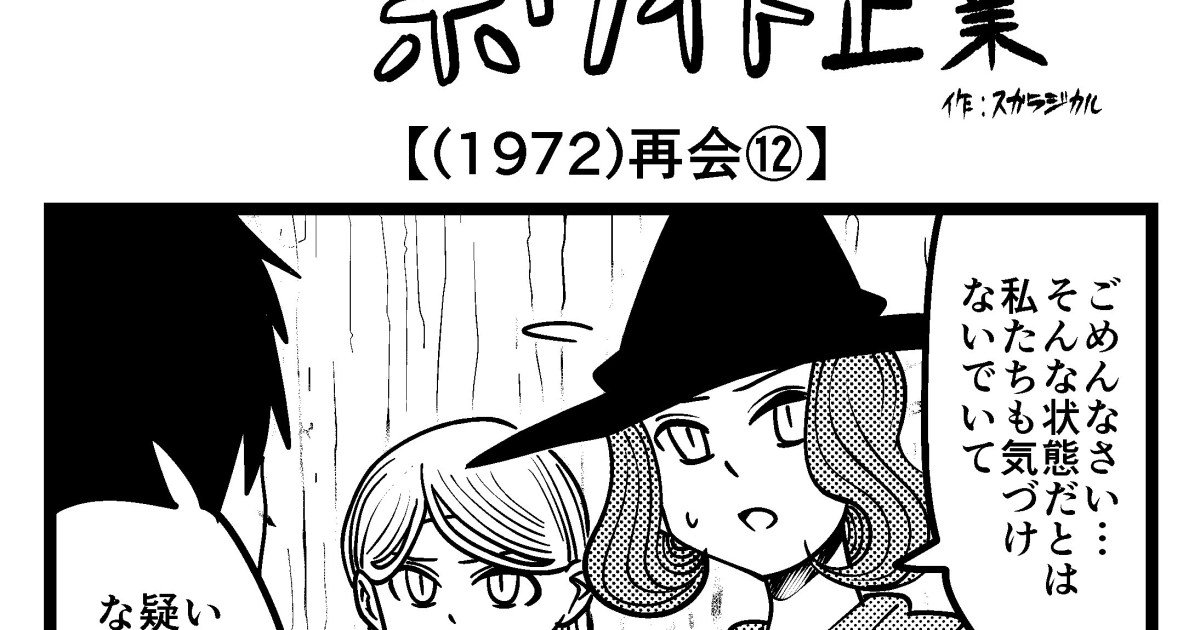
On April 27, 2026, Rocket News published episode 1972 of a long-running four-panel comic: 【4コマ】魔王軍はホワイト企業 1972話目「再会⑫」. The series, drawn by スガラジカル, continues its story with “Reunion (12).”
Even from just the title and navigation text, there’s a lot of real, everyday Japanese you can learn.
A 4-Panel Comic: What Is 「4コマ」?
The title begins with 4コマ (yon koma), which literally means “four panels.”
- 4 = four
- コマ (koma) = panel (of a comic)
So 4コマ漫画 (yon koma manga) means a four-panel comic strip. This format is extremely popular in Japan. Each episode is short and usually follows a clear structure: introduction, development, twist, and punchline.
The word 漫画 (manga) simply means “comic” or “cartoon.” In Japan, manga appears everywhere—from newspapers to online news sites like Rocket News.
Understanding the Episode Information
The title continues:
- 1972話目 (sen kyūhyaku nana-jū ni wa me)
- 「再会⑫」 (saikai jūni) — “Reunion (12)”
Let’s break that down.
「話目」 and Episode Numbers
- 話 (hanashi) can mean “story,” “episode,” or “talk,” depending on context.
- 〜話目 (~ wa me) indicates “the ~th episode.”
So:
- 1972話目 = “the 1972nd episode”
You’ll often see this pattern in manga, anime, and drama series.
The subtitle 再会 (saikai) means “reunion,” and the ⑫ shows that this is part 12 of that reunion storyline.
Navigation Phrases You’ll See Everywhere
Under the comic information, there are navigation links:
« 前の話へ Mae no hanashi e “To the previous episode”
第1回から読む Dai ikkai kara yomu “Read from episode 1”
▼キャラ一覧はこちら Kyara ichiran wa kochira “Character list is here”
These short phrases are gold for Japanese learners because they show how real websites are structured.
Let’s Look More Closely
前 (mae) means “before” or “previous.” So 前の話 (mae no hanashi) means “the previous episode.”
Notice the pattern:
N の N
Here:
- 前 (previous) + の
- 話 (episode)
This structure shows that one noun describes another.
Next:
第1回 (dai ikkai) means “the first time” or “episode 1.”
- 第〜回 (dai ~ kai) is used for numbered events or installments.
- 回 (kai) counts occurrences.
So:
- 第1回 = the first episode
- 第2回 = the second episode
Then we have:
第1回から読む Dai ikkai kara yomu “Read from episode 1”
Here’s an important grammar pattern:
N + から + Verb “Starting from N”
- 第1回から = from episode 1
- 読む (yomu) = to read
So the whole phrase literally means: “Read starting from episode 1.”
Finally:
一覧 (ichiran) means “list” or “overview.” こちら (kochira) is a polite way to say “this way” or “here.”
So:
- キャラ一覧はこちら “The character list is here.”
You’ll see こちら all over Japanese websites, in stores, and in customer service situations.
Cultural Context: Why This Format Matters
The 4-panel format is deeply rooted in Japanese publishing culture. Many manga artists sharpen their storytelling skills through 4コマ漫画 before moving to longer works.
The structure trains readers, too. Japanese audiences are used to quick setups and subtle punchlines. Even the episode numbering—like 1972話目—reflects the long-running nature of many Japanese series. Longevity and consistency are highly valued.
Navigation phrases such as 前の話へ and 第1回から読む also reflect how carefully organized Japanese media tends to be. Clear structure and reader guidance are part of the user experience.
Learn Japanese from This Article
Let’s collect the key vocabulary.
Vocabulary
| Japanese | Romaji | Meaning |
|---|---|---|
| 漫画 | manga | comic, manga |
| 前 | mae | before, previous |
| 話 | hanashi | story, episode, talk |
| 第〜回 | dai ~ kai | No.~ / the ~th time or episode |
| 読む | yomu | to read |
| 一覧 | ichiran | list, overview |
| こちら | kochira | this way, here (polite) |
Try spotting these words next time you browse a Japanese website.
Grammar Spotlight
1. N + から + Verb
“Starting from N”
第1回から読む。 Dai ikkai kara yomu. “Read from episode 1.”
今日から勉強します。 Kyō kara benkyō shimasu. “I will study starting today.”
日本から来ました。 Nihon kara kimashita. “I came from Japan.”
This pattern is incredibly common in daily conversation.
2. N の N
Noun describing another noun
前の話 Mae no hanashi “The previous episode”
日本の漫画 Nihon no manga “Japanese manga”
先生の本 Sensei no hon “The teacher’s book”
Think of の as a flexible connector—like “of” or an apostrophe-s in English.
Useful Expressions from Web Navigation
- 前の話へ — “To the previous episode”
- 第1回から読む — “Read from episode 1”
- 一覧はこちら — “The list is here”
You’ll encounter these constantly on Japanese blogs, news sites, and online stores. Learning them helps you navigate Japanese content independently.
Continue Learning
📚 Want to understand the verb forms used here? Check out Masu Form: Mastering Polite Everyday Speech.
📚 Want to learn more about lifestyle? Check out our lesson on Greetings and Self-Introductions: Authentic Entry Phrases.
📚 Curious about the Japanese used here? Our Basic Vocabulary Building: Embracing Words Without Latin Ties lesson covers this in depth.
Basic Vocabulary Building: Embracing Words Without Latin Ties
これからもよろしくお願いします。 Kore kara mo yoroshiku onegaishimasu.