
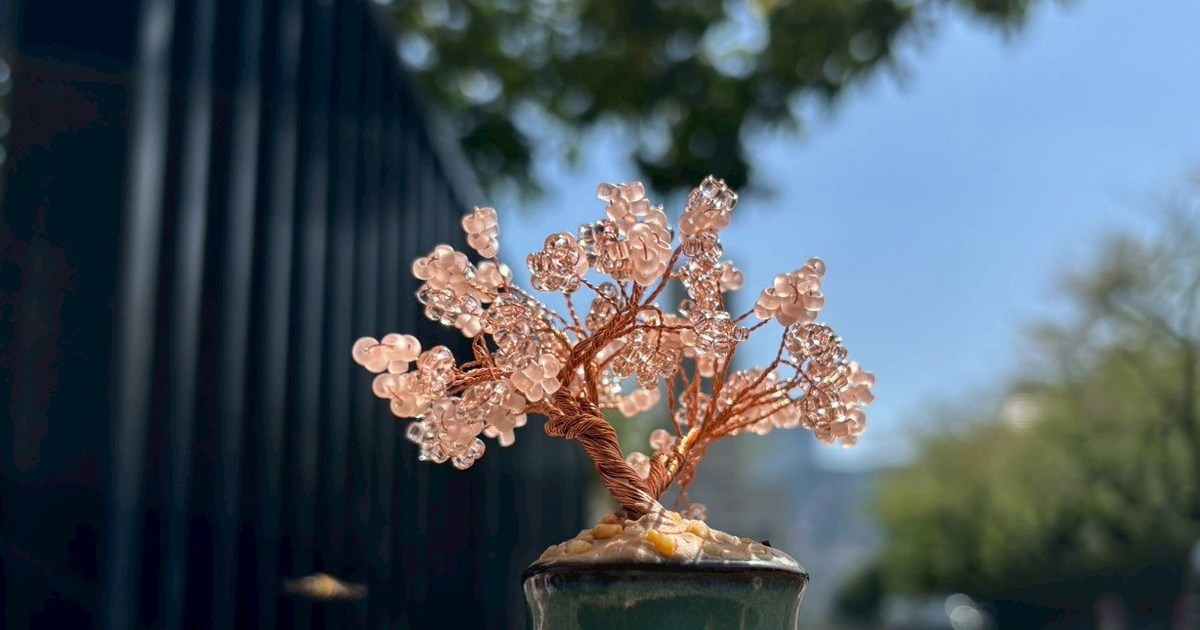
A DIY bonsai kit priced at 2,200 yen has been quietly taking over online shops—so much so that nearly everything was completely 売切れ (urikire), or sold out.
The kit is called ネジッテBONSAI (nejitte bonsai), and it lets you create miniature trees by twisting beads and wire together. Pine, plum, ginkgo, maple—and of course, cherry blossom. One writer decided to make a sakura version as a substitute for this year’s missed cherry blossom viewing. What seemed like a light spring project ended up taking five hours.
Here’s what happened—and what you can learn from it.
Sold Out Everywhere
The appeal of ネジッテBONSAI is simple: twist beads and wire to create your own bonsai. The variety is wide, from classic 松 (matsu, pine) and 梅 (ume, plum) to 銀杏 (ichō, ginkgo) and 紅葉 (momiji, maple).
The writer hadn’t properly enjoyed お花見 (ohanami, cherry blossom viewing) this year and thought, “Why not make my own sakura at home?”
But when she checked online shops and physical stores, everything was 売切れ (urikire). Not just the cherry blossom version—almost all products were gone. She hadn’t realized it was that popular.
And as often happens, being unable to get it made her want it even more.
After two weeks of checking repeatedly, the kit was finally 再販 (saihan), meaning restocked. She managed to get one.
Time for a relaxed, at-home cherry blossom experience—or so she thought.
Difficulty Level 2… Really?
On the box, the difficulty was listed as 2 out of 5. That sounded manageable.
Still, she admitted she wasn’t very 器用 (kiyou), meaning skillful with her hands, so she asked a friend for help.
When she opened the box, the sakura-colored beads immediately brought a feeling of spring. Her heart leapt with excitement.
But that joy lasted only a 束の間 (tsukanoma), a brief moment.
The instruction manual was packed with text. There were nearly 20 工程 (koutei), or steps, in total. For someone used to making miniatures, it might be fine—but from a beginner’s perspective, the hurdle felt high.
In step one alone, she had to measure and cut 80 pieces of wire to the same length.
Twenty minutes later, she wasn’t even halfway done with the first step.
Ironically, even though the name is “Nejitte” (twist), she hadn’t reached the twisting stage yet.
Twisting… and Twisting…
After about an hour, step one was finally complete. A pile of neatly cut wires brought a small sense of satisfaction.
Step two was where the real twisting began.
She threaded a set number of beads onto each wire and started twisting them together. Along the way, she dropped beads—and felt her own heart twist a little too.
Two hours into step two, she had completed only about 20 percent of it. At that rate, she calculated it might take ten hours just for this stage.
What had started as fun began to feel physically demanding. She even worried about 腱鞘炎 (kenshouen), wrist tendinitis from repetitive motion.
Still, she kept going.
She twisted and twisted—so much that she joked it felt like she had twisted enough for a lifetime. (The article humorously compares it to actor Akira Nakao’s famously twisted neckties.)
What began as a casual attempt to “make up” for missing cherry blossom season turned out to be far more work than expected.
And yet, something changed.
As the shape slowly emerged, it looked beautiful and cute. She even felt her twisting skills improving.
Finally, after adjusting the branches, packing in clay, and placing sand on top—
It was complete.
Five Hours Later
Despite being labeled difficulty level 2, the kit took a total of five hours to finish (including breaks). She had assumed it would take about two.
The challenge wasn’t so much complexity as sheer volume of work. If you steadily build step by step, you can finish it.
In fact, it might be perfect for moments when you want to enter a state of 無心 (mushin)—an “empty mind,” where you focus completely on one task.
For anyone who missed peak cherry blossom season this year, making flowers bloom again at home could be a surprisingly meaningful alternative.
Cultural Context: Why Sakura Matters
Cherry blossoms are more than just pretty flowers in Japan. お花見 (ohanami) is a seasonal tradition where people gather under blooming sakura trees to eat, drink, and celebrate spring.
Missing sakura season can feel like missing a national event. That emotional weight explains why the writer felt drawn to making her own cherry blossom bonsai.
Bonsai itself is an art form of cultivating miniature trees in containers. This kit transforms that traditional aesthetic into an accessible, bead-based DIY craft—blending old and new Japan in one project.
Learn Japanese from This Article
Key Vocabulary
| Japanese | Romaji | Meaning |
|---|---|---|
| 売切れ | urikire | sold out |
| 再販 | saihan | restock; resale |
| 工程 | koutei | process; step |
| 器用 | kiyou | skillful; handy |
| 束の間 | tsukanoma | brief moment |
| 腱鞘炎 | kenshouen | tendinitis (wrist) |
| 無心 | mushin | empty mind; total absorption |
Try using them in your own sentences. For example:
全部売切れだった。 Zenbu urikire datta. “Everything was sold out.”
再販を待っていました。 Saihan o matte imashita. “I was waiting for the restock.”
Grammar Spotlight 1: 〜てみる (Try Doing)
Pattern: Verb (て-form) + みる
Used when you try something out to see what it’s like.
作ってみた。 Tsukutte mita. “I tried making it.”
やってみよう。 Yatte miyou. “Let’s try doing it.”
In the article title, 作ってみた shows that the writer gave it a try—and discovered it was much harder than expected.
Grammar Spotlight 2: 〜てしまう (Completely / Unfortunately)
Pattern: Verb (て-form) + しまう
This expresses:
- Completing something fully
- Regret or something unintended
5時間もかかってしまった。 Go-jikan mo kakatte shimatta. “It ended up taking five whole hours.” (with a hint of surprise/regret)
ビーズをこぼしてしまった。 Bīzu o koboshite shimatta. “I accidentally spilled the beads.”
You’ll hear this structure constantly in everyday Japanese, especially in casual storytelling.
Useful Expression
- 無心になりたいときにちょうどいい。 Mushin ni naritai toki ni choudo ii. “It’s just right for when you want to clear your mind.”
This kind of phrasing—〜たいときに (“when you want to…”)—is extremely common in daily conversation.
Continue Learning
📚 Want to understand the verb forms used here? Check out Masu Form: Mastering Polite Everyday Speech.
📚 Want to learn more about lifestyle? Check out our lesson on Greetings and Self-Introductions: Authentic Entry Phrases.
📚 Curious about the Japanese used here? Our Basic Vocabulary Building: Embracing Words Without Latin Ties lesson covers this in depth.
Basic Vocabulary Building: Embracing Words Without Latin Ties
これからもよろしくお願いします。 Kore kara mo yoroshiku onegaishimasu.