
Shinjuku is famously せわしない (sewashinai)—busy, hectic, constantly in motion. That’s exactly why finding a place to 腰を落ち着ける (koshi o ochitsukeru), to truly sit down and relax, can feel almost impossible.
Doutor? 混んでいる (konde iru)—crowded. Starbucks? Also packed. Search online for a “relaxing café,” and you often get either ultra-stylish, high-pressure spots or places that are simply expensive. Sometimes you don’t want trendy. You just want to unwind.
According to a recent Rocket News report, the solution might be hiding in plain sight: the 13th floor of Shinjuku Takashimaya.
A Restaurant Floor with a Garden View
The 13th floor of Takashimaya is a restaurant floor filled with various dining options. It also connects to a rooftop-style garden space, which means many restaurants offer open-air seating.
On sunny days, with blue skies and a light breeze, the outdoor seats on this floor are especially appealing. As the writer walked through the garden area, most of the open seats at different restaurants were fairly full.
Waiting in a crowded place? Not ideal.
But then—at the 片隅 (katasumi), the corner of the floor—there was one restaurant with open seats available.
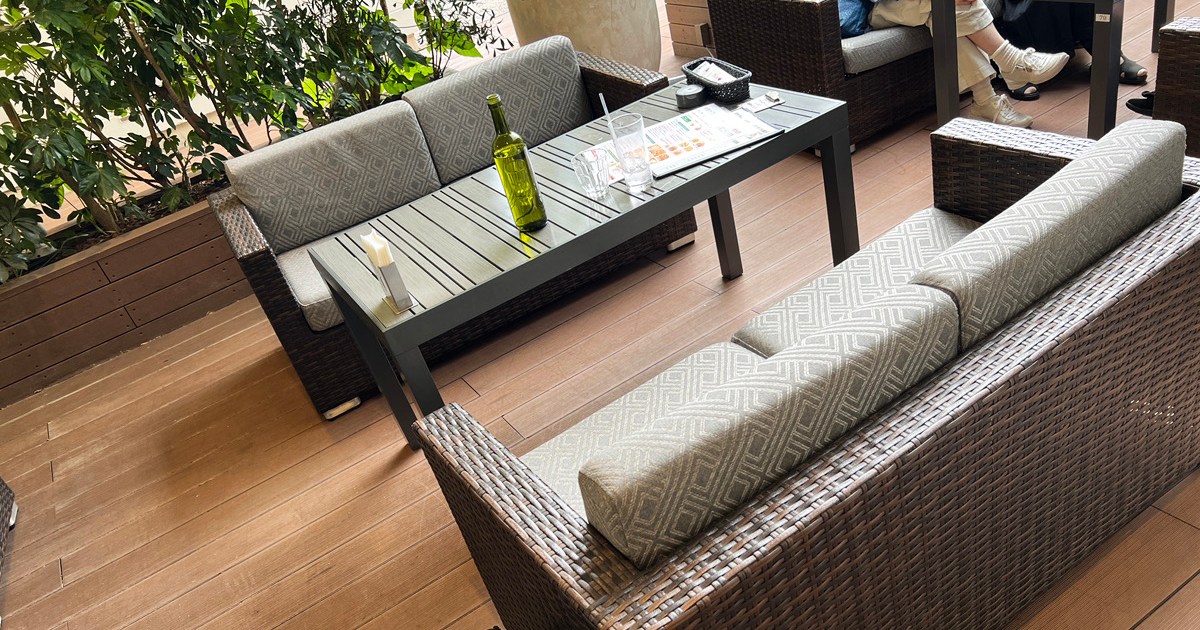
Even better: the outdoor area had sofa seating.
And surprisingly, it was almost empty.
The Mystery of the Empty Sofa Seats
Compared to the other restaurants on the same floor, this place wasn’t particularly expensive. For example:
- ブラッドオレンジ (buraddo orenji) – Blood orange drink (590 yen, tax included)
- ホットコーヒー (hotto kōhī) – Hot coffee (490 yen, tax included)
So why was it so quiet?
The writer speculates it might be because the entrance is located in something like a 死角 (shikaku), a blind spot of the floor. From the garden side, the area is surrounded by 植木 (ueki), shrubs and plants, making it hard to see from the outside.
Because of that, the inside and outside feel gently separated. Even though it’s open-air seating, you barely notice other people’s gazes or movement. It feels private without being closed off.
At the time, there was only one other group—a group of “madams” (a very Japanese way to describe elegant middle-aged or older women). The writer even overheard them saying, “This place is really great!”
In Japan, when it comes to afternoon tea culture, the opinions of experienced “madams” carry serious weight.
So Good It Became the Meeting Spot
The writer was originally searching for a café near Shinjuku Station for a 待ち合わせ (machiawase), a meetup with someone.
But the space was so comfortable that they simply invited the other person there instead.
The restaurant’s name?
北海道イタリアン ミア・ボッカ 新宿高島屋店 Hokkaidō Itarian Mia Bokka Shinjuku Takashimaya-ten “Hokkaido Italian Mia Bocca, Shinjuku Takashimaya branch”
It may technically be a restaurant, but at that moment, it felt more relaxed and approachable than many “recommended cafés.” For a casual conversation in hectic Shinjuku, it might just be the strongest contender.
Store Information
- Name: 北海道イタリアン ミア・ボッカ 新宿高島屋店
- Address: 東京都渋谷区千駄ヶ谷5-24-2 新宿タカシマヤタイムズスクエア13階
- Hours: 11:00–23:00
- Closed: According to Takashimaya Times Square business hours
Cultural Context: Why “Afternoon Tea” Matters
In Japan, “afternoon tea” doesn’t always mean a formal British-style tiered set. It often simply means taking a relaxing break in the afternoon—especially popular among women, retirees, and friends catching up.
Urban centers like Shinjuku are known for being せわしない (sewashinai). That’s why hidden calm spaces are so valuable. A place that isn’t obviously visible—thanks to a 死角 (shikaku) or surrounding 植木 (ueki)—can become a secret oasis.
Understanding these small spatial details helps you understand Japanese city culture: privacy and comfort are often about subtle design, not obvious separation.
Learn Japanese from This Article
Key Vocabulary
| Japanese | Romaji | Meaning |
|---|---|---|
| せわしない | sewashinai | busy; hectic |
| 腰を落ち着ける | koshi o ochitsukeru | to settle down; to sit and relax |
| 混んでいる | konde iru | to be crowded |
| 片隅 | katasumi | corner (of a place) |
| 死角 | shikaku | blind spot |
| 植木 | ueki | garden plant; shrub |
| 待ち合わせ | machiawase | meeting up; appointment |
Try using one today: ちょっと腰を落ち着けたい。 Chotto koshi o ochitsukitai. “I just want to sit down and relax for a bit.”
Grammar Spotlight
1. 〜わけではない
“It doesn’t mean that…” / “It’s not that…”
From the article’s idea: The restaurant isn’t empty because it’s expensive.
高いわけではない。 Takai wake de wa nai. “It’s not that it’s expensive.”
More examples:
嫌いなわけではない。 Kirai na wake de wa nai. “It’s not that I dislike it.”
日本が嫌いなわけではないですが、海外にも住んでみたいです。 Nihon ga kirai na wake de wa nai desu ga, kaigai ni mo sunde mitai desu. “It’s not that I dislike Japan, but I’d like to try living abroad too.”
This pattern is extremely common in natural Japanese conversation.
2. 〜ため(に)
“Because of…” / “Due to…” / “For the purpose of…”
In the article, the space might be quiet 入口が死角にあるため—because the entrance is in a blind spot.
雨のため、試合は中止です。 Ame no tame, shiai wa chūshi desu. “The game is canceled due to rain.”
勉強するために、カフェに行きます。 Benkyō suru tame ni, kafe ni ikimasu. “I go to a café in order to study.”
Notice how ため can express both reason and purpose.
Useful Expressions
混んでるなあ。 Konderu nā. “It’s crowded…”
ここ、めっちゃ良いね! Koko, meccha ii ne! “This place is really great!”
ここで待ち合わせしよう。 Koko de machiawase shiyō. “Let’s meet here.”
These are the kinds of phrases you’ll actually hear in places like Shinjuku.
Continue Learning
To understand more about 時間 expressions often used when arranging plans like 待ち合わせ, explore our Time and Dates: Tense-Free Expressions
Urban Japan can feel overwhelming—but sometimes, the best places are hiding in a quiet 片隅 (katasumi). And when you learn the language the way it’s naturally used, you start to notice those hidden spots in conversation too.
これからもよろしくお願いします。 Kore kara mo yoroshiku onegaishimasu.