
On April 15, BS-TBS announced it will end its 4K satellite channel “BS-TBS 4K” by choosing not to renew its government certification after January 24, 2027. With this decision, all five major commercial BS broadcasters in Japan will have withdrawn from 4K broadcasting.
This means that commercial 4K satellite broadcasting in Japan will effectively drop to zero.
All Commercial BS 4K Channels to End
BS-TBS is one of five major private BS (Broadcast Satellite) stations in Japan. Among them:
- BS Fuji
- BS TV Tokyo
- BS Asahi
have already announced the end of their 4K broadcasts. In addition, BS Nippon has made clear that it will not apply for a new license.
As a result, commercial 4K satellite broadcasting in Japan 〜ことになる (koto ni naru) — “will end up” disappearing altogether.
In the original announcement, BS-TBS explained that the ビジネス環境 (bijinesu kankyou, business environment) 〜を取り巻く (o torimaku, surrounding) 4K broadcasting has become extremely severe.
They pointed to two major factors:
- Rapid expansion of インターネット配信 (intaanetto haishin, internet streaming)
- Widespread adoption of スマートデバイス (sumaato debaisu, smartphones and tablets)
According to the company, viewing environments have changed dramatically in recent years. After reviewing the profitability and user growth of BS 4K broadcasting, they decided to end the current 4K broadcast business.
What Happens to 4K Content?
Although the satellite broadcasts will end, the 4K programs themselves won’t completely disappear.
BS-TBS stated that its 4K コンテンツ (kontentsu, media content) will be distributed through a new free 4K streaming framework starting this fall on WOWOWオンデマンド (WOWOW on demando, WOWOW On-Demand). The other four stations are planning similar distribution.
This reflects a clear shift from satellite broadcasting — which requires a special アンテナ (antena, antenna) such as the BS/110-degree CS right/left circular shared antenna — to internet-based delivery.
In other words, 4K is moving from hardware-dependent television infrastructure to flexible デジタル (dejitaru, digital) streaming platforms.
The Financial Reality Behind 4K
BS 4K broadcasting began in December 2018. However, while viewership failed to grow significantly, production コスト (kosuto, costs) remained high.
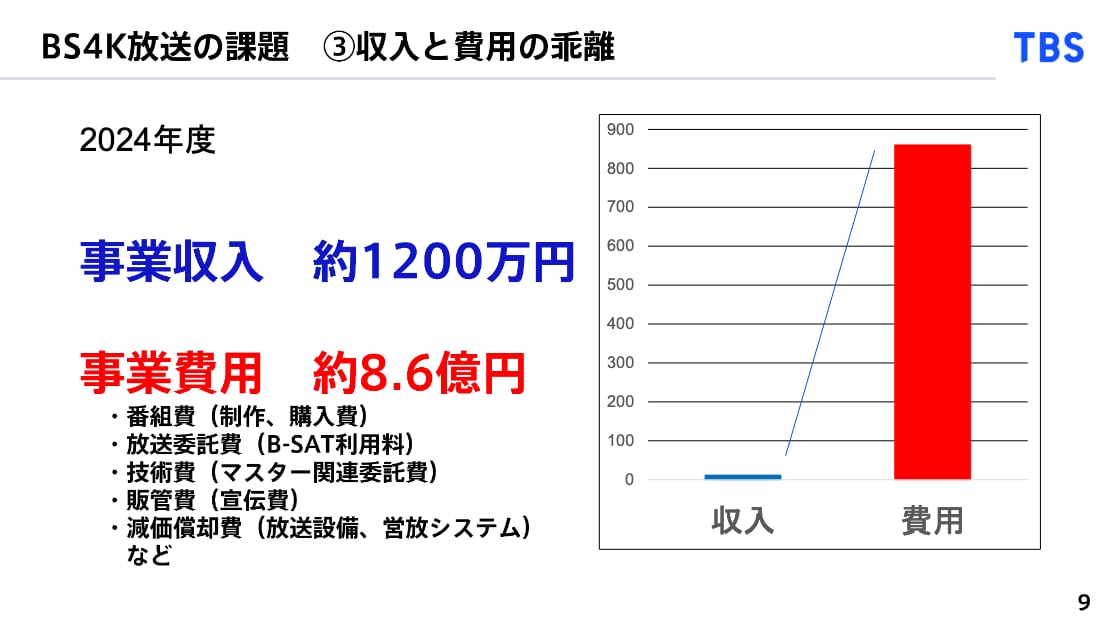
According to materials submitted by TBS Holdings to a Ministry of Internal Affairs and Communications study group in September 2025, the business had been financially difficult from the beginning:
- “Financial conditions were severe from the start, with large cumulative losses.”
- “Even recently, approximately 850 million yen in losses.”
This helps explain why the stations ultimately decided that continuing 4K satellite broadcasting was unsustainable.
Cultural Context: Why Satellite 4K Struggled
In Japan, BS broadcasting refers to satellite TV channels that require a dedicated antenna and compatible equipment. When 4K broadcasting launched in 2018, it was positioned as a next-generation viewing experience.
However, at the same time:
- High-speed internet became widespread.
- Streaming services expanded rapidly.
- Viewers increasingly watched content on smartphones and tablets.
Rather than installing new satellite equipment, many consumers chose flexible, on-demand services. The circumstances surrounding (〜を取り巻く) 4K broadcasting changed faster than expected.
This story reflects a broader shift in Japanese media consumption — from traditional broadcasting to internet streaming.
Learn Japanese from This Article
Let’s turn this news into practical Japanese study.
Key Vocabulary
| Japanese | Romaji | Meaning |
|---|---|---|
| インターネット配信 | intaanetto haishin | internet streaming |
| スマートデバイス | sumaato debaisu | smart device |
| オンデマンド | on demando | on-demand |
| コンテンツ | kontentsu | content (media) |
| ビジネス環境 | bijinesu kankyou | business environment |
| コスト | kosuto | cost |
| デジタル | dejitaru | digital |
| アンテナ | antena | antenna |
Notice how many of these are written in katakana. Modern Japanese tech news heavily relies on loanwords.
Grammar Spotlight
1️⃣ 〜ことになる
Meaning: It will result in… / It has been decided that…
Structure: Verb (dictionary form) + ことになる
Example from this situation:
- 民放の4K放送が終了することになる。 Minpou no 4K housou ga shuuryou suru koto ni naru. Commercial 4K broadcasting will end (as a result).
This pattern is often used for decisions that feel official, external, or inevitable.
More examples:
来年、日本に行くことになりました。 Rainen, Nihon ni iku koto ni narimashita. It has been decided that I will go to Japan next year.
会議は中止することになった。 Kaigi wa chuushi suru koto ni natta. It was decided that the meeting would be canceled.
2️⃣ 〜を取り巻く
Meaning: To surround (physically or figuratively)
Structure: Noun + を取り巻く + noun
Example:
- 4K放送事業を取り巻くビジネス環境 4K housou jigyou o torimaku bijinesu kankyou The business environment surrounding the 4K broadcast business
This expression is frequently used in news and formal writing to describe circumstances, social issues, or economic conditions.
Useful Expression from the Article
- 厳しい状態が続いている Kibishii joutai ga tsuzuite iru A severe/difficult situation continues.
You’ll see this phrasing often in business, economics, and political reporting.
Continue Learning
Want to better understand all those katakana tech words?
- Katakana Essentials: Adapting Global Words to Japanese
- Basic Vocabulary Building: Embracing Words Without Latin Ties
- Reading and Writing in Japanese II: Hiragana and Katakana
Mastering katakana is essential if you want to read modern Japanese news, especially about technology and business.
これからもよろしくお願いします。 Kore kara mo yoroshiku onegaishimasu.