
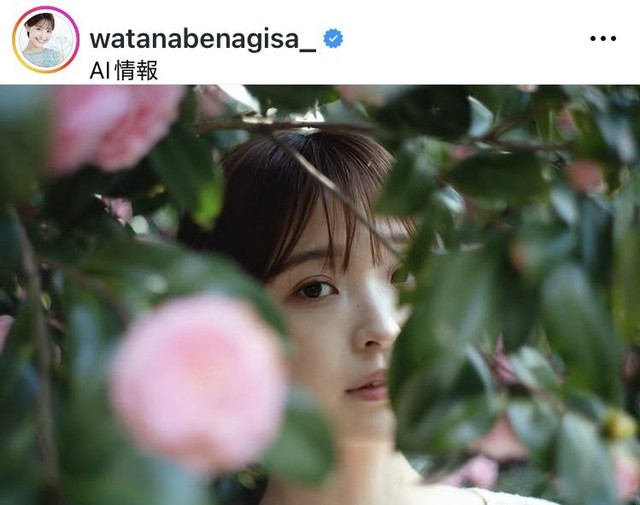
On April 9, former Fuji TV announcer Watanabe Nagisa updated her Instagram with a deeply personal message, writing, “It’s not that I made a big mistake, but…” and opening up about the harsh thoughts she sometimes directs at herself.
“I Think, ‘I’m a Useless Person’”
In her post, Watanabe began with the phrase:
大きな失敗をしたわけでもないけれど、 Ōkina shippai o shita wake demo nai keredo, “It’s not that I made a big mistake, but…”
She explained that on days when she hasn’t achieved something special or done something she feels proud of, she finds herself thinking:
『今日は何もできなかった』『私はダメ人間だ』と思う。 ‘Kyō wa nani mo dekinakatta’ ‘Watashi wa dame ningen da’ to omou. “I couldn’t do anything today.” “I’m a useless person.”
She went on to 吐露する (toro suru), meaning to confess or openly express her feelings, about how these thoughts affect her daily life. Sometimes, she wonders:
そんな人がご飯とか食べていいのかな? Sonna hito ga gohan toka tabete ii no kana? “Is it okay for someone like that to even eat?”
She wrote that her desire to eat fades, and that simply being alive and consuming things makes her feel uneasy:
生きているだけで何かを消費していることに、何だか嫌気が刺す、そんな毎日。 Ikite iru dake de nanika o shōhi shite iru koto ni, nandaka iyake ga sasu, sonna mainichi. “Just by being alive, I’m consuming something, and somehow I become fed up with that—those are my days.”
Here, the expression 嫌気が刺す (iyake ga sasu) conveys a deep sense of becoming fed up or emotionally worn down.
Through Instagram, she chose to 明かす (akasu), or reveal, her 胸の内 (mune no uchi)—her true inner feelings.
Her Career and Health Struggles
Watanabe joined Fuji Television in 2020. Beginning in 2023, she took a break from work for 療養 (ryōyō), meaning medical recuperation due to poor health. She later 退社 (taisha), or left the company, at the end of August 2024.
In October of that same year, she announced that she had been suffering from PTSD, written in Japanese as 心的外傷後ストレス障害 (shinteki gaishōgo sutoresu shōgai). The verb often used for suffering from an illness is 患う (wazurau). She also shared that her specialized treatment had been completed.
She is currently working as a freelancer.
Cultural Context: Public Vulnerability in Japan
In Japan, public figures—especially announcers, known as アナウンサー (anaunsā)—are often expected to appear composed, cheerful, and professional at all times. Admitting to mental health struggles can feel risky in a society that has traditionally valued endurance, or 我慢 (gaman), meaning persevering through hardship without complaint.
That’s why posts like this matter. By choosing to openly share her 胸の内 (mune no uchi), Watanabe is participating in a gradual cultural shift in Japan, where conversations about mental health are becoming more visible.
For you as a learner, this kind of real-life language—raw, emotional, and honest—offers a powerful glimpse into how Japanese is actually used to express vulnerability.
Learn Japanese from This Article
Let’s break down key vocabulary and grammar you can start using right away.
Key Vocabulary
| Japanese | Romaji | Meaning |
|---|---|---|
| 胸の内 | mune no uchi | one’s true feelings; inner thoughts |
| 明かす | akasu | to reveal; to disclose |
| 吐露する | toro suru | to confess; to express one’s feelings openly |
| 嫌気が刺す | iyake ga sasu | to become fed up with; to feel disgusted |
| 療養 | ryōyō | medical recuperation; rest for treatment |
| 退社 | taisha | to leave a company |
| 患う | wazurau | to suffer from (an illness) |
| 消費する | shōhi suru | to consume |
Notice how many of these words are written in kanji compounds. Recognizing the individual characters can dramatically improve your reading speed.
Grammar Spotlight ①: 〜わけでもないけれど
Structure: Plain form + わけでもないけれど
Meaning: “It’s not that… but…” (softening or clarifying a statement)
Example from the article:
- 大きな失敗をしたわけでもないけれど、 Ōkina shippai o shita wake demo nai keredo, “It’s not that I made a big mistake, but…”
More examples:
嫌いなわけでもないけれど、毎日は食べない。 Kirai na wake demo nai keredo, mainichi wa tabenai. “It’s not that I dislike it, but I don’t eat it every day.”
忙しいわけでもないけれど、何だか疲れている。 Isogashii wake demo nai keredo, nandaka tsukarete iru. “It’s not that I’m busy, but I somehow feel tired.”
This pattern helps you express subtle, nuanced feelings—very common in Japanese communication.
Grammar Spotlight ②: 〜だけで
Structure: Verb (dictionary form) + だけで
Meaning: “Just by…” / “Merely by…”
Example from the article:
- 生きているだけで何かを消費している。 Ikite iru dake de nanika o shōhi shite iru. “Just by being alive, (I’m) consuming something.”
More examples:
見るだけでわかる。 Miru dake de wakaru. “I understand just by looking.”
聞くだけで安心する。 Kiku dake de anshin suru. “Just hearing it makes me feel relieved.”
This structure is simple—but incredibly powerful for expressing cause and effect.
Useful Expression: ダメ人間
- ダメ人間 dame ningen “A useless person” / “A hopeless person”
This is a very strong, self-critical expression. You might hear it jokingly among friends, but when used seriously, it reveals deep self-doubt.
Understanding emotional vocabulary like this allows you to read social media posts, interviews, and news stories with greater empathy and nuance.
Continue Learning
📚 Working on your reading skills? Our Introduction to Kanji: Pictorial Foundations of Japanese Script lesson is a great next step.
Introduction to Kanji: Pictorial Foundations of Japanese Script
📚 Want to learn more about culture? Check out our lesson on Honorifics: Keigo for Respectful Dialogue.
📚 Want to learn more about culture? Check out our lesson on Basic Vocabulary Building: Embracing Words Without Latin Ties.
Basic Vocabulary Building: Embracing Words Without Latin Ties
これからもよろしくお願いします。 Kore kara mo yoroshiku onegaishimasu.