
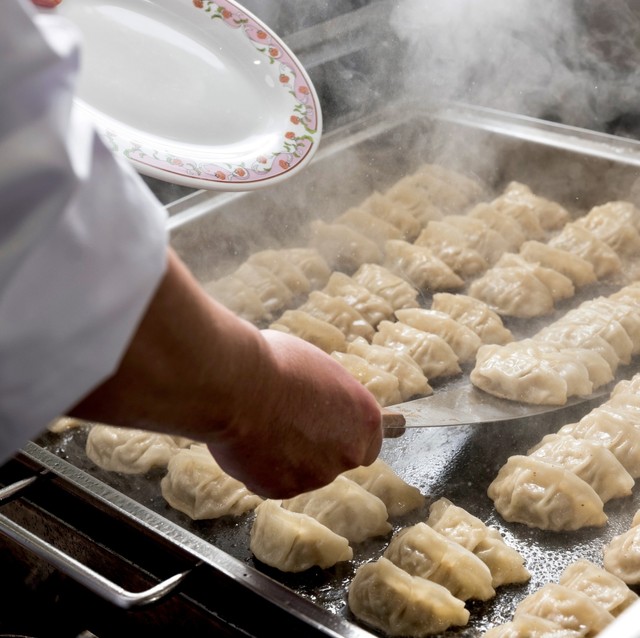
“イーガーコーテル!” The shout rang out from the kitchen at a bustling Gyōza no Ōshō restaurant, cutting through the chatter of diners. A customer, dining with family, heard it clearly—followed by more mysterious calls that sounded almost like Chinese. No one at the table knew what they meant.
At issue were the lively kitchen chants echoing through 店内 (tennai, inside the restaurant). From the 厨房 (chūbō, commercial kitchen), 威勢のいい (isei no ii, energetic) voices were 飛び交っていました (tobikatte imashita, flying back and forth). At one point, a staff member 声を張り上げました (koe o hariagemashita, raised their voice loudly):
「イーガーコーテル!」
It certainly sounded like a foreign language. Curious, the customer asked family members what it meant—but no one could answer.
Online, people have posted similar questions:
「餃子の王将の掛け声ってどういう意味?」 Gyōza no Ōshō no kakegoe tte dō iu imi? “What do the chants at Gyōza no Ōshō mean?”
「あの言葉は何語?」 Ano kotoba wa nan-go? “What language is that?”
To get answers, the media outlet contacted a company 担当者 (tantōsha, representative/person in charge*) at Gyōza no Ōshō to ask directly.
What’s Going On in the Kitchen?
The article highlights something many diners notice but rarely understand: the unique 掛け声 (kakegoe, chants or calls) used in restaurant kitchens.
In busy restaurants, especially large chains, staff often use short, loud calls to communicate orders quickly and efficiently. These calls must be:
- Fast to say
- Easy to hear over noise
- Distinct from everyday conversation
At Gyōza no Ōshō, those calls apparently sound unusual enough that customers wonder whether they’re hearing Chinese—or something else entirely.
The source article focuses on the mystery itself and the curiosity it sparks among customers and on social media. It sets up the central question:
What language are these chants, and what do they mean?
Cultural Context: Why Are Restaurant Calls So Loud?
Japanese restaurant kitchens can be surprisingly vocal. Staff frequently shout confirmations and instructions to prevent mistakes and maintain speed during busy hours.
This kind of energetic shouting reflects:
- Team coordination
- Emphasis on efficiency
- A culture of verbal confirmation
You may also notice that staff in Japan often call out greetings loudly when customers enter:
「いらっしゃいませ!」 Irasshaimase! “Welcome!”
This culture of clear, audible communication carries over into the kitchen. Even if customers don’t understand the words, the energy contributes to the lively atmosphere of the 店内 (tennai).
Learn Japanese from This Article
Let’s turn this news story into a learning opportunity.
Key Vocabulary
| Japanese | Romaji | Meaning |
|---|---|---|
| 店内 | tennai | inside the store/restaurant |
| 厨房 | chūbō | commercial kitchen |
| 威勢のいい | isei no ii | lively; energetic |
| 飛び交う | tobikau | to fly about; to be exchanged rapidly |
| 声を張り上げる | koe o hariageru | to raise one’s voice; shout loudly |
| 掛け声 | kakegoe | chant; call; shout |
| 担当者 | tantōsha | person in charge; representative |
Notice how many of these words are commonly used in news writing. If you're building reading skills, getting comfortable with kanji like 店, 内, and 声 will make a big difference. Working on your reading skills? Our Introduction to Kanji: Pictorial Foundations of Japanese Script lesson is a great next step.
Grammar Spotlight
1️⃣ 〜ていました (Past Continuous)
Used to describe an ongoing action in the past—similar to “was doing” in English.
厨房からは威勢のいい声が飛び交っていました。 Chūbō kara wa isei no ii koe ga tobikatte imashita. “Energetic voices were flying back and forth from the kitchen.”
Structure: Verb (て-form) + いました
More examples:
家族と一緒に食事をしていました。 Kazoku to issho ni shokuji o shite imashita. “I was eating with my family.”
2️⃣ 〜といった〜 (Such as; things like)
Used to give examples.
「どういう意味?」「何語?」といった声が見られます。 “Dō iu imi?” “Nan-go?” to itta koe ga mirareremasu. Comments such as “What does it mean?” and “What language is it?” can be seen.
Structure: Example 1、Example 2 といった + noun
This pattern is very common in news writing.
Useful Expressions
Here are a few phrases you might hear or use:
声を張り上げる koe o hariageru “To shout loudly”
どういう意味? dō iu imi? “What does that mean?”
何語? nan-go? “What language?”
These short, natural questions are extremely useful in daily conversation.
To expand your everyday word knowledge, explore our lesson on Basic Vocabulary Building: Embracing Words Without Latin Ties.
And to understand how politeness shapes communication in places like restaurants, take a look at Honorifics: Keigo for Respectful Dialogue.
The next time you eat at a lively restaurant in Japan and hear mysterious calls from the kitchen, you’ll know you’re listening to a carefully coordinated system of communication—not random shouting.
And maybe you’ll find yourself thinking:
「あれはどういう意味だろう?」 Are wa dō iu imi darō? “I wonder what that means?”
Language learning often begins with simple curiosity—just like this.
Continue Learning
📚 Working on your reading skills? Our Introduction to Kanji: Pictorial Foundations of Japanese Script lesson is a great next step.
Introduction to Kanji: Pictorial Foundations of Japanese Script
📚 To understand more about culture, explore our Honorifics: Keigo for Respectful Dialogue lesson.
📚 Ready to dive deeper? Our lesson on Basic Vocabulary Building: Embracing Words Without Latin Ties will help you master these concepts.
Basic Vocabulary Building: Embracing Words Without Latin Ties
これからもよろしくお願いします。 Kore kara mo yoroshiku onegaishimasu.