
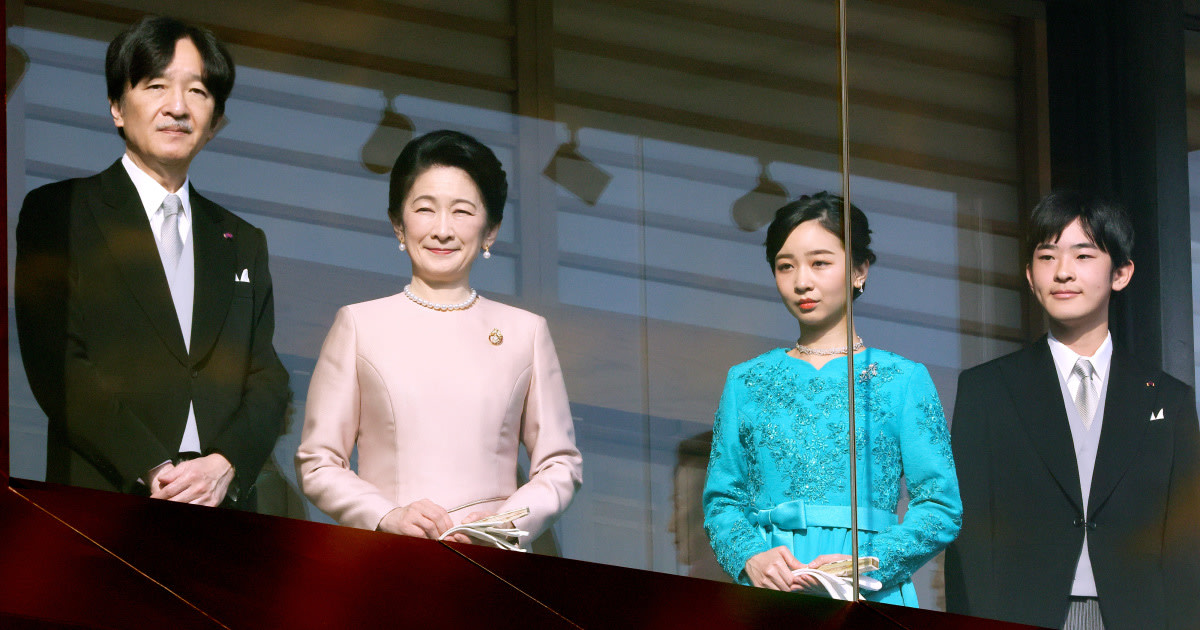
An annual payment of 125.05 million yen. That’s the amount allocated to the Akishino family for the 2025 fiscal year — and yet, reports now suggest concerns about whether that money is enough.
The Akishino family, often subject to 批判 (hihan, criticism), is once again at the center of public discussion. This time, the issue is a theory that a shortage of 皇族費 (kōzokufi, allowance for imperial family members) has “surfaced” — or in Japanese, 浮上した (fujō shita).
What Is 皇族費 (Kōzokufi)?
皇族費 (kōzokufi) refers to the money paid to each 宮家 (miyake, branch of the imperial family). This allowance supports the official and private lives of imperial family members.
The amount is not the same for every branch. It changes 構成人数によって (kōsei ninzū ni yotte), depending on the number of family members in each household.
For the 2025 年度 (nendo, fiscal year), the reported amounts were:
- Akishino family: 125.05 million yen
- Hitachi family: 45.75 million yen
- Takamado family: 36.905 million yen
- Mikasa family: 28.06 million yen
The Akishino family receives the largest sum among these households.
“Not Enough Money?” A Debate Surfaces
Despite receiving over 120 million yen annually, a claim suggesting insufficient funds has emerged. In Japanese reporting, the word 浮上する (fujō suru) is often used when an issue “comes to light” or “emerges” in public discussion.
Because the Akishino family tends to be 批判されがち (hihan sare-gachi) — prone to criticism — even financial matters quickly attract attention and debate.
The article raises a simple but powerful question: What exactly is this annual allowance used for?
That question alone has sparked renewed public interest.
Cultural Context: Money and the Imperial Family
In Japan, the imperial family occupies a unique constitutional position. They do not participate in politics and are supported by public funds. Discussions about their budget can therefore become sensitive topics.
Unlike celebrities or politicians, imperial family members have highly regulated public and private roles. Financial transparency is often a point of curiosity among the public, which may explain why discussions about 皇族費 generate strong reactions.
Understanding this context helps you see why even the suggestion of a funding shortage can quickly become headline news.
Learn Japanese from This Article
Let’s turn this news into practical Japanese study.
Key Vocabulary
| Japanese | Romaji | Meaning |
|---|---|---|
| 批判 | hihan | criticism |
| 浮上する | fujō suru | to surface; to emerge (as an issue) |
| 皇族費 | kōzokufi | allowance for imperial family members |
| 宮家 | miyake | branch of the imperial family |
| 構成人数 | kōsei ninzū | number of members (comprising a group) |
| 年度 | nendo | fiscal year |
Notice how many of these are Sino-Japanese words (漢語), commonly used in formal reporting.
Grammar Spotlight
1️⃣ 〜がち(な)
Meaning: tend to; prone to (often used for negative tendencies)
Structure: Verb stem + がち Noun + がち + な + noun
Example from the article context:
批判されがちだ。 Hihan sare-gachi da. “(They) tend to be criticized.”
忘れがちです。 Wasure-gachi desu. “I tend to forget.”
This pattern often implies something happens more frequently than desired.
2️⃣ 〜によって
Meaning: depending on; according to; by means of
Structure: Noun + によって
Example:
- 構成人数によって金額が変わる。 Kōsei ninzū ni yotte kingaku ga kawaru. “The amount changes depending on the number of members.”
You’ll see 〜によって constantly in news articles and formal explanations.
Useful Expressions
〜が浮上した。 ~ ga fujō shita. “An issue has surfaced.”
年間〜円。 Nennen ~ en. “~ yen per year.”
何に使っているのだろうか。 Nani ni tsukatte iru no darō ka. “What could it be used for?”
That last expression adds a reflective or questioning tone often seen in opinion-based reporting.
Continue Learning
Working on your reading skills? Our Introduction to Kanji: Pictorial Foundations of Japanese Script lesson is a great next step.
Curious about the Japanese used in formal contexts like this? Our Honorifics: Keigo for Respectful Dialogue lesson covers this in depth.
Want to build more culture-related vocabulary? Check out Basic Vocabulary Building: Embracing Words Without Latin Ties.
Public discussions like this offer more than headlines — they give you real-world Japanese packed with formal structures, cultural nuance, and rich vocabulary. The more you read, the more natural this style becomes.
これからもよろしくお願いします。 Kore kara mo yoroshiku onegaishimasu.