
In February, it was reported that Japan had successfully conducted a trial excavation of “rare earth mud” from the ocean floor near Minamitorishima. The site lies 5,700 meters below the surface, close to Japan’s easternmost point.
At a time when China’s export restrictions on rare earth materials to Japan are continuing, the news sparked excitement in political circles. Some even suggested Japan could become a future rare earth superpower. But experts say it may be too soon to celebrate.
What Was Discovered?
The report stated that in February, Japan succeeded in a 試掘 (shikutsu) — a trial excavation — of レアアース泥 (rea āsu dei), or rare earth mud.
The location is near 南鳥島 (Minamitorishima), described as Japan’s 最東端 (saitōtan), its easternmost point. It is also referred to as a 孤島 (kotō), meaning a remote island. The mud was retrieved from the seabed at a depth of 5,700 meters.
In Japanese news style, this was introduced with the expression:
〜と報じられた (to hōjirareta) — “it was reported that…”
This passive reporting form is extremely common in journalism, and you’ll see it often in headlines and broadcasts.
Why Rare Earth Matters Now
The discovery comes 〜中(ちゅう) (~chū) — in the midst of — ongoing 輸出規制 (yushutsu kisei), or export restrictions, by China on rare earth materials to Japan.
Rare earth elements are essential for high-tech products and advanced manufacturing. Although the article does not detail their specific uses, the context makes clear that supply concerns have created what some call a レアアース危機 (rea āsu kiki) — a rare earth crisis.
Because of this situation, voices within 政界 (seikai), Japan’s political world, welcomed the news enthusiastically. Some even suggested that Japan could eventually become a “rare earth superpower.”
However, not everyone agrees.
Experts Urge Caution
While political circles expressed optimism, many 専門家 (senmonka), or experts, argue that it is still too early to celebrate.
The article poses a key question:
How should we view the current rare earth crisis?
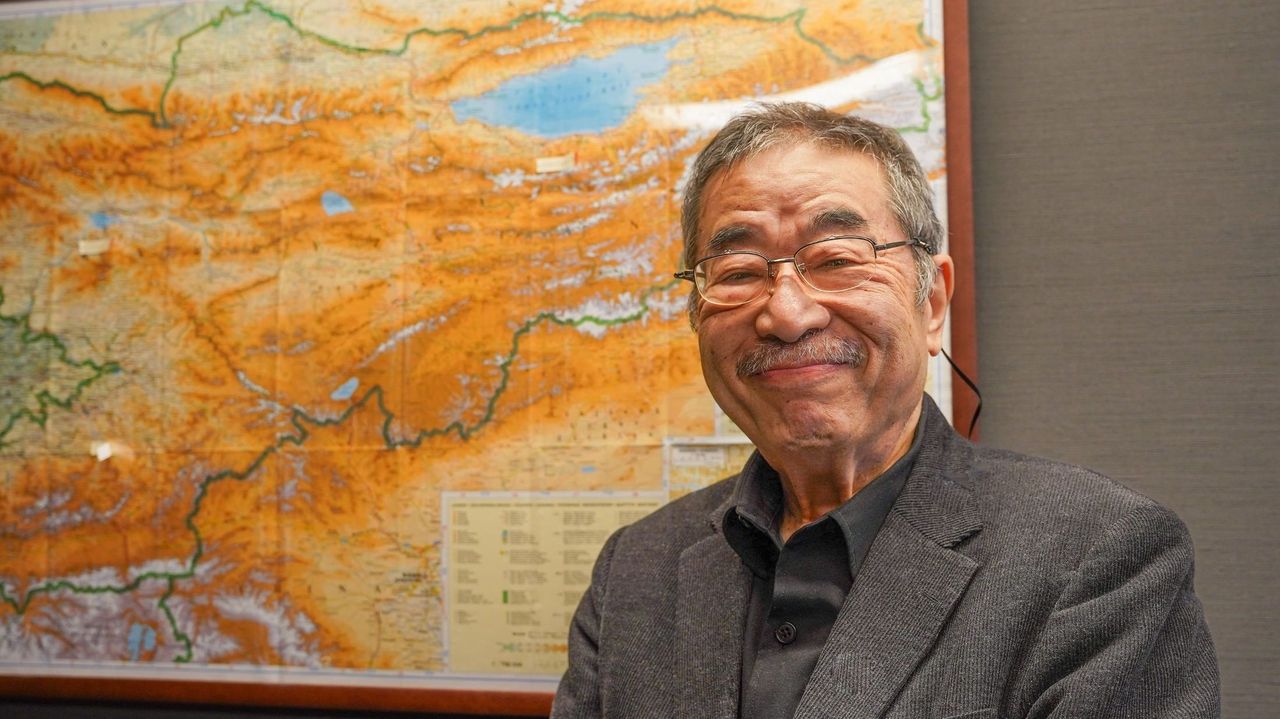
To explore this issue, the journalist interviewed Nakamura Shigeo, a man nicknamed the “Rare Metal King,” who has been involved with rare earths for about half a century.
This contrast — political excitement versus expert caution — is a common pattern in Japanese news coverage. It reflects the Japanese media’s tendency to present multiple perspectives, especially on economic and resource-related issues.
Cultural Context: Why This Matters in Japan
Japan is a resource-poor country in terms of natural minerals and fossil fuels. As a result, supply disruptions can quickly become national concerns.
When another country imposes 輸出規制 (yushutsu kisei), it can trigger debates in 政界 (seikai) and among industry leaders. Discovering domestic resources — even in the deep ocean near a 孤島 (kotō) — carries strong symbolic weight.
At the same time, Japanese public discourse often includes caution from 専門家 (senmonka), reminding people not to draw conclusions too quickly. This careful, measured tone is characteristic of Japanese reporting.
Learn Japanese from This Article
Let’s break down some key vocabulary and grammar you can use right away.
Key Vocabulary
| Japanese | Romaji | Meaning |
|---|---|---|
| 最東端 | saitōtan | easternmost point |
| 孤島 | kotō | remote island |
| 試掘 | shikutsu | trial excavation; test drilling |
| 輸出規制 | yushutsu kisei | export restrictions |
| 政界 | seikai | political world; political circles |
| 専門家 | senmonka | expert; specialist |
| 〜危機 | ~kiki | crisis (e.g., レアアース危機) |
Notice how many of these are compound kanji words. Learning to recognize patterns like 〜規制 (~kisei, regulation) or 〜危機 (~kiki, crisis) will dramatically expand your reading ability.
Grammar Spotlight
1. 〜と報じられた — “It was reported that…”
Structure:
- Plain form + と報じられた
Example:
- 試掘に成功したと報じられた。 Shikutsu ni seikō shita to hōjirareta. It was reported that the trial excavation succeeded.
This passive reporting style creates distance and neutrality — very common in news writing.
2. 〜中(ちゅう) — “In the midst of; while…”
Structure:
- Noun + 中(ちゅう)
Example:
- 輸出規制が続く中、成功が報じられた。 Yushutsu kisei ga tsuzuku naka, seikō ga hōjirareta. The success was reported while export restrictions continued.
This pattern is essential for understanding how Japanese connects events happening simultaneously.
Useful Expression
- 喜ぶにはまだ早い Yorokobu ni wa mada hayai. “It’s still too early to celebrate.”
This is a very natural phrase you’ll hear in both news and daily conversation.
Continue Learning
Curious about the Japanese used here? Our Reading and Writing in Japanese II: Hiragana and Katakana lesson covers this in depth.
Working on your reading skills? Our Introduction to Kanji: Pictorial Foundations of Japanese Script lesson is a great next step.
Ready to dive deeper? Our lesson on Basic Vocabulary Building: Embracing Words Without Latin Ties will help you master these concepts.
Discovering rare earth mud near Japan’s 最東端 (saitōtan) may sound like a breakthrough — but as this article shows, understanding Japan means listening carefully to both political excitement and expert caution.
これからもよろしくお願いします。 Kore kara mo yoroshiku onegaishimasu.