
In January 2026, at 日本武道館 (Nippon Budōkan), a virtual idol stood alone at the center of a 360-degree stage—and physical robots moved with her, earning applause as if they were performers themselves.
The concert was 如月千早’s solo live, 「OathONE」, from The Idolmaster series. What made it historic wasn’t just the music. It was the moment when Sony’s developing swarm robot システム (shisutemu) called groovots stepped onto the センターステージ (sentaa suteeji)—not as stage equipment, but as something closer to cast members.
Let’s look at how this unprecedented collaboration between Bandai Namco Entertainment and Sony came to life—and what it tells us about technology, storytelling, and modern Japanese entertainment.
A Center Stage Surrounded by 360 Degrees
The Budokan performance used a full センターステージ (sentaa suteeji), meaning the audience surrounded the stage on all sides. This setup is demanding. Every angle is visible. There’s nowhere to hide cables, props, or awkward transitions.
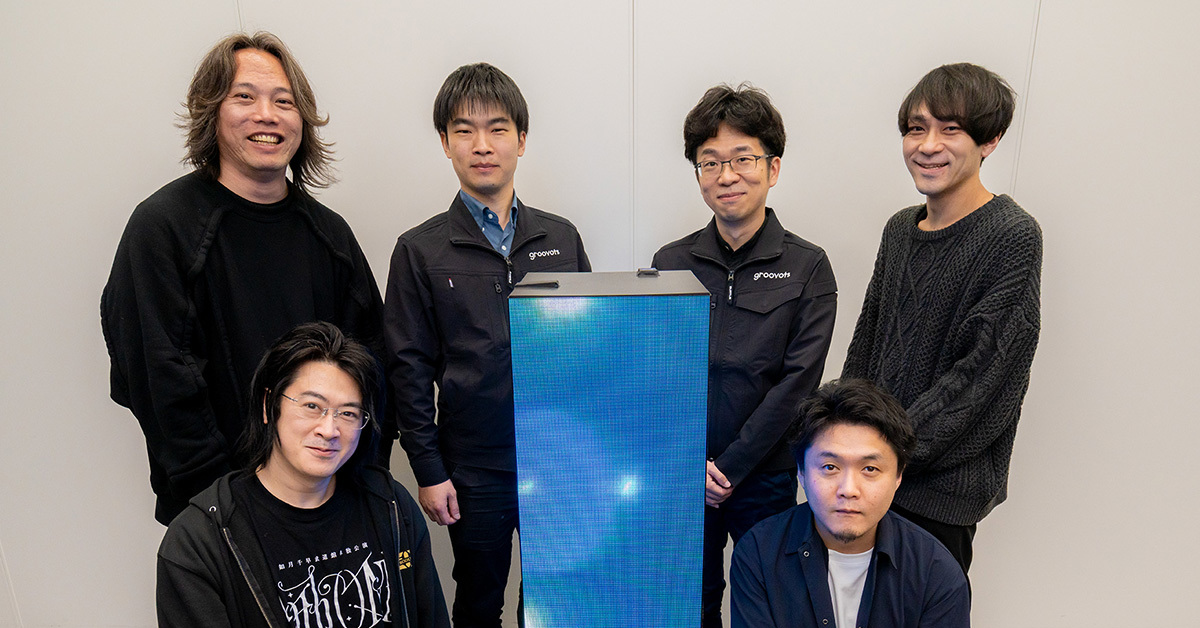
On stage were multiple moving ディスプレイ (disupurei) units. But these weren’t just screens showing CG projections. They were part of Sony’s in-development entertainment-focused swarm robot system, groovots.
Unlike static stage equipment, these robots moved freely across the stage—vertically and horizontally—synchronized with Chihaya’s performance. They had physical mass. They occupied real space. And somehow, that physical presence strengthened the character’s “existence” in the venue.
The article’s author admits that before attending, he assumed an MR (mixed reality) live would simply be an extension of CG projection. Instead, he witnessed something far beyond that expectation: a fusion of robot technology and character expression that led, ultimately, to the robots receiving applause as “performers.”
In Japanese, the article describes this moment as one that 拍手を浴びるに至った (hakushu o abiru ni itatta)—“reaching the point of being showered with applause.” We’ll come back to that grammar in the learning section.
Where the Project Began
The roots of this ambitious プロジェクト (purojekuto) go back to July 2025. That’s when Bandai Namco Holdings and Sony Group announced a strategic business partnership focused on developing new IP-centered experiences, especially in anime.
During discussions about combining their technologies and know-how, Sony introduced several internal technologies to Bandai Namco Entertainment. Among them was the swarm robot system groovots.
吉本行気 (Yoshimoto), a manager in the AE business division at Bandai Namco Entertainment, explained that conversations initially began with a simple question: could the two groups create something new together?
As ideas took shape, the possibility emerged: could groovots be used in a solo Budokan concert for Chihaya?
That question quickly turned into a concrete plan.
“Can She Stand at the Center of Budokan?”
Another key figure, 石田裕亮 (Ishida), explained that within The Idolmaster’s new IP strategy, called PROJECT IM@S 3.0 VISION, the team had already been producing MR live events where characters appeared on stage.
At some point, it had already been decided: Chihaya would stand alone in a solo concert.
However, holding it at Budokan with a full center-stage configuration was another matter entirely. Technical and production hurdles had to be cleared one by one. The team had to determine whether such a performance was even feasible.
上月貴博 (Kozuki) from Sony PCL, which acted as a ハブ (habu)—a connecting hub—between Sony Group and Bandai Namco, recalled that discussions began around spring 2025. When Bandai Namco mentioned wanting to use Budokan’s center stage, Sony evaluated which internal technologies might fit.
After considering feasibility and impact, groovots seemed like the perfect match.
Pressure on Both Sides
For Sony’s hardware development teams, this was no small challenge.
中野晶 (Nakano) from Sony’s robot platform development division admitted that when they first received the request to move robots at the center of a large-scale commercial event, there was pressure. Their team was not yet accustomed to deploying systems in such major live entertainment settings.
And this wasn’t a multi-year development timeline. They were introducing a product still in the development phase into a one-shot, high-stakes live performance only months away.
上月 (Kozuki) even described obtaining internal project approval as a major hurdle. After the successful conclusion of the concert, he sent a heartfelt thank-you email to leadership who had approved the risk.
Meanwhile, Yoshimoto from Bandai Namco brought nearly the entire creative team to see a live demo of groovots at the end of May. The key question: could they all envision real stage direction using these robots?
Looking back, Yoshimoto said that forming consensus within the creative team may have been the greatest challenge of all.
On one side: Bandai Namco’s fast-moving entertainment production culture. On the other: Sony’s strict hardware quality control and safety standards.
Between them stood an “invisible cultural wall.”
Cultural Context: Why Budokan Matters
日本武道館 (Nippon Budōkan) is one of Japan’s most iconic performance venues. Originally built for martial arts events, it has become a symbolic stage for musicians. Performing a solo concert there is often seen as a milestone achievement.
For a fictional idol like Chihaya Kisaragi to headline a solo Budokan concert—supported by cutting-edge robotics—reflects how Japanese IP culture blends fiction and reality.
In Japan, characters aren’t just stories. They are long-term intellectual properties developed across games, anime, music, and live events. The line between “virtual” and “real” becomes intentionally blurred.
This project wasn’t only about technology. It was about making audiences feel that Chihaya “existed” in that space.
Learn Japanese from This Article
Key Vocabulary
| Japanese | Romaji | Meaning |
|---|---|---|
| センターステージ | sentaa suteeji | center stage (surrounded by audience) |
| ディスプレイ | disupurei | display, screen |
| システム | shisutemu | system |
| プロジェクト | purojekuto | project |
| プラットフォーム | purattofoomu | platform |
| モーションAI | mooshon ei ai | motion AI |
| インキュベーション | inkyubeeshon | incubation (business development) |
| ハブ | habu | hub, central connector |
You probably noticed something: almost all of these are written in katakana. Modern Japanese tech and business language heavily relies on adapted loanwords.
Grammar Spotlight
1. 〜にて (formal “at” or “in”)
Used in written or formal contexts, especially in news.
Example from the article:
2026年1月、日本武道館にて公演が開催された。 2026-nen 1-gatsu, Nippon Budōkan ni te kōen ga kaisai sareta. “In January 2026, the performance was held at Nippon Budokan.”
Compared to で, にて sounds more official and written.
2. 〜に至る (to reach the point of)
This expression describes a process that leads to a final outcome.
Example inspired by the article:
ロボットは最終的に出演者として拍手を浴びるに至った。 Robotto wa saishūteki ni shutsuen-sha to shite hakushu o abiru ni itatta. “The robots ultimately reached the point of receiving applause as performers.”
It emphasizes a journey or progression—not just a result.
Useful Expression
実在した (jitsuzai shita) — “truly existed”
The related report article was titled: 「如月千早は、実在した」 “Kisaragi Chihaya truly existed.”
In entertainment contexts, this phrase expresses overwhelming emotional realism.
Continue Learning
Working on your reading skills? Our Katakana Essentials: Adapting Global Words to Japanese lesson is a great next step.
To understand more about tech vocabulary, explore our Basic Vocabulary Building: Embracing Words Without Latin Ties.
Want to strengthen your script reading skills? Check out Reading and Writing in Japanese II: Hiragana and Katakana.
Technology alone doesn’t create emotion. Story alone doesn’t fill a 360-degree arena. But when robotics, IP strategy, and creative vision converge, even machines can step onto the センターステージ (sentaa suteeji)—and be applauded as performers.
For Japanese learners, this article is also a reminder: language evolves alongside culture and technology. By learning the words shaping today’s Japan, you’re stepping into that future too.
これからもよろしくお願いします。 Kore kara mo yoroshiku onegaishimasu.