
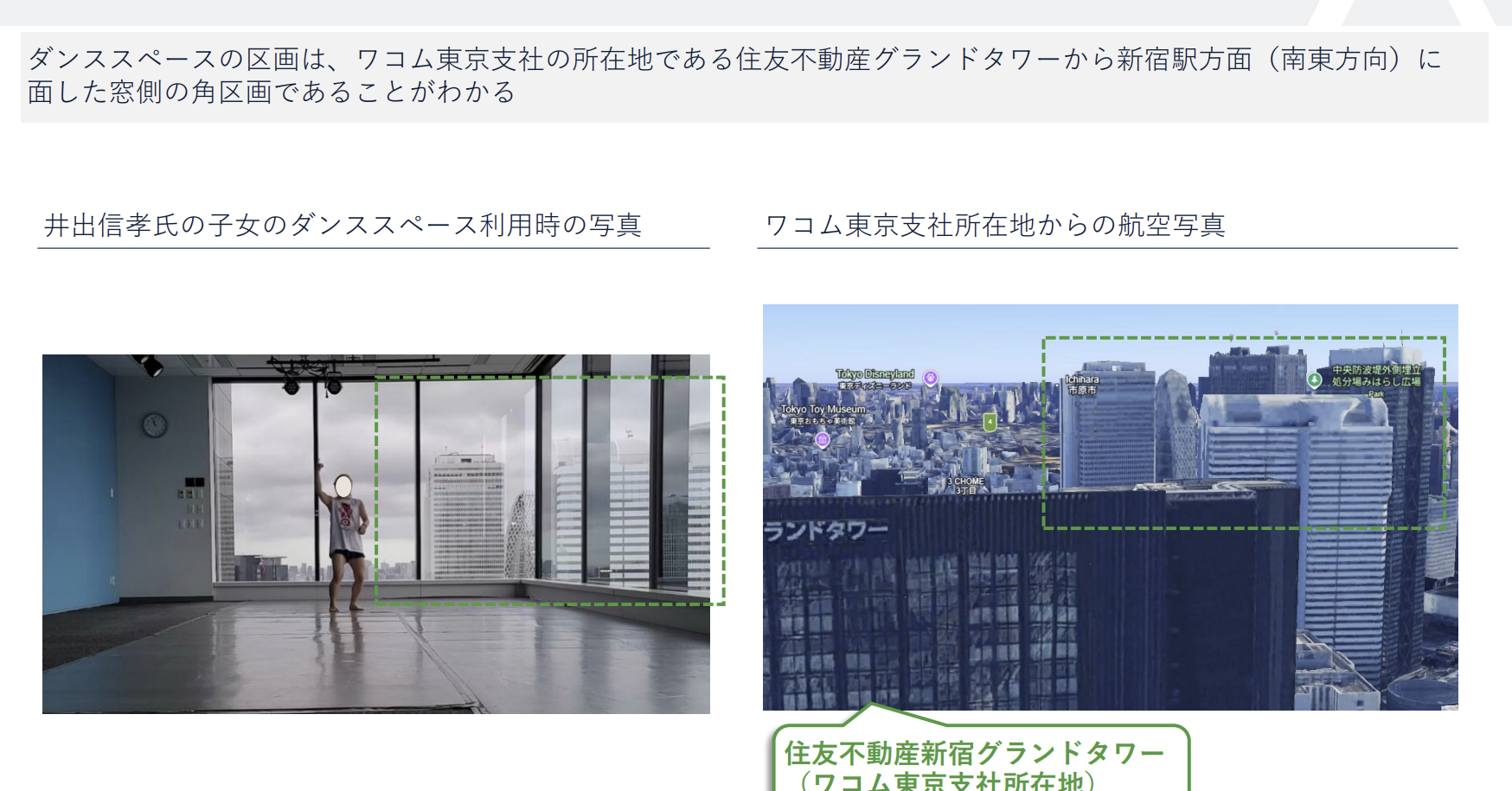
On May 14, 2026, British investment fund Asset Value Investors (AVI) submitted a shareholder proposal calling for the dismissal of Wacom’s president, Nobutaka Ide, and its COO(シーオーオー) (shī-ō-ō), Takashi Nakajima. At the center of the dispute: allegations that part of Wacom’s Tokyo office was used as a private dance space for the president’s daughter.
The case has sparked debate about leadership, corporate ethics, and ガバナンス (gabanansu, corporate governance) at one of Japan’s best-known tech companies.
What Happened?
Wacom, headquartered in Saitama Prefecture, is famous worldwide for its digital drawing tablets. Its largest shareholder is a British investment ファンド (fando), Asset Value インベスターズ (inbesutāzu), which holds a 13.8% stake.
AVI says it has been in dialogue with Wacom for years to improve corporate value. However, it points to several concerns:
- Over the past five years, Wacom’s total shareholder return (TSR) has underperformed the dividend-inclusive TOPIX index.
- Operating profit, excluding the impact of the weak yen, has dropped by about 40% since the fiscal year ending March 2021.
- Brand product performance has slowed under President Ide’s leadership.
AVI attributes part of this decline to what it describes as “closed-door management” and the private use of company assets.
The Alleged Dance Space
According to AVI, part of Wacom’s Tokyo branch office—located on the 31st floor of Sumitomo Fudosan Shinjuku Grand Tower—was set aside as a “dance space.”
The Tokyo office’s annual rent is estimated at several hundred million yen. The specific corner space, with an open view, is estimated to cost between 5 million and 8.5 million yen per year in rent.
AVI claims that President Ide’s daughter, a dancer known as MIDORI, used this space for practice and filming for 少なくとも5年以上にわたって (sukunakutomo go-nen ijō ni watatte)—for at least over five years.
Employees who responded to AVI’s inquiries reportedly described:
- A mysterious space not registered as a meeting room
- No clear usage records or entry logs
- An impression that it had been carefully arranged for private use
Some employees allegedly said they left the company because they could not tolerate what they saw as the privatization of company resources.
AVI argues that actions 〜といった (~to itta, such as) setting aside office space for personal use have severely damaged employee morale and corporate value.
When AVI sought clarification from Wacom through IR(アイアール) (ai-āru, Investor Relations), it says it did not receive a satisfactory explanation.
Donations and Events
AVI also raised concerns about donations totaling 280 million yen from Wacom to a general incorporated association called Connected Ink Village (CIV). President Ide founded this organization and serves as its representative director.
Wacom and CIV co-host an annual イベント (ibento) called “Connected Ink.” According to AVI, since Ide became president, the event has shifted from a technology-focused exhibition to one with a stronger アート色 (āto-shoku, artistic tone). MIDORI has reportedly appeared each year as a director and dancer.
AVI suggests that while Wacom’s internal R&D budget has been restricted, opaque spending has continued elsewhere.
The Governance Question
AVI concluded that Wacom’s board of directors is failing to fulfill its supervisory function and that the company is facing a breakdown in ガバナンス (gabanansu).
The fund is proposing:
- The dismissal of President Ide
- The dismissal of COO Nakajima
- The appointment of new outside directors
AVI argues that supporting its shareholder proposal would benefit shareholders collectively and help realize what it estimates to be Wacom’s intrinsic value of 1,300 yen per share.
Cultural Context: “Monoiu Kabunushi” in Japan
The article describes AVI as a “物言う株主” (mono iu kabunushi), literally “a shareholder who speaks out.” In English, this is often translated as an “activist investor.”
In Japan, shareholder activism has historically been less confrontational than in the United States or the United Kingdom. However, in recent years, pressure for transparency and stronger corporate governance has increased. Words like ガバナンス (gabanansu) and IR(アイアール) (ai-āru) have become common in Japanese business media—often written in katakana because they originate from English.
Understanding these terms helps you follow modern Japanese business news more naturally.
Learn Japanese from This Article
Key Vocabulary
| Japanese | Romaji | Meaning |
|---|---|---|
| ファンド | fando | investment fund |
| インベスターズ | inbesutāzu | investors |
| COO(シーオーオー) | shī-ō-ō | Chief Operating Officer |
| ガバナンス | gabanansu | corporate governance |
| IR(アイアール) | ai-āru | Investor Relations |
| イベント | ibento | event |
| アート色 | āto-shoku | artistic tone |
| 解任 | kainin | dismissal (from a position) |
| 私物化 | shibutsuka | privatization for personal use |
Notice how many of these are written in katakana. Business Japanese relies heavily on adapted English words.
Grammar Spotlight
1. 〜にわたって
Meaning: over a period of; throughout
Structure: Noun + にわたって
Example from the article: 少なくとも5年以上にわたって利用している。 Sukunakutomo go-nen ijō ni watatte riyō shite iru. (It has been used for at least over five years.)
More examples:
3日間にわたって会議が行われた。 Mikka-kan ni watatte kaigi ga okonawareta. The meeting was held over three days.
全国にわたって影響が出ている。 Zenkoku ni watatte eikyō ga dete iru. The impact is spreading across the entire country.
This pattern is extremely common in news reports.
2. 〜といった
Meaning: such as; things like
Structure: Noun + といった + Noun
Example from the article: ダンススペースの設置といった行為 Dansu supēsu no setchi to itta kōi Acts such as setting up a dance space
More examples:
株価の低迷といった問題 Kabuka no teimei to itta mondai Problems such as a sluggish stock price
不透明な支出といった点 Futōmei na shishutsu to itta ten Points such as opaque spending
You’ll often see 〜といった in formal writing and news analysis.
Useful Expression
物言う株主(ものいうかぶぬし)
mono iu kabunushi An activist shareholder (literally, “a shareholder who speaks out”)
This phrase appears frequently in Japanese business journalism when discussing investor pressure on management.
Continue Learning
Working on your reading skills? Our Katakana Essentials: Adapting Global Words to Japanese lesson is a great next step.
To understand more about tech, explore our Basic Vocabulary Building: Embracing Words Without Latin Ties.
Ready to dive deeper? Our lesson on Reading and Writing in Japanese II: Hiragana and Katakana will help you master these concepts.
Corporate scandals, shareholder activism, and governance debates may feel complex—but they’re rich sources of real-world Japanese. By studying articles like this, you’re learning the language as it’s actually used in modern Japan.
これからもよろしくお願いします。 Kore kara mo yoroshiku onegaishimasu.