
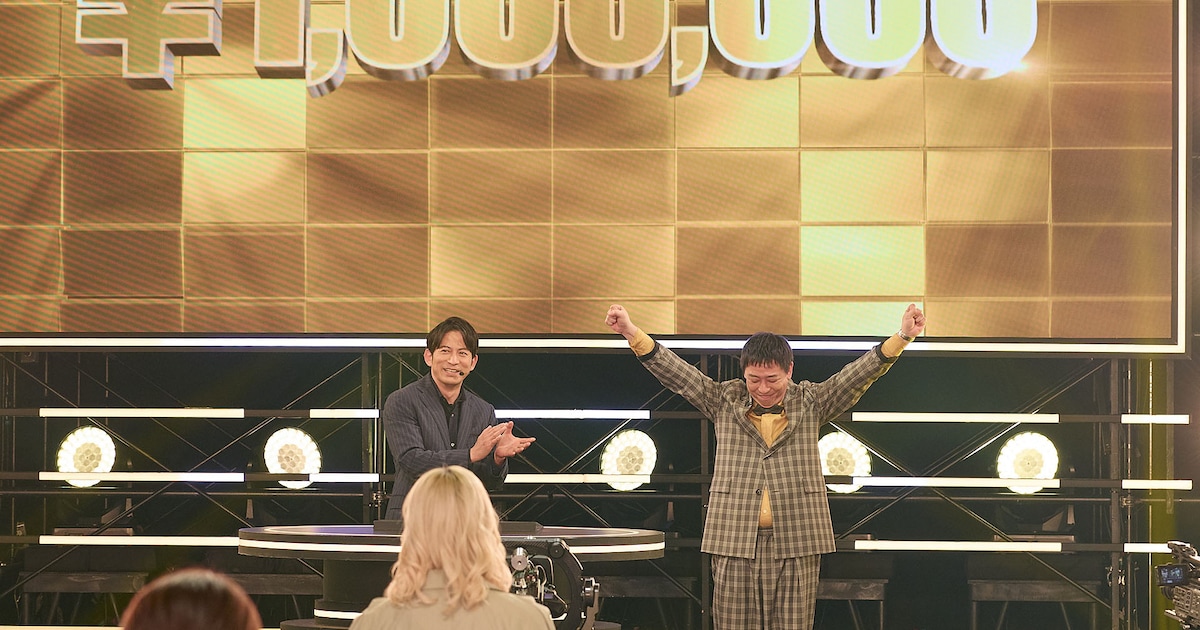
On March 28, 2026, Nippon TV aired the special program “THE FLOOR,” where Saraba Seishun no Hikari’s Morita won a 1 million yen bonus—and actor Shinya Kote was crowned the very first champion.
The high-stakes quiz survival show brought together 32 celebrities for its Japanese debut, and the competition quickly turned intense.
Morita’s Three-Game Winning Streak
“THE FLOOR” is a territory-grabbing survival quiz show. Contestants face off in one-on-one 対決 (taiketsu)—head-to-head matches—and expand their area on a giant floor with each victory.
The format first aired in the Netherlands in 2023 and, 〜のを皮切りに (… no o kawakiri ni, starting with…), spread to the United States, France, Spain, Germany, Italy, and other Western countries. This broadcast marked its Japanese 初上陸 (hatsujōriku), or first arrival in Japan.
In the middle of the program, Morita from the comedy duo Saraba Seishun no Hikari delivered an impressive series of victories. Beginning with the 13th round, he defeated Ami Suzuki in a “sushi” showdown, then beat Okazaki Taiiku in a “buzzwords” match in round 14, and triumphed over Wataru Yokoo (Kis-My-Ft2) in a “famous athletes” battle in round 15.
With three straight wins—3連勝 (san renshō, three consecutive victories)—Morita 獲得 (kakutoku) a 1 million yen bonus.
Even after that, his momentum didn’t stop. He continued expanding his territory across the floor. However, in the 27th round, he lost the “dogs and cats” showdown to Shinya Kote.
Shinya Kote’s Unstoppable Momentum
Kote went on to claim victory and became the show’s first champion.
The article describes his run as 破竹の勢い (hachiku no ikioi)—literally “like splitting bamboo,” meaning unstoppable momentum. It’s a vivid expression you’ll often see in sports or competition news.
After winning, Kote smiled with a hint of 困惑 (konwaku, bewilderment) and said:
「ただ長く映りたかっただけなのに……」 Tada nagaku utsuritakatta dake na no ni… “I just wanted to be on screen longer…”
When MC Junichi Okada told him, “1,000 man yen—for your family!” it was described as a 粋な (iki na) comment—a stylish, classy remark. Kote responded with a face 安堵と歓喜が混じりの表情で (ando to kanki ga majiri no hyōjō de), meaning “with an expression mixed with relief and joy,” and said:
「ありがとうございます!」 Arigatō gozaimasu! “Thank you very much!”
The show is available on TVer for one week after broadcast and on Hulu for one year.
Cultural Context: Why “THE FLOOR” Feels Different
Japanese television loves quiz shows, especially celebrity specials known as 特番 (tokuban, special programs). However, “THE FLOOR” adds a Western-style competitive survival element, where visual territory expands as players win.
The phrase 初代王者 (shodai ōja)—“first-generation champion”—is also culturally significant. In Japan, being the “first” winner of something carries prestige. That title often sticks with a person’s name for years.
You’ll also notice how humble Kote’s reaction was. Even after winning, he joked that he only wanted more screen time. This kind of modest response is common in Japanese entertainment culture.
Learn Japanese from This Article
Here are key words you can take directly from this news story:
| Japanese | Romaji | Meaning |
|---|---|---|
| 獲得 | kakutoku | to acquire; to win (a prize) |
| 連勝 | renshō | consecutive wins |
| 破竹の勢い | hachiku no ikioi | unstoppable momentum |
| 初上陸 | hatsujōriku | first arrival in a country |
| 対決 | taiketsu | showdown; head-to-head match |
| 困惑 | konwaku | bewilderment; confusion |
| 粋な | iki na | stylish; classy in a refined way |
| 初代王者 | shodai ōja | first champion |
Grammar Spotlight
1️⃣ 〜のを皮切りに
Meaning: Starting with…, beginning from…
Structure: [Verb (dictionary form) + の] + を皮切りに
Example from the article context:
- オランダでの放送を皮切りに、世界中で人気を博している。 Oranda de no hōsō o kawakiri ni, sekaijū de ninki o hakushite iru. Starting with its broadcast in the Netherlands, it gained popularity worldwide.
You’ll often see this in news when describing trends or expansion.
2️⃣ 〜混じりの〜
Meaning: Mixed with…, tinged with…
Structure: [Noun] + 混じりの + [Noun]
Example:
- 安堵と歓喜が混じりの表情 Ando to kanki ga majiri no hyōjō An expression mixed with relief and joy.
Another example:
- 驚き混じりの声 Odoroki majiri no koe A voice tinged with surprise.
This pattern is perfect for describing emotions in a nuanced way.
Useful Expression
- ありがとうございます! (Arigatō gozaimasu!) A polite “Thank you very much!”—essential in both daily life and formal settings.
Continue Learning
📚 Working on your reading skills? Our Katakana Essentials: Adapting Global Words to Japanese lesson is a great next step.
📚 Working on your reading skills? Our Introduction to Kanji: Pictorial Foundations of Japanese Script lesson is a great next step.
Introduction to Kanji: Pictorial Foundations of Japanese Script
📚 To understand more about entertainment, explore our Basic Vocabulary Building: Embracing Words Without Latin Ties lesson.
Basic Vocabulary Building: Embracing Words Without Latin Ties
これからもよろしくお願いします。 Kore kara mo yoroshiku onegaishimasu.