
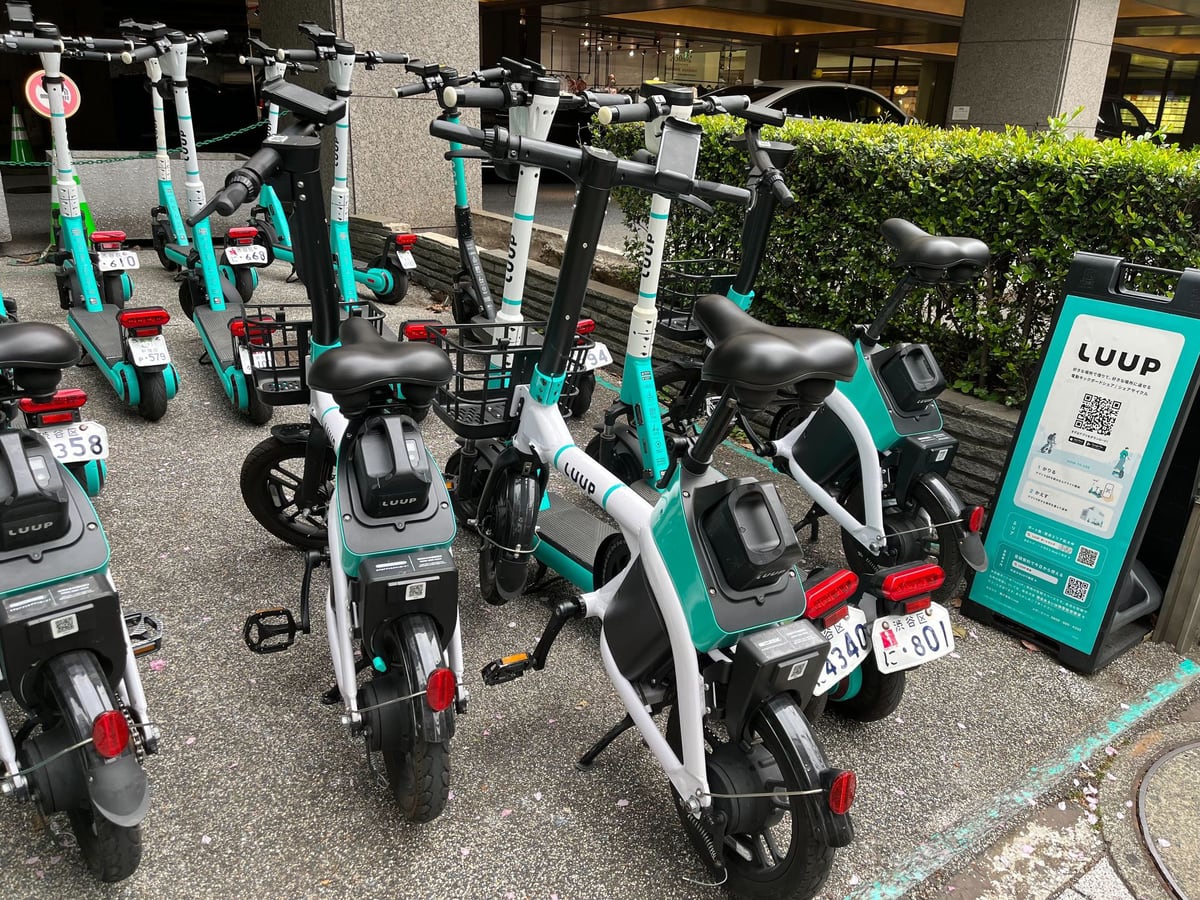
On March 19, Luup, the company behind the electric mobility sharing service LUUP, announced that it will lower the maximum insurance payouts for accidents occurring during use, starting April 20.
The change affects compensation paid to riders in the event of death or serious injury. Here’s what that means—and what Japanese you can learn from it.
What Is Changing on April 20?
LUUP is a シェアリングサービス (shearingu sābisu) for electric モビリティ (mobiriti) such as electric assist bicycles and electric kick scooters. Users unlock a vehicle, take a short trip—called a ライド (raido)—and return it to a designated port.
According to the company, the maximum 保険金 (hokenkin, insurance payout) for riders will be reduced for rides that begin on or after April 20 at 12:00 a.m.
Death and Serious Injury Coverage
Currently, if a rider dies or suffers permanent disability during use, the maximum payout is 10 million yen.
However, for rides that begin on April 20 at 12:00 a.m. or later, the maximum will be reduced to 5 million yen—a significant 減額 (gen gaku, reduction in amount).
- Rides started by April 19 at 11:59 p.m.: up to 10 million yen
- Rides started April 20 at 12:00 a.m. or later: up to 5 million yen
Daily hospitalization payments will remain at 3,000 yen per day. But outpatient visit compensation will be reduced from 2,000 yen to 1,500 yen per day.
In other words, the timing of your ライド (raido) determines which insurance terms apply.
What About Damage to Other People?
Coverage related to 賠償責任 (baishō sekinin, liability for damages to others) will not change.
For electric assist bicycles:
- Up to 300 million yen for bodily or property damage
For electric kick scooters and electric seat boards:
- 無制限 (museigen, unlimited), including the 30 million yen compulsory automobile liability insurance
This means that compensation for harm caused to third parties remains at the same level as before.
What Is Covered—and What Isn’t?
For LUUP, insurance premiums are included in the usage fee. However, coverage for riders applies only in the case of:
“Sudden and accidental external accidents” during use.
If an accident is caused by a user’s intentional act or gross negligence, it is not covered.
This distinction is important in Japanese insurance language, which often uses very specific phrasing to define eligibility.
Cultural Context: Micro-Mobility in Japanese Cities
Services like LUUP have become increasingly visible in urban areas such as Tokyo. Small electric vehicles are positioned at designated “ports,” often near train stations or office buildings.
Because these are compact, personal transportation devices, insurance plays a key role in public acceptance. News about changes in 保険金 (hokenkin) or 賠償責任 (baishō sekinin) coverage reflects ongoing conversations in Japan about safety, regulation, and responsibility in shared mobility services.
You’ll also notice how many of the key terms—シェアリングサービス, モビリティ, ライド—are written in katakana. Modern tech and business news in Japan is filled with loanwords, making katakana literacy essential.
Learn Japanese from This Article
Let’s break down the most useful vocabulary and grammar.
Key Vocabulary
| Japanese | Romaji | Meaning |
|---|---|---|
| シェアリングサービス | shearingu sābisu | sharing service |
| モビリティ | mobiriti | mobility (transport devices) |
| 保険金 | hokenkin | insurance payout |
| 減額 | gen gaku | reduction (in amount) |
| 賠償責任 | baishō sekinin | liability for damages |
| 無制限 | museigen | unlimited |
| ライド | raido | ride (trip) |
| 搭乗者 | tōjōsha | rider / passenger |
| 後遺障害 | kōi shōgai | permanent disability |
Notice how technical and legal terms often use kanji-heavy vocabulary, while service-related terms appear in katakana.
Grammar Spotlight 1: 〜場合 (in the case of / when)
In the article:
搭乗者が死亡、もしくは後遺障害が残った場合 Tōjōsha ga shibō, moshikuwa kōi shōgai ga nokotta baai In the case that a rider dies or is left with a permanent disability
Structure: Plain form + 場合
Examples:
事故が起きた場合、保険金が支払われます。 Jiko ga okita baai, hokenkin ga shiharawaremasu. In the case that an accident occurs, insurance will be paid.
4月20日以降に開始した場合、新しい条件が適用されます。 Shigatsu hatsuka ikō ni kaishi shita baai, atarashii jōken ga tekiyō saremasu. If it starts on or after April 20, the new conditions apply.
This pattern is extremely common in contracts, rules, and news articles.
Grammar Spotlight 2: 〜以降 (from ~ onward)
From the article:
4月20日午前0時以降の利用 Shigatsu hatsuka gozen reiji ikō no riyō Use from 12:00 a.m. on April 20 onward
Structure: Time expression + 以降
Examples:
明日以降、料金が変わります。 Ashita ikō, ryōkin ga kawarimasu. From tomorrow onward, the price will change.
午後6時以降は入場できません。 Gogo rokuji ikō wa nyūjō dekimasen. Entry is not allowed after 6 p.m.
You’ll frequently see 以降 in official announcements and policy changes.
Useful Expression
急激かつ偶然な外来の事故 Kyūgeki katsu gūzen na gairai no jiko A sudden and accidental external accident
This formal phrasing is typical of insurance language in Japan. Learning to recognize these set expressions helps you read contracts and news more confidently.
Continue Learning
Working on your reading skills? Our Katakana Essentials: Adapting Global Words to Japanese lesson is a great next step.
To understand more about tech, explore our Reading and Writing in Japanese II: Hiragana and Katakana lesson.
Ready to dive deeper? Our lesson on Basic Vocabulary Building: Embracing Words Without Latin Ties will help you master these concepts.
Small policy changes like this one are packed with real-world Japanese—legal terms, katakana loanwords, and precise time expressions. The more news you read, the more natural these patterns will feel.
これからもよろしくお願いします。 Kore kara mo yoroshiku onegaishimasu.